There is a week at the end of June, in July, and in August when the kitchen becomes a factory. Tomatoes boil on every burner. Jars clink in the sink. The air smells like vinegar, sugar, and the slightly desperate knowledge that this abundance will not last. Preserving summer is one of the oldest human impulses, and also one of the most defiant. It is the refusal to let a good thing end without a fight.
Before refrigeration, before global shipping, the only way to eat in winter was to outsmart time. The ancient Egyptians dried figs in the desert heat. The Chinese fermented vegetables in brine by 2000 BC. The Romans packed fish in salt and layered fruit with honey in sealed clay pots. Every civilization that experienced hunger developed a method to stretch the harvest.
Canning is surprisingly recent. It was invented in 1810 by Nicolas Appert, a French confectioner who spent fourteen years experimenting with glass jars and boiling water. Napoleon had offered a cash prize to anyone who could feed his armies reliably. Appert won, though he did not understand why it worked — bacteria would not be discovered for another fifty years. The mason jar, patented in 1858 by American tinsmith John Landis Mason, changed the domestic kitchen forever.
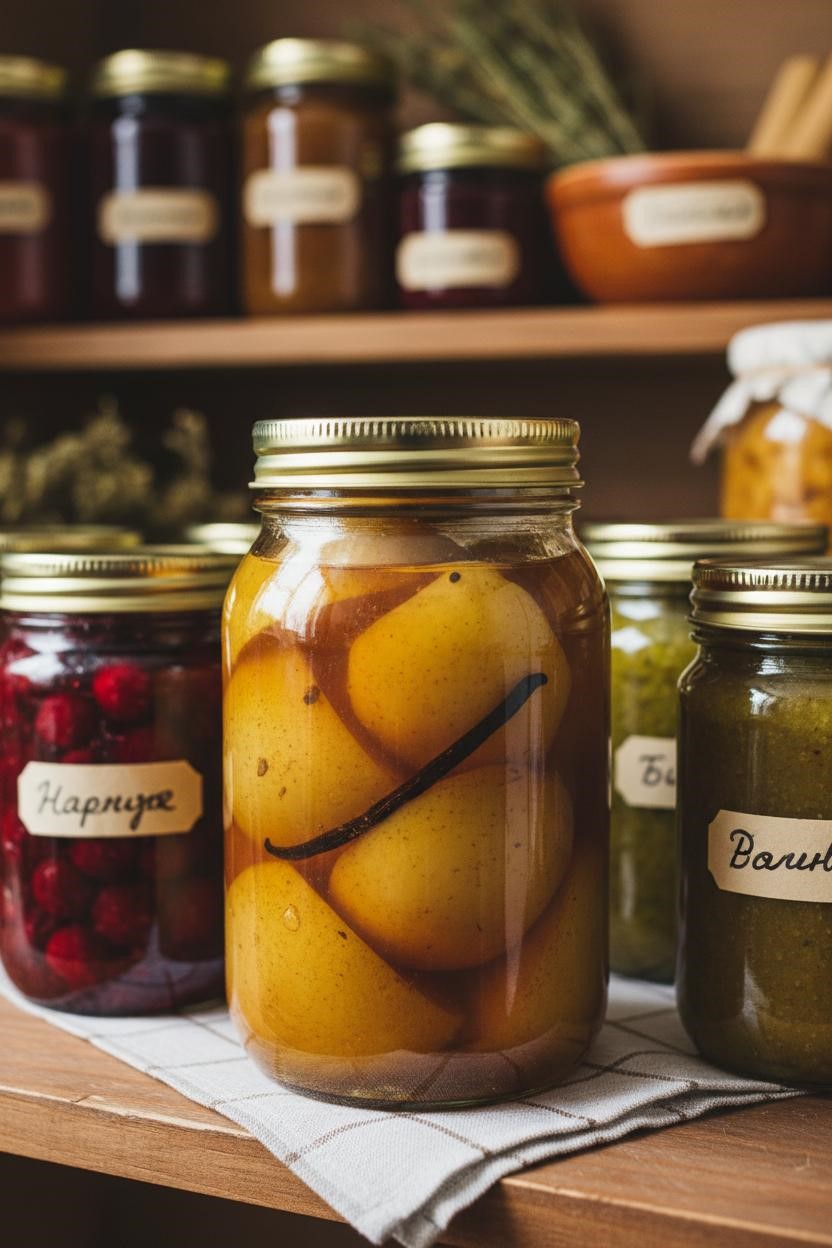
What did people preserve? Everything that could not survive the frost. Stone fruits — peaches, plums, cherries — were sugared into jams or brandied into jars. Berries became syrups. Tomatoes were boiled into sauces. Cucumbers became pickles through lacto-fermentation, a process that predates written history and relies on natural bacteria on the vegetable skin. Peppers were roasted and submerged in oil. Apples were dried into sweet, wrinkled coins. Cabbage was pounded into sauerkraut or kimchi. Onions and garlic were braided and hung in cool corners, their papery skins protecting the cloves for months.
The health profile is complicated. Fermentation actually increases nutritional value. The bacteria that transform cabbage into sauerkraut produce B vitamins and support gut health. Dried fruit concentrates nutrients — a handful of dried apricots delivers more iron and fiber than fresh, though it also concentrates sugar. Canning is less forgiving. The high heat destroys vitamin C and some B vitamins. What remains is shelf-stable and safe, but not as nutritionally complete as the fresh fruit that went in. The trade-off is survival, not perfection.
Symbolically, the pantry is a kind of autobiography. Every jar is a decision made in August about what December will taste like. In Eastern European traditions, a full pantry was proof the household would not starve. In rural America, the canning cellar measured a farm’s prosperity. Jars were lined up like soldiers, labeled in shaky handwriting, and opened in the coldest months as a reminder that summer had been real.
What has changed? The freezer replaced the cellar for many. Freezing preserves texture and nutrients better than canning, and requires less labor. And the supermarket made preservation optional. You can buy peaches from Chile in February. The jar became a hobby, not a necessity.
But a counter-movement is growing. Young people are returning to fermentation, to jam-making, to the slow ritual of peeling and boiling and sealing. They are not doing it because they must. They are doing it because it connects them to a rhythm that the supermarket erased. Putting summer in a jar is a small rebellion against the idea that everything should be available always. It says: I was here when this was ripe. I paid attention. I saved something.
So when the tomatoes split on the vine and the peaches bruise on the counter, set aside a Saturday. Borrow a big pot. Sterilize the jars. The process is slow, sticky, and slightly dangerous. The kitchen will be a mess. But in January, when the sky is gray and the tomatoes taste like water, you will open a jar and remember the exact heat of the day you sealed it. That is the real preservation. Not the fruit. The memory.