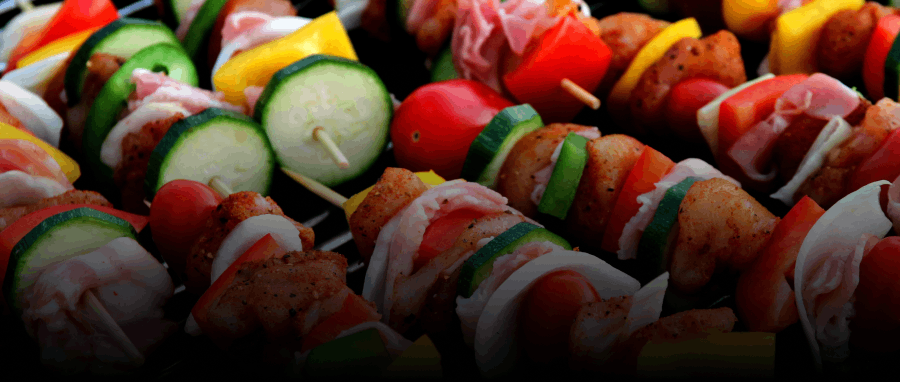

There is a sound that defines a neighborhood in July. It is the metallic clink of a grill lid opening, followed by the hiss of fat hitting hot coals, followed by the smell that makes every window on the street open a little wider. That is the sound of the barbecue, and it is older than the country most of us live in.
The word comes from the Caribbean. The Taino people called their wooden framework for drying meat a barabicu, and Spanish explorers borrowed it in the 1500s. But cooking meat over open flame is prehistoric. Archaeologists have found evidence of controlled fire cooking dating back 1.5 million years. The first barbecue was not a party. It was survival.
What did people do before the modern grill? In medieval Europe, meat was roasted on a spit in a fireplace, turned by hand or by a dog walking in a wheel. In the American South, pit barbecue meant digging a hole in the ground, lining it with coals, and slow-cooking a whole animal for a day. This was not fast food. It was a community event that required patience, labor, and shared responsibility. The meat was tough, the cuts were cheap, and the smoke was the only tenderizer that mattered.
The modern backyard grill is a recent invention. The first charcoal briquette was patented in 1897, but Henry Ford commercialized it in the 1920s using scrap wood from his Model T factories. The kettle grill was invented by George Stephen in 1952, a welder who cut a buoy in half, added legs, and created the shape that now sits on 75 million American patios. The gas grill followed in the 1960s, turning fire into a dial you could control with a wrist flick.
But the real magic is not the equipment. It is the chemistry. When meat hits heat above 300 degrees Fahrenheit, the Maillard reaction begins — amino acids and sugars rearrange into hundreds of new flavor compounds. Fat drips onto coals, vaporizes, and rises back up as smoke, coating the meat with phenols and carbonyls that create the taste we call “barbecue.” This does not happen in an oven. It only happens when meat, fire, and air meet in the open.
Symbolically, the grill carries ancient weight. Fire was the first human technology, and cooking meat over it was the first social ritual. In Argentina, the asado is a four-hour ceremony where the cook never leaves the fire. In South Africa, the braai is a national identity so strong that it has its own public holiday. In Korea, galbi is grilled at the table, making the meal a performance. Every culture that has meat and fire has invented barbecue, and every one believes theirs is the only true way.
Summer owns the barbecue because summer owns the evening. The days are long enough that dinner happens at eight without apology. The air is warm enough that no one rushes inside. The produce is ripe enough that the side dishes — tomatoes, corn, peaches — need no recipe. The grill becomes the kitchen, and the kitchen becomes a storage room.
What has changed? We have added Wi-Fi-enabled smokers and meat probes that send notifications to our phones. We have turned a primal ritual into a competitive sport with television shows and prize money. But the core remains. A piece of protein, a source of heat, and someone willing to stand in the smoke and watch it happen.
So when the charcoal is gray and the first burger goes on, remember what you are doing. You are not just cooking dinner. You are continuing the oldest culinary tradition on Earth. You are standing where every human ancestor stood, holding tongs instead of a stick, but doing the same thing: feeding the people you love with fire you control. That is the charm. That is the ritual. That is why summer will never let the grill go cold.