When October arrives, one vegetable quietly takes over the world — appearing on doorsteps, in soups, pies, and lattes, glowing orange against grey autumn skies. The pumpkin is far more than a seasonal decoration: it is one of humanity’s oldest cultivated crops, a symbol of abundance, and one of the most powerful natural allies of our immune system.
Long before Europeans ever set foot in the Americas, pumpkins were already feeding civilizations. Archaeological evidence from the Oaxaca valley in Mexico shows that wild pumpkins were being domesticated as early as 8,000 BC — making them older than wheat farming in Egypt. The ancient peoples of Central America treasured the entire plant: the flesh for food, the seeds for medicine and ritual, the dried shells as bowls and containers. In a world without plastic, a hollowed pumpkin was a gift.
Even the Bible touches this story, though indirectly. When Jonah sat beneath the shade of a fast-growing plant, the original Hebrew described a kikayon — translated in many versions as a “gourd,” the ancient cousin of the pumpkin family. The Book of Jonah gives us one of scripture’s most vivid images of a man finding shelter under a large gourd vine, watching over the city of Nineveh. Few readers realize the plant shading the prophet belonged to the same botanical family that would centuries later shelter entire harvests.
Pumpkins crossed the Atlantic after the Age of Exploration and conquered Europe with remarkable speed. By the 17th century they were so beloved in England that the word “pumpion” appeared in Shakespeare’s The Merry Wives of Windsor. And here is a delightful twist most people never learn: the original jack-o’-lantern wasn’t a pumpkin at all. In Ireland, people carved frightening faces into turnips and rutabagas to ward off wandering spirits. Only when the tradition reached America did immigrants discover that pumpkins — larger, softer, and glowing beautifully from within — were infinitely better for the job.
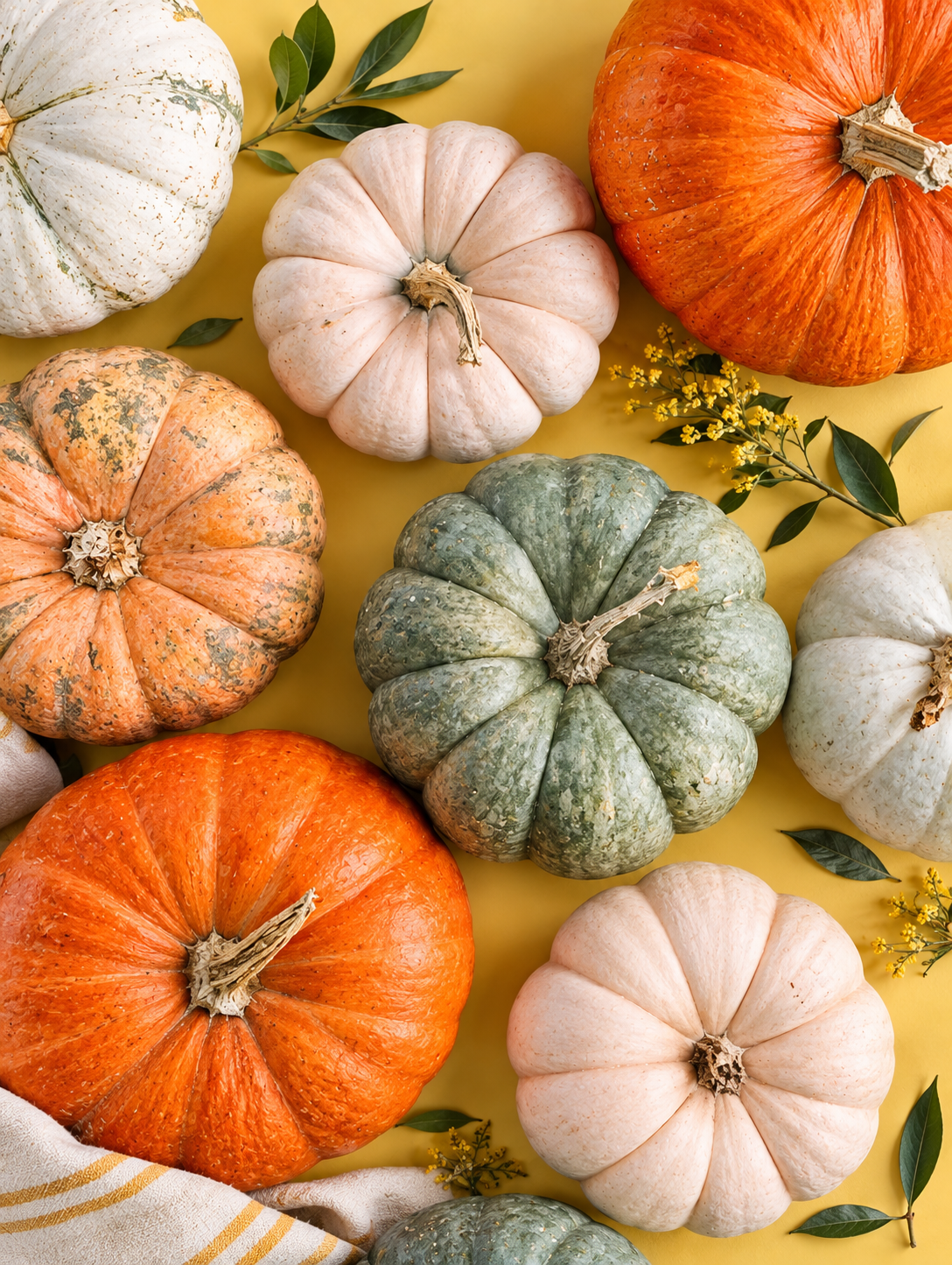
Today the pumpkin family is vast. Cucurbita pepo gives us the small sugar pumpkins ideal for pies, Cucurbita moschata produces the beloved butternut, and Cucurbita maxima breeds the giants — some weighing over a ton. Sadly, many old varieties have vanished, pushed out by hybrids bred for transport and shelf life rather than flavor. The giant specimens, grown for size competitions, have sacrificed nearly all their taste.
Symbolically, the pumpkin has always meant protection and plenty. Immigrants’ families hollowed them for light; farmers stacked them at the door as a promise that the cellar was full. Modern science has confirmed what grandmothers sensed: pumpkins are extraordinary immune boosters, packed with beta-carotene, vitamin C, fiber, and seeds rich in zinc.
Immunity-Boosting Pumpkin Soup (serves 4): Sauté one onion, two cloves of garlic, and a thumb of fresh ginger in olive oil. Add 600 g of roasted pumpkin, 1 tsp turmeric, pour in 1 liter of vegetable broth, simmer 15 minutes, and blend until silky. Season with salt, pepper, and a swirl of cream. Simple, golden, and powerful.
From ancient Mexican fields to modern October tables, the pumpkin remains what it has always been — autumn’s golden guardian.