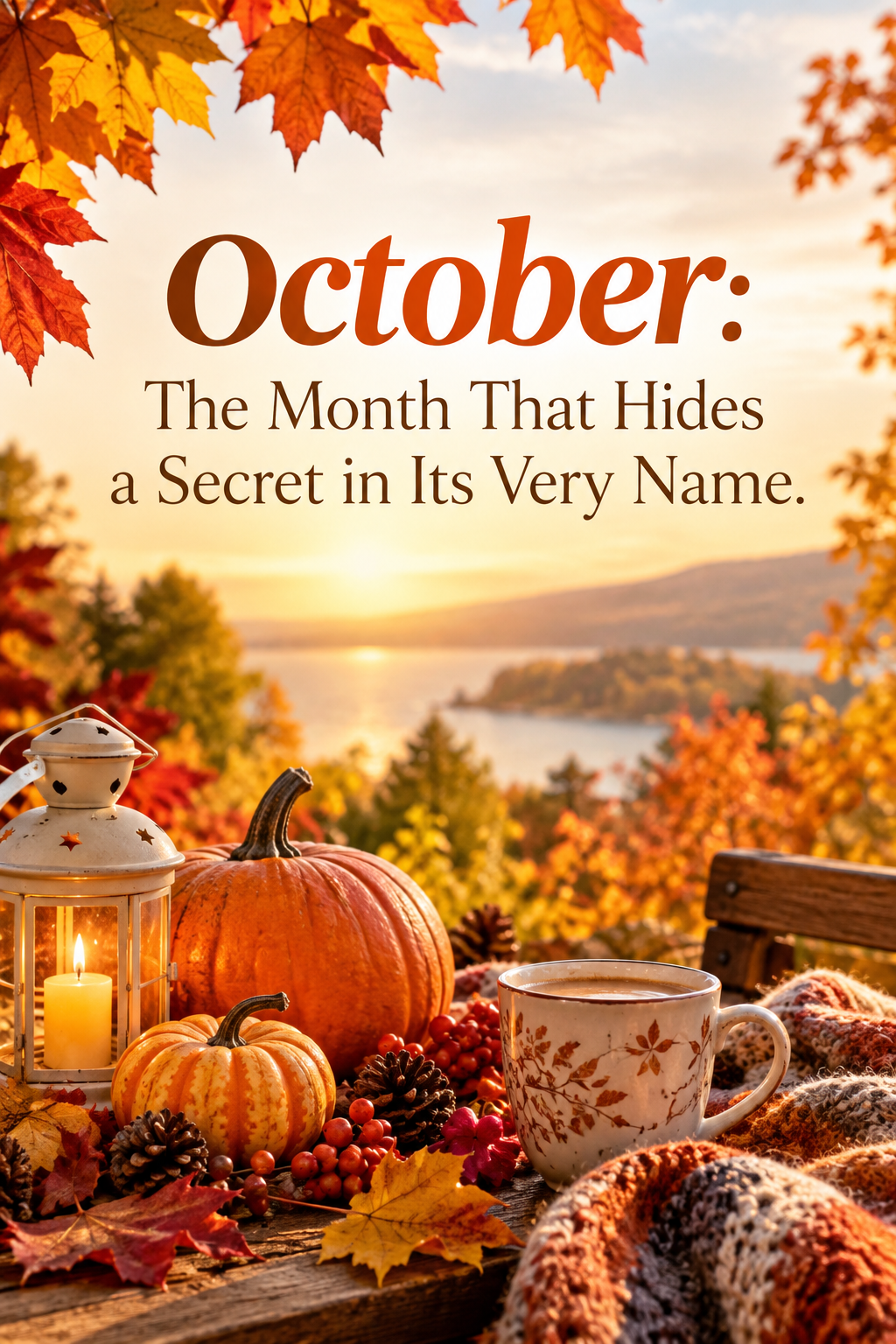
Few months carry a mystery in their own name, but October does — and it has been hiding in plain sight for more than two thousand years. The word comes from the Latin octo, meaning eight, yet October is the tenth month of the year. The riddle dates back to the earliest Roman calendar, which had only ten months and began in March. October truly was the eighth month then, and when King Numa Pompilius later added January and February around 700 BC, shifting the entire calendar, the stubborn name simply refused to change.
The Anglo-Saxons had their own poetic vision of this month, calling it Winterfylleth — “winter’s full moon” — because the first full moon of October marked the official beginning of winter in old England. Long before thermometers and weather forecasts, entire communities planned their survival around that single glowing moonrise.
While the Bible never uses the word October, its pages are saturated with the spirit of this season. “The harvest is past, the summer is ended,” laments the Book of Jeremiah, capturing the bittersweet mood that every October still carries. Genesis speaks of the eternal cycle of “seedtime and harvest, and cold and heat,” and the Jewish festival of Sukkot — the Feast of Tabernacles — transforms October into a time of harvest gratitude, celebrated under open-air shelters as families gather beneath the autumn sky.
Symbolically, October is the great threshold. In astrology, it belongs to two very different energies: Libra’s scales, representing balance and harmony, give way around the 23rd to the intensity of Scorpio. For centuries, people have seen this month as nature’s final act of generosity before rest — the last apples falling, pumpkins swelling in the fields, and vineyards heavy with grapes. Ancient Romans even marked the season with Meditrinalia, a festival of wine-tasting and gratitude for the harvest.
Few people know that the world’s most famous beer celebration began as a wedding party. In October 1810, Munich honored a royal marriage with days of feasting and horse races — and the tradition grew so beloved that it continues to this day. Meanwhile, at the other end of the month, Halloween traces its roots to the Celtic festival of Samhain, when people believed the veil between worlds grew thin — a tradition that turned pumpkins into the most iconic autumn symbol on Earth.
Today, October is consistently ranked among people’s favorite months, especially in North America and Europe, where “leaf peeping” trips draw millions to witness forests ablaze with color. It is also the global month of breast cancer awareness, when the color pink joins the traditional palette of amber, crimson, and gold.
Much has changed since Roman times, of course. An October that once dictated the rhythm of agricultural life now speaks to a world of pumpkin patches, apple orchards for weekend visitors, and cozy cafés. Yet the old heartbeat remains: October is still the month of harvest, reflection, and preparation — a reminder that abundance and letting go are two sides of the same season.