Some of the world’s greatest creations were never planned — they simply happened, and someone had the genius to notice. Tarte Tatin, the caramelized upside-down apple tart that has become the very symbol of French autumn baking, is perhaps the most delicious example of this truth. Its story begins not in a royal kitchen, but in a modest hotel restaurant deep in the apple orchards of France’s Sologne region.
In the 1880s, two unmarried sisters, Stéphanie and Caroline Tatin, ran the Hôtel Tatin in the small town of Lamotte-Beuvron. Stéphanie handled the kitchen while Caroline charmed the guests in the dining room. One busy evening, according to the beloved legend, Stéphanie was rushing between pots and pans when she left her apples cooking in butter and sugar far too long. By the time she noticed, the fruit had softened and caramelized — a potential disaster in any respectable French kitchen.
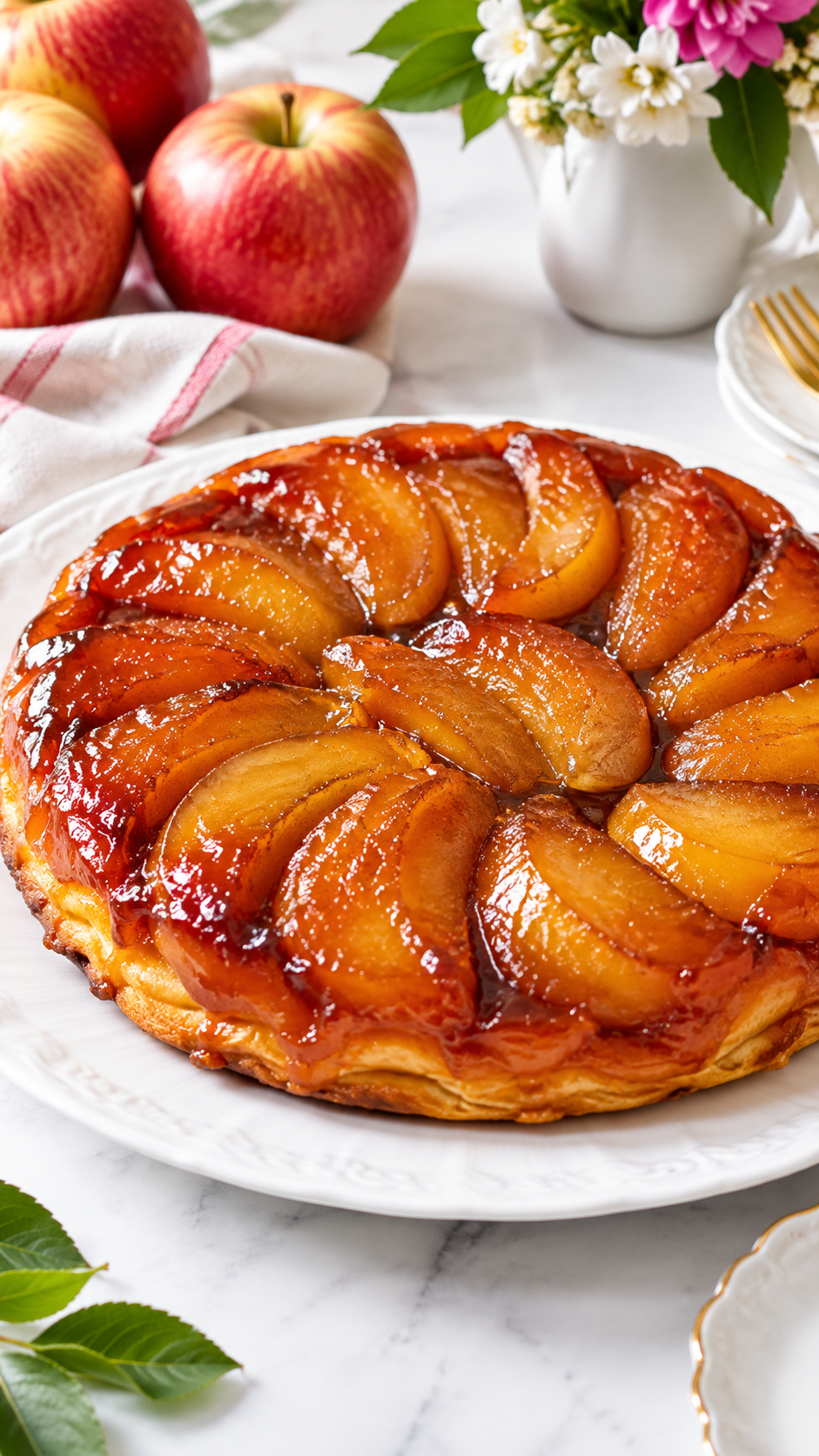
But instead of throwing the pan away, she did something bold. She quickly covered the apples with a sheet of pastry dough and slid the whole pan into the oven, hoping to hide the mistake. When she flipped it onto a serving plate, the tart emerged golden, glistening, and stunning — the apples formed a deep amber crown beneath a crisp buttery crust. The guests were enchanted. The sisters had accidentally invented one of the most elegant desserts in history.
What makes the story even more delightful is that the sisters never gave their creation a grand name. For years it was simply the hotel’s signature tart. Regular visitors began asking for “the Tatin sisters’ tart,” and eventually the name tarte Tatin traveled far beyond Lamotte-Beuvron, carried by travelers and food lovers who couldn’t forget it. The Hôtel Tatin still stands today, and the tart remains its eternal legacy.
There is something deeply fitting that this dessert belongs to autumn. The Sologne region was, and still is, famous for its apple orchards, and the Tatin sisters used the tart local varieties that ripen just as the leaves turn. Caramelizing apples transforms their sharp freshness into honeyed depth — a kind of culinary magic that mirrors the season itself: abundance softened by time, brightness mellowing into warmth.
Symbolically, tarte Tatin represents everything autumn stands for. It honors the harvest without wasting a single fruit. It celebrates imperfection elevated into art — proof that mistakes, embraced with creativity, can become masterpieces. Its inverted form carries a quiet philosophy: sometimes the most beautiful things reveal themselves only when we dare to turn things upside down.
The tart’s influence on modern pastry is enormous. It gave birth to an entire family of upside-down desserts, from pear and pineapple variations to savory versions with tomatoes and onions. Yet nothing has dethroned the original. In French homes, tarte Tatin remains the undisputed queen of Sunday autumn lunches, usually served barely warm with a spoonful of thick cream.
Nearly 140 years after that fateful evening, the story still ends the same way: a slice of golden apples, caramel shining, and the reminder that the sweetest things in life are often the ones we never planned.