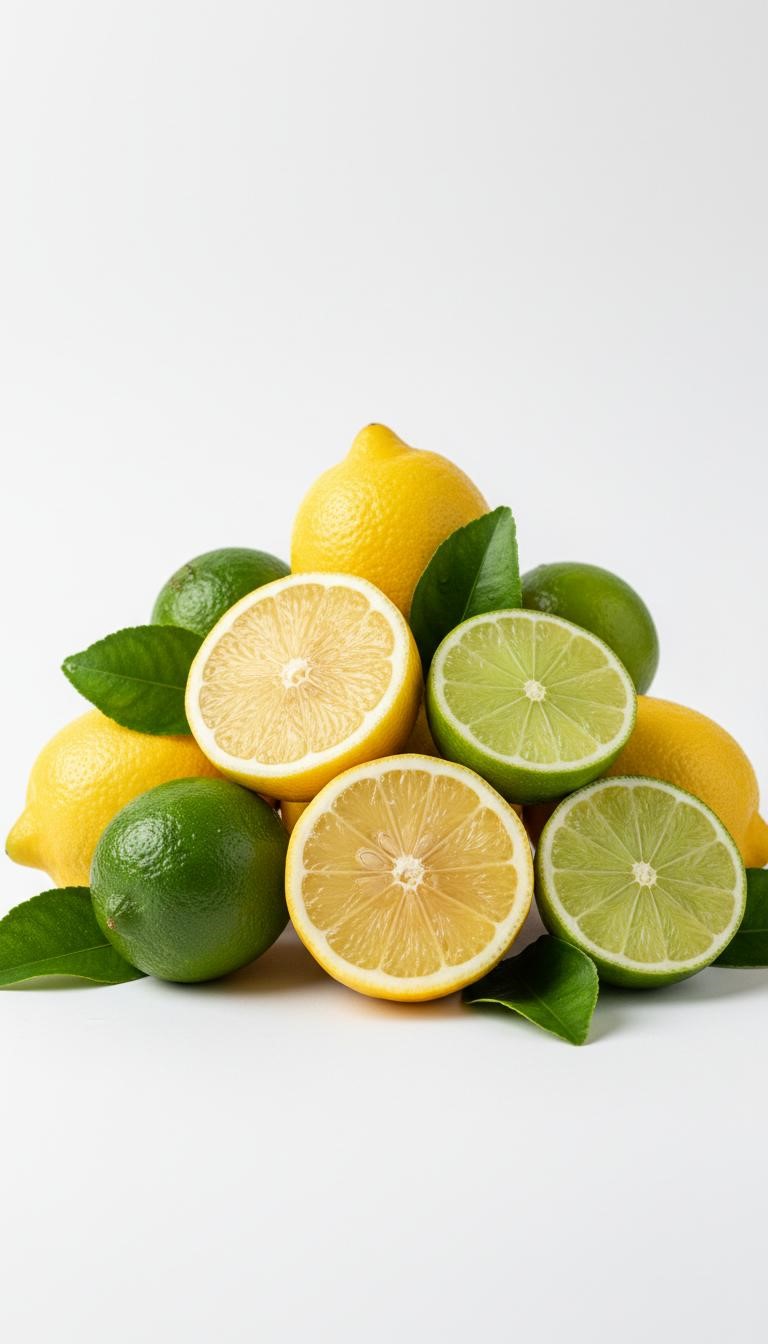
September is the forgotten citrus season. We think of oranges in December, of grapefruit resolutions in January. But the first true citrus harvest begins in late summer and early autumn, when groves in California, Florida, and the Mediterranean begin to release their earliest varieties. The fruit that arrives in September is not the storage-waxed, travel-weary citrus of midwinter. It is young, taut, and explosive with juice. A September lemon does not need to be coaxed. It yields.
The difference is not subtle. Winter lemons, shipped across hemispheres or held in cold storage, can taste flat — polite, but exhausted. Early-autumn fruit still carries the heat of the grove. Cut one open and the spray of oil hits the air before the knife is even clean. The zest is fragrant enough to perfume a room. The juice is sharper, more electric, less willing to be background noise. This is citrus with an opinion.
In the kitchen, September citrus is a bridge. It finishes the last grilled fish of summer with a squeeze that makes the flesh taste like the sea. It sharpens the first batch of roasted root vegetables, preventing them from becoming too earthy, too solemn. It cuts through the richness of the first stews, the first creamy soups, the first pans of slow-braised meat. Where summer herbs are fading and winter spices have not yet fully arrived, lemon and lime hold the middle ground — a kind of culinary punctuation that keeps autumn cooking from drifting into heaviness.
There is a deeper reason we reach for them now, and it has nothing to do with chemistry. When the world outside begins its drift toward brown and gray, the sudden yellow-green shock of a sliced lemon triggers something primal — a reminder that brightness still exists, that acidity still cuts through monotony, that not everything in nature is preparing to sleep. The Scandinavians have long understood this. Their winter tables are never without a jar of preserved lemons or a bright dill-and-lemon sauce to cut through the root vegetables and cured fish of the dark months. They do not fight the season. They punctuate it.
Historically, citrus has always arrived at moments of transition. The ancient Romans shipped lemons north as summer ended, not for medicine, but for flavor — to enliven the preserved meats and fermented grains that would dominate the cold months. Persian cooks have long relied on dried limes to carry the memory of sun into winter stews. The fruit was never merely an ingredient. It was a small, portable piece of summer, hoarded against the gray.
So leave the bowl where you can see it. Not buried in the refrigerator, where the cold dulls the scent, but on the counter, where the morning light can catch the oil in the rind. September is not a month for retreat. It is a month for recalibration. And sometimes, the best way to meet the dark is to keep a little brightness within arm’s reach.