
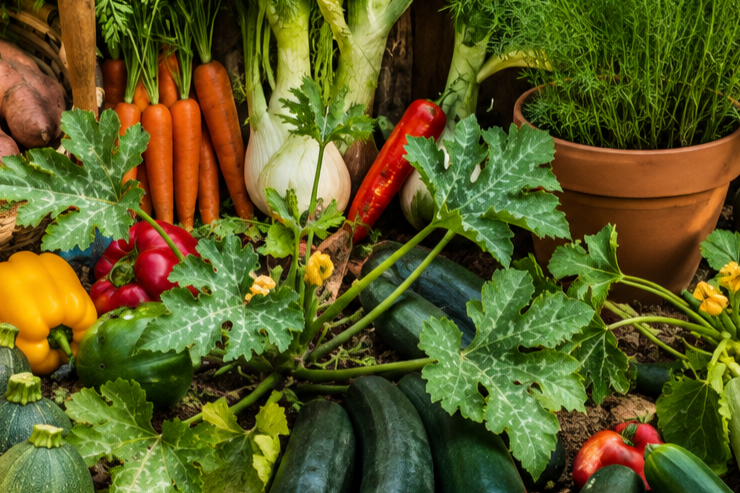
The daylight is shrinking, the morning air carries a chill, and your garden is practically shouting at you. Those tomato vines are bending under the weight of fruit. Zucchini has staged a hostile takeover of every spare inch of soil. Herbs have gone from polite sprigs to woody bushes. It is the glorious, overwhelming reality of late August and early September — the final push before frost claims what remains.
Instead of letting the last wave of summer produce rot on the counter, treat it like the gift it is. Here is how to cook your way through the chaos.
Slow-Roasted Tomato Confit
When you have twenty pounds of tomatoes and zero patience, this is your answer. Preheat your oven to 300°F. Slice four pounds of mixed tomatoes — Roma, cherry, heirloom, whatever is splitting on the vine — into halves or thick wedges. Toss them into a large roasting pan with one cup of olive oil, eight smashed garlic cloves, a handful of fresh thyme, one teaspoon of flaky sea salt, and a generous crack of black pepper. Roast for two to two and a half hours, stirring once, until the tomatoes have collapsed into sweet, jammy pockets with slightly caramelized edges.
Use them immediately over grilled bread with ricotta, or pack them into jars covered in their own oil. They will keep in the refrigerator for two weeks and transform plain pasta, grain bowls, or omelets into something that tastes like late July.
Zucchini Fritters with Lemon Yogurt
If you are sneaking zucchini onto your neighbors’ porches at midnight, stop. Grate them instead. Take two medium zucchini, grate them on the large holes of a box grater, and toss with one teaspoon of salt. Let the mixture sit in a colander for twenty minutes, then squeeze out every drop of liquid you can. This step is non-negotiable — wet zucchini makes soggy fritters.
In a large bowl, combine the drained zucchini with one quarter cup of all-purpose flour, one quarter cup of grated Parmesan, two beaten eggs, two minced garlic cloves, and a handful of chopped fresh dill. Form into small patties and fry in a skillet with olive oil over medium heat, three minutes per side, until deeply golden.
Stir together one cup of Greek yogurt, the zest and juice of half a lemon, and a pinch of salt for dipping. These disappear in minutes and freeze surprisingly well.
Roasted Pepper and White Bean Dip
Peppers are at their sweetest right now. Place six large bell peppers — any color — directly over a gas flame or under your broiler. Char them until the skins are black and blistered all over, then transfer to a bowl and cover with plastic wrap. Let them steam for fifteen minutes; the skins will slide off effortlessly.
Tear the peeled peppers into strips, discarding seeds and stems. In a food processor, blend the peppers with one can of drained cannellini beans, two tablespoons of tahini, one tablespoon of red wine vinegar, one clove of raw garlic, and a quarter cup of good olive oil. Season with salt and smoked paprika. It is smoky, creamy, and perfect as a sandwich spread or a dip for raw vegetables.
Herb Pesto Cubes
Before the first frost turns your basil into black slime, harvest everything. Blend four cups of packed basil leaves with one third cup of pine nuts or walnuts, two peeled garlic cloves, one half cup of grated Pecorino Romano, and one half teaspoon of salt. With the motor running, drizzle in two thirds cup of olive oil until smooth.
Spoon the pesto into ice cube trays and freeze. Once solid, pop them into a freezer bag. One cube equals one generous serving. Drop into soups, whisk into vinaigrettes, or melt over roasted vegetables in January when fresh basil is a distant memory.
The end of summer is not an ending. It is a transfer — from soil to jar, from vine to freezer, from garden to table. Cook now. Preserve what you can. The cold months will taste better for it.