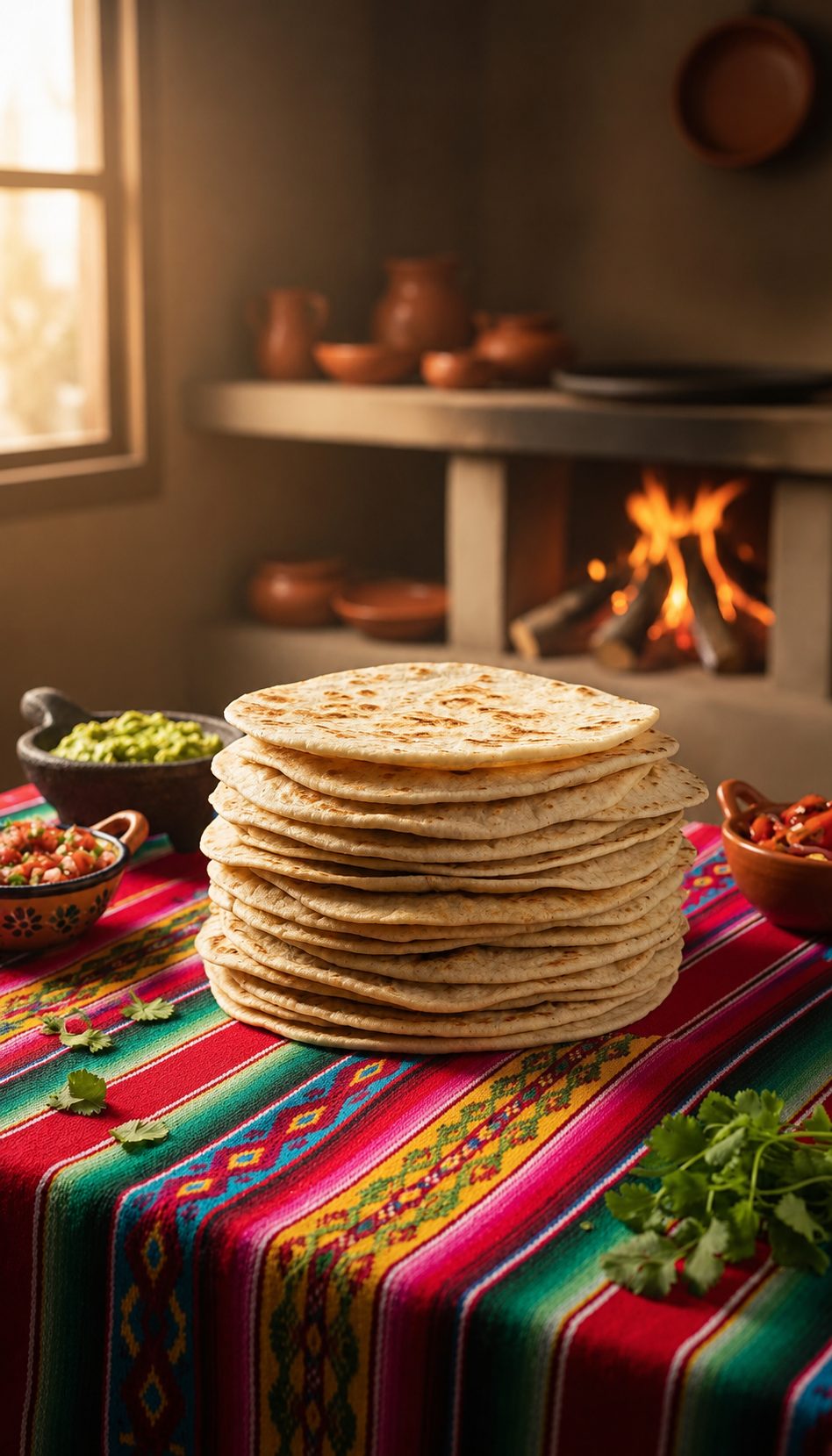
The flat, round bread tlaxcalli—meaning simply “something baked”—was not a culinary innovation but a sacred necessity, the edible foundation upon which one of the world’s great civilizations was built. Corn, in the Mesoamerican cosmos, was not merely food but the very substance from which the gods had fashioned humanity. To eat a tortilla was to consume one’s own origin story, to participate in a cycle of cultivation and reverence that stretched back millennia.
The process that made this possible—nixtamalization—was itself a form of alchemy. Dried corn kernels were boiled in water mixed with wood ash or limestone, a treatment that softened the hulls, released bound niacin, and transformed the grain into a pliable dough called masa. Without this step, corn is nutritionally deficient and physically stubborn. With it, corn becomes tortilla, tamale, and atole—the trinity of Mesoamerican sustenance. The technique was so essential that the Nahuatl word for cooking pot, comalli, gave its name to the flat griddle upon which tortillas are still cooked today.
When Hernán Cortés arrived in 1519, found markets overflowing with tortillas stacked like coins, served with every conceivable topping from roasted insects to spiced chocolate. Bernal Díaz del Castillo, chronicler of the expedition, described these breads with the puzzled fascination of a man encountering something entirely outside his experience. The Spanish, accustomed to wheat and olive oil, initially dismissed corn as inferior grain fit only for natives. Yet necessity and adaptation soon intervened. In the absence of wheat, soldiers and settlers learned to eat tortillas, and by the late 1500s, the bread had been incorporated into colonial cuisine, often serving as the host for improvised Eucharistic celebrations in regions where wheat flour was scarce.
The daily bread of the Lord’s Prayer—“give us this day our daily bread”—finds its Mesoamerican echo in the tortilla, which was prepared fresh for every meal, sometimes for every individual diner. Catholic missionaries recognized this resonance and consciously adapted indigenous corn rituals to Christian frameworks, allowing the tortilla to survive colonization as something more than mere sustenance.
The flour tortilla emerged later, a child of northern geography. Wheat grew poorly in the tropical lowlands where corn thrived, but in the cooler, drier climate of Sonora and Chihuahua, Spanish settlers successfully cultivated small grains. The resulting flour tortilla was softer, more pliable, and more durable than its corn ancestor, qualities that made it ideal for the large, filled burritos that would eventually define Tex-Mex cuisine. By the early twentieth century, flour tortillas had crossed into Texas and New Mexico, carried by Mexican immigrants and adapted to American tastes with the addition of baking powder and shortening.
Extremes of tortilla culture are both monumental and intimate. The largest tortilla ever produced was a giant corn tortilla measuring over three meters in diameter, created in Mexico as a promotional stunt that required a custom-built comal and a team of six to flip. At the opposite extreme, the “street tortilla” of Mexico City—barely fifteen centimeters across, served hot from a vendor’s wicker basket wrapped in a cloth to retain steam—represents the bread at its most essential, a few bites of warmth in a folded paper towel. The most expensive tortilla on record was likely served at a luxury resort in Los Cabos, incorporating blue corn, edible gold leaf, and black truffle oil—a gastronomic absurdity that would have baffled the Aztec grandmother who first pressed masa between her palms.
Today’s tortilla landscape is vast and fractured. In Mexico, corn remains king, with regional varieties ranging from the thick, pillowy gordita of the north to the thin, delicate taquera of the central plateau. The hand-patted tortilla, cooked over wood fire on a clay comal, survives in indigenous communities and high-end restaurants that market “authenticity” to tourists. Flour tortillas dominate the American market, their softness making them ideal for burritos, wraps, and quesadillas. The “wrap”—a large flour tortilla folded around non-Mexican fillings—has become a global lunch staple, while the hard taco shell, a fried U-shaped corn tortilla, is an American invention rarely seen in Mexico. Yet some traditions have faded. The ancient practice of grinding nixtamal by hand on a metate stone has largely disappeared, replaced by electric mills and mass-produced masa harina. The three-color ceremonial tortilla—white, yellow, and blue corn representing different spiritual realms—survives now only in indigenous festivals and heritage food demonstrations.
What preceded the modern tortilla was the wild teosinte grass of southern Mexico, the ancestor of all domesticated corn, whose tiny, hard seeds bore little resemblance to the plump kernels that would eventually feed empires. The leap from wild grass to global staple required thousands of years of selective breeding, the biochemical genius of nixtamalization, and the historical accidents of migration.
Today, the tortilla industry generates over $12 billion annually in the United States alone, with consumption surpassing that of sliced bread in many households. It symbolizes comfort, tradition, and the adaptability of immigrant cuisine. What changed most profoundly is the context. Once, the tortilla was made fresh for every meal by hands that knew the exact pressure and thickness required. Now, it arrives in plastic bags, preserved for weeks, heated in microwaves rather than over open flames. The comal smoke that once perfumed every Mexican kitchen has been replaced by the beep of a timer. Yet the essential gesture remains: a flat circle of corn or wheat, warmed and folded, carrying something delicious from plate to mouth. The Aztec merchant who sold tlaxcalli in the great market of Tenochtitlan would recognize the shape, if not the packaging. The tortilla has circled the globe, but it has never stopped being, at its heart, a simple, perfect circle of bread.