
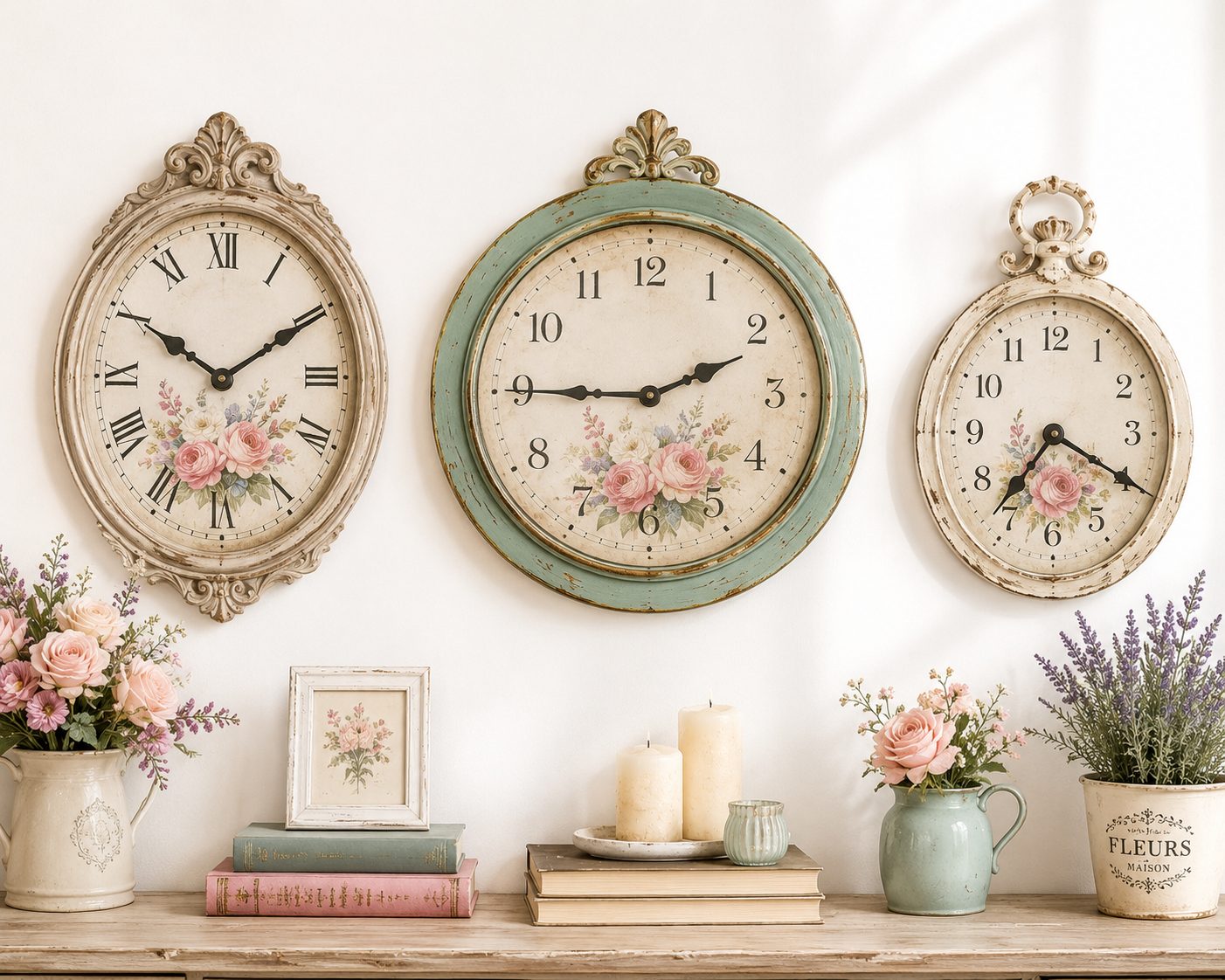
Before the clock, time was not a number. It was a color—the gold of late afternoon, the blue of deep winter, the particular silence that announces dawn. Humans measured duration by the body, by the season, by the ripening of grain and the migration of birds. The clock changed this. It transformed time from experience into quantity, from rhythm into commodity, and in doing so, became one of the most consequential inventions in the history of civilization. The small circle on your wall, with its patient hands and indifferent tick, is the descendant of a revolution that began five thousand years ago and shows no sign of ending.
The earliest timekeepers were not mechanical but astronomical. The ancient Egyptians divided day and night into twelve segments each, using obelisks whose shadows traced the sun’s passage. The Babylonians, working in base sixty, gave us the 360-degree circle and the 60-minute hour, mathematical legacies that persist in every clock face today. Water clocks—clepsydrae—appeared in Egypt and Mesopotamia around 1500 BCE, measuring time by the regulated flow of liquid from one vessel to another. These were not precise instruments; they were approximations, tools for temple rituals and irrigation schedules rather than personal discipline.
The Bible treats time with a reverence that predates mechanical measurement. The Book of Genesis establishes the seven-day week, with the Sabbath as its sanctified culmination. The Psalms speak of numbering our days that we may gain a heart of wisdom—a verse that resonates strangely with modern time-management culture, though the biblical intent was spiritual rather than productive. Ecclesiastes declares that “to everything there is a season,” asserting a cyclical, agricultural rhythm rather than the linear, mechanical progression that clocks would later impose. The prophets measured time in generations and divine appointments, not in hours and minutes. The clock, when it finally arrived, would challenge this theological framework by suggesting that time could be owned rather than received.
The mechanical clock emerged in medieval Europe, probably in the late 13th century, though its exact origins are obscured by the secrecy of monastic workshops. The first documented mechanical clock was installed in the tower of the Benedictine abbey of St. Albans in England around 1280, built by the abbot Richard of Wallingford. These early clocks had no faces; they struck bells to mark the canonical hours of prayer, serving the religious rather than the commercial life of the community. The clock was originally a servant of the church, a tool for regulating devotion, not labor.
The transformation came with the Renaissance and the rise of urban commerce. By the 14th century, public clocks with visible faces were appearing in Italian city-states, their towers dominating town squares and asserting civic pride. The clock became an instrument of social coordination, regulating market hours, work shifts, and municipal gatherings.
The domestic clock arrived in the 17th and 18th centuries, as spring-driven mechanisms became small and affordable enough for private homes. The grandfather clock, with its long pendulum and resonant chime, became a fixture of the bourgeois parlor, asserting respectability and punctuality. The pocket watch, perfected by English craftsmen like Thomas Tompion and George Graham, allowed time to be carried on the body, transforming the gentleman’s waistcoat into a mobile timekeeping station. The wristwatch, initially dismissed as a feminine novelty in the late 19th century, became standard military equipment during World War I, when soldiers needed to coordinate artillery barrages without fumbling for a pocket watch in the mud of the trenches.
The taxonomy of clocks today is vast and often nostalgic. Mechanical clocks, with their mainsprings and escapements, persist as luxury objects and artisanal crafts, their ticking a deliberate anachronism in the digital age. Quartz clocks, introduced by Seiko in 1969, revolutionized accuracy by using the piezoelectric properties of quartz crystals to regulate oscillation, rendering mechanical precision obsolete for everyday purposes. Atomic clocks, which measure time by the vibration of cesium atoms, now define the international second with an accuracy that will neither gain nor lose a second in millions of years. The smartphone in your pocket contains a clock more precise than anything available to Newton or Galileo, yet we still hang mechanical clocks on our walls for the comfort of their visible, audible passage.
What has changed most dramatically is the clock’s relationship to presence. The mechanical clock demanded attention; its ticking filled the room, its chiming interrupted conversation, its winding required daily ritual. The digital clock, by contrast, is silent and passive, displaying time only when summoned. The smartwatch has transformed timekeeping into a stream of notifications, the clock now merely one function among dozens, competing with messages, health metrics, and weather updates for attention. We have more precise time than ever, and less awareness of its passage.
Symbolically, the clock remains one of the most loaded objects in human culture. It represents mortality—the “clock ticking” is a universal metaphor for finite life. It represents order, discipline, and the industrial rationalization of human experience. It represents modernity itself, the triumph of measurement over mystery. Yet it also represents something older and more tender: the desire to mark presence, to say we were here, at this moment, together. The grandfather clock that chimes in an empty house is not merely measuring absence. It is keeping time until someone returns.
From an Egyptian shadow to a cesium atom’s vibration, the clock has proven that humanity’s deepest anxiety is not death but uncertainty. We cannot control time, but we can measure it, and in measurement, we find the illusion of mastery. The small circle on your wall does not tell you what time it is. It tells you that time exists, that it passes, and that you are still here to witness it.