The Red Teardrop: A History of the Strawberry and the Longing It Left Behind
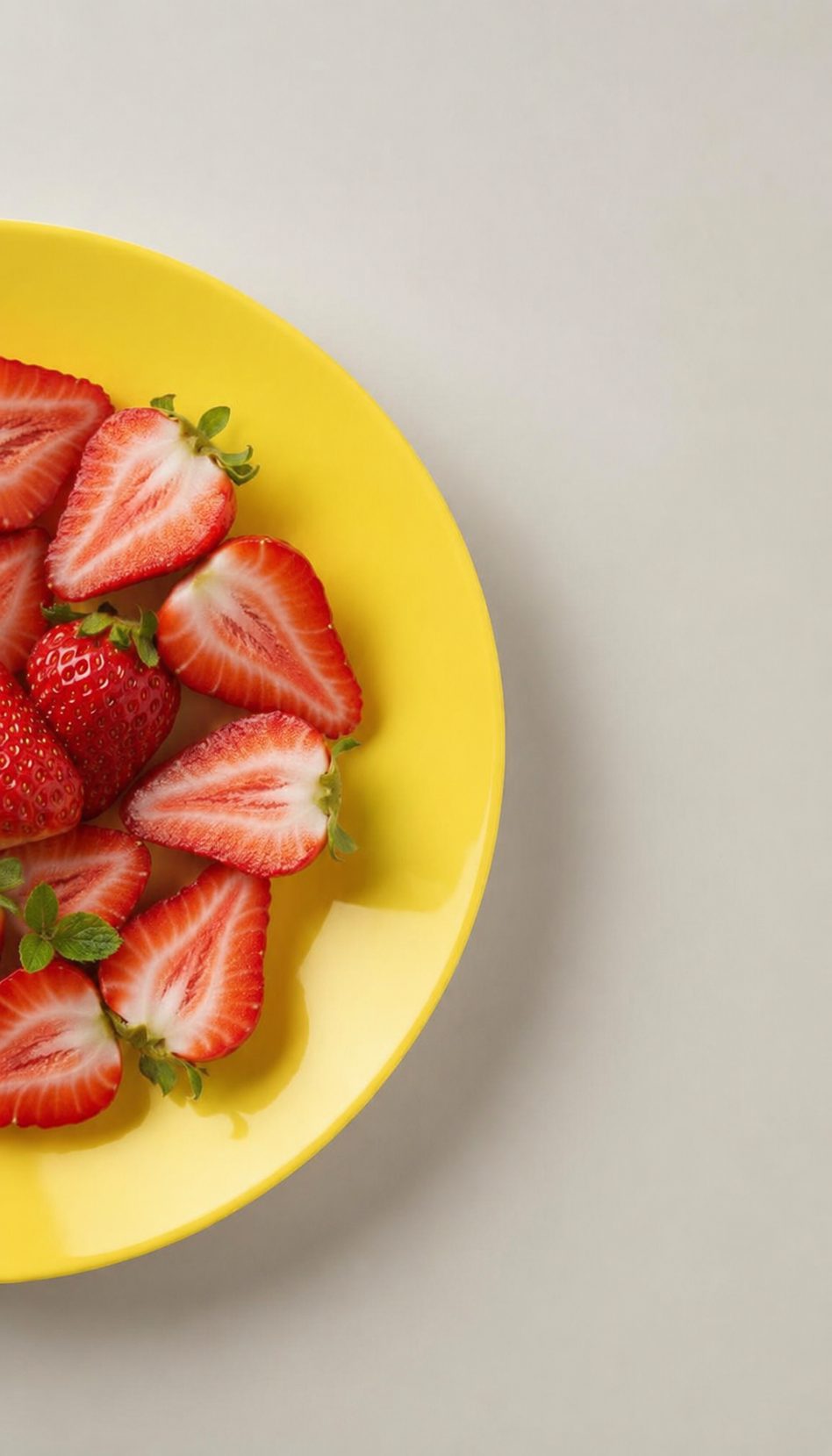
The strawberry is a fruit that refuses to be serious. It wears its seeds on the outside, as if the usual rules of modesty do not apply. It is heart-shaped, or something close to it, and its color is the red of theater curtains, of warning signs, of blood before it dries. Yet for all its visual drama, the strawberry is botanically a fraud. It is not a berry at all. The true fruits are the tiny dry achenes dotting its surface—those specks we mistake for seeds—while the fleshy red part is merely the swollen receptacle, the plant’s base pretending to be the prize. The strawberry, in other words, is a trick. It offers us something that is not what it seems, and we have been falling for it for millennia.
The wild strawberry, Fragaria vesca, is native to Europe, Asia, and North America, and its history with humans stretches back to the Paleolithic. Unlike many fruits that required domestication to become palatable, the wild strawberry was already perfect—small, intensely flavored, and aromatic in a way that modern varieties have largely lost. The Romans gathered them from the woods and used them medicinally, though they never cultivated the plant systematically. Pliny the Elder mentions strawberries in his Naturalis Historia, but with the casualness of a man describing something abundant and unremarkable. The strawberry was a woodland snack, a child’s treat, not a crop worthy of agricultural attention.
The Bible does not mention the strawberry directly. The Hebrew scriptures speak of the “fruit of the field” and the “sweet fruits” of the land, but the specific identification of any small red fruit is complicated by translation history and botanical uncertainty. Some scholars have suggested that the “berry” of Isaiah 34:4 might refer to wild strawberries, but this is speculative. The strawberry’s absence from biblical narrative is not surprising; it was a temperate woodland fruit, not a cultivated staple of the Near Eastern agricultural world. Its spiritual significance developed later, primarily in medieval European Christianity, where the three-leaved plant became associated with the Trinity and the blood-red fruit with the Passion of Christ.
The strawberry’s transformation from woodland curiosity to global commodity required the collision of two continents. In the early 18th century, a French spy and engineer named Amédée-François Frézier was sent to Chile to map Spanish colonial defenses. While there, he encountered Fragaria chiloensis, a wild strawberry species with unusually large fruit, and brought five plants back to France in 1714. These Chilean strawberries were impressive in size but produced few offspring when planted alone. Meanwhile, North American settlers had brought Fragaria virginiana to Europe, a species that bore abundant fruit but of modest size. The accidental or deliberate crossing of these two New World species in French and English gardens produced Fragaria x ananassa—the modern garden strawberry, larger, sweeter, and more productive than either parent.
The taxonomy of strawberries today is bewildering. Thousands of varieties have been developed for specific climates, seasons, and purposes. The June-bearing varieties, which produce a single, concentrated harvest in late spring, dominate commercial agriculture in temperate regions. The ever-bearing or day-neutral varieties, which fruit intermittently throughout the growing season, are favored by home gardeners and some greenhouse operations. The alpine strawberry, Fragaria vesca, persists as a gourmet niche product, its tiny, intensely aromatic fruits prized by chefs and connoisseurs who find modern varieties bland by comparison. The white strawberry, developed in Japan and now spreading globally, offers a pale, pineapple-like flavor that has become a status symbol in luxury fruit markets.
Geographically, China is now the world’s largest producer of strawberries by a wide margin, followed by the United States, Mexico, and Turkey. California’s Central Valley and the Watsonville-Salinas region produce roughly 90 percent of American strawberries, an industry dependent on immigrant labor, intensive pesticide use, and varieties bred specifically for shipping durability rather than flavor. The result is the supermarket strawberry: large, uniformly red, photographically perfect, and often disappointingly watery. The variety that travels best is not the variety that tastes best, and this tension defines modern strawberry consumption.
What has changed most dramatically is the strawberry’s relationship to seasonality. For most of human history, the strawberry was a brief, ecstatic encounter—a few weeks in late spring when the woods and meadows offered their gift, and then nothing until the following year. Preserving strawberries was difficult; they do not dry well, and their high water content makes them challenging to store. Jam, that alchemical transformation of fruit and sugar, was the primary preservation method, and strawberry jam became a Victorian obsession, with recipes proliferating in domestic manuals and competitions held at agricultural fairs. Today, global supply chains and greenhouse cultivation have made fresh strawberries available year-round in wealthy nations, though the winter berries flown in from Mexico or Spain bear little resemblance to the wild fruit that once defined the season.
The strawberry’s nutritional reputation has also evolved. Once valued primarily for pleasure, it is now marketed as a superfood, rich in vitamin C, manganese, and antioxidants—particularly ellagic acid and anthocyanins, which give the fruit its red color and have been studied for potential anti-inflammatory and anti-cancer properties. The modern wellness industry has embraced the strawberry with the same fervor it applies to blueberries and açaí, though the scientific evidence for many claimed benefits remains preliminary.
Symbolically, the strawberry carries a weight of meaning that belies its modest size. In medieval art, it represented righteousness and perfect nobility, its three leaves echoing the Trinity and its downward-hanging fruit suggesting humility. In Renaissance painting, strawberries appear in the hands of the Virgin Mary or scattered across the foreground of Annunciation scenes, signaling the sweetness of divine grace. In European folklore, the strawberry was associated with love and fertility, and double strawberries—those with two fused fruits—were prized as love charms. The French tradition of serving strawberries with cream at wedding feasts persists in the English summer ritual of strawberries and cream at Wimbledon, a pairing so iconic it has become synonymous with the tournament itself.
From a woodland floor to a global supply chain, the strawberry has proven that the most seductive foods are often the most deceptive. It is not a berry. It is not a single fruit. It is a swollen base wearing its seeds like jewelry, offering sweetness in exchange for dispersal. We have transformed it, enlarged it, shipped it across oceans, and diluted its flavor in the process. Yet every June, in the fields where wild strawberries still grow, the original magic persists—small, fleeting, and impossible to improve.