
An Accident That Became an Icon
Every great food story begins with a small act of nature — and grapefruit is no exception. Somewhere on the sun-drenched island of Barbados in the early 1700s, nature quietly performed an experiment of its own: the sweet orange crossed paths with the pomelo, a giant, thick-skinned citrus from Southeast Asia. From that accidental encounter grew a tree with golden orbs, neither as gentle as the orange nor as imposing as the pomelo. The locals called it “forbidden fruit” — a name that suited its bittersweet personality perfectly.
For nearly a century, grapefruit remained a Caribbean curiosity, admired by botanists but unknown to the world. It wasn’t until the 1820s that the fruit sailed to Florida, where the warm, humid climate embraced it like a long-lost relative. Within decades, orchards stretched across the American South, and a new citrus empire quietly took root.
A Jewel Hidden in the Rind
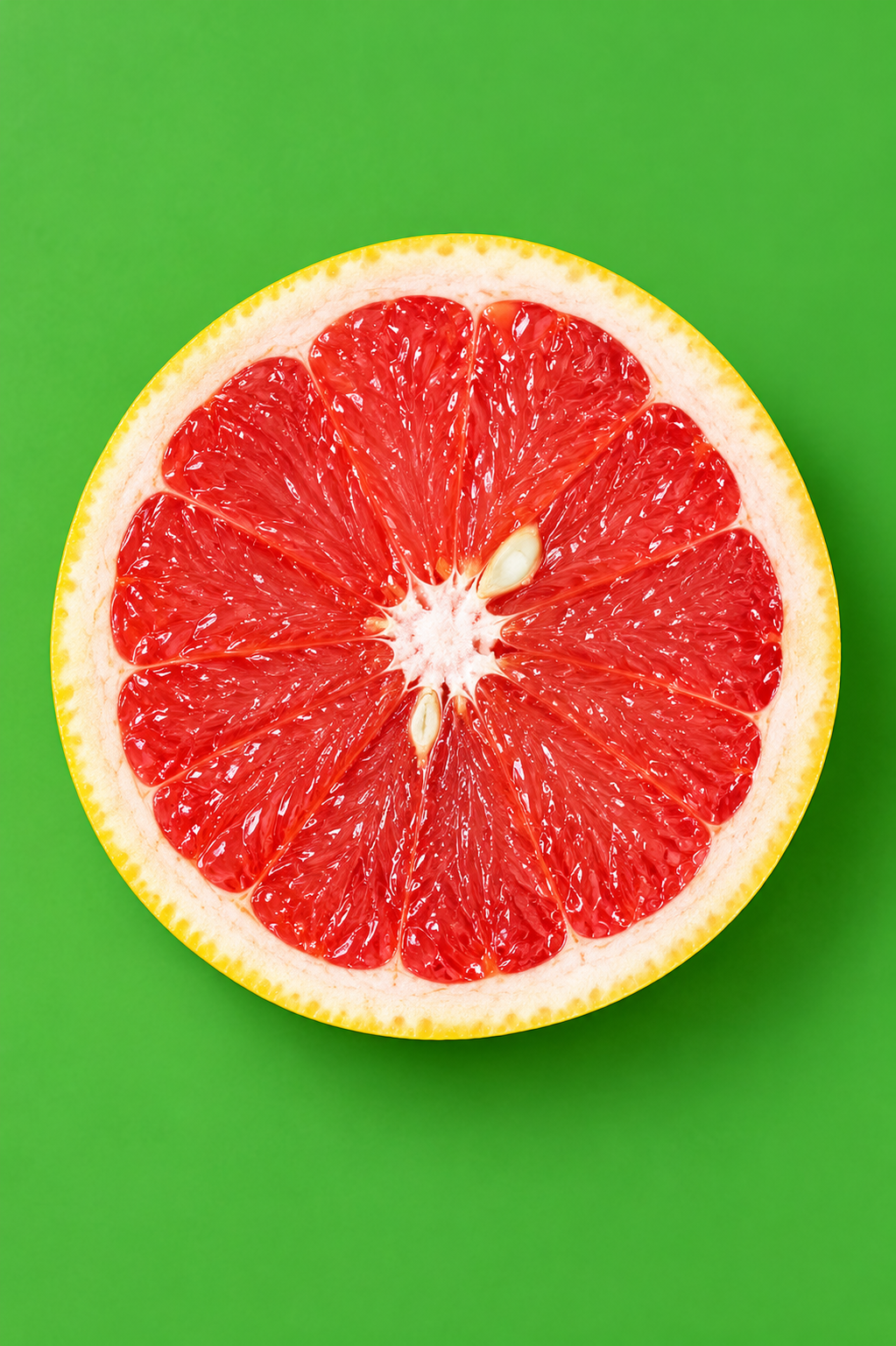
The true magic of grapefruit lies in contrast. Beneath its thick, sun-yellow armor hides a world of translucent vesicles — little sacks of juice that explode with a flavor no other citrus can imitate: sweet at first, then a pleasant bitterness that lingers like a memory. Some compare it to edible sunshine with a rebellious streak.
The fruit kept one more secret for a long time. In 1929, on a quiet ranch in Texas, a simple mutation transformed everything: a tree produced fruit with blush-red flesh instead of pale gold. The Ruby Red grapefruit was born, and with it a new era. Growers raced to cultivate pink and deep crimson varieties, turning the breakfast table into a canvas of color. Texas proudly declared grapefruit its state fruit, and by the 1950s, half of America was starting its morning with a halved grapefruit and a serrated spoon.
From Grove to Table
Growing grapefruit is an exercise in patience and precision. The trees demand subtropical warmth, well-drained soil, and up to eight hours of daily sun — yet a single mature tree can reward its keeper with hundreds of fruits each year. Harvesters still pick much of the crop by hand, choosing each fruit at the exact moment when sugar and acidity reach their perfect balance.
And the fruit gives back generously. Beyond the breakfast bowl, grapefruit has conquered kitchens worldwide: its juice brightens salads and ceviches, its zest perfumes cakes and cocktails, its segments dance between salty cheeses and fresh herbs. Nutritionists praise it as a treasure of vitamin C, antioxidants, and hydration — a true gift of wellness wrapped in golden peel.
A Fruit That Refuses to Be Forgotten
Today, grapefruit travels from the groves of Florida and Texas to markets on every continent. It has survived frosts, changing fashions, and a hundred trends that promised to replace it. Yet it endures — because some flavors are simply irreplaceable.
Every time we cut one in half, we repeat a small ritual that began three centuries ago on a Caribbean island: the knife through the rind, the burst of citrus aroma, the first bittersweet spoonful. The living history of grapefruit is written not in books, but in mornings — one golden segment at a time.