Slicing into a dry-cured sausage is an act of edible archaeology. That firm resistance against the blade, the marbled fat glistening like ivory in garnet, the sharp bloom of fermentation on the tongue — it represents thousands of years of human ingenuity in outsmarting decay. Long before refrigeration, salt, smoke, and time were the only barriers standing between a butchered animal and starvation. The sausage was never merely food; it was a contract with the future, a promise that tomorrow’s hunger could be answered by today’s patience.
The true predecessor to every salami stick and pepperoni ring was simply a strip of salted flesh hung over a slow fire. But the leap from dried meat to encased sausage required two crucial discoveries: salt’s ability to draw moisture and inhibit bacteria, and the intestinal casing’s miraculous capacity to hold ground meat while allowing breath and drainage. Ancient Sumerians were curing meat by 3000 BCE, yet the first recognizable sausages likely emerged in the Mediterranean around 1000 BCE. Homer’s Odyssey contains what many culinary historians interpret as the earliest literary nod to sausage-making — a reference to a stomach stuffed with blood and fat, turned over flames at a feast. By the Roman era, the craft had become sophisticated. The poet Martial grumbled about cheap street sausages sold to plebeians, while the cookbook of Apicius recorded recipes for forcemeats stuffed into casings and smoked over bay. The lucanica, named for the Lucania region of southern Italy, is considered the direct ancestor of modern salami: ground pork, aggressively spiced with pepper and cumin, then fermented and dried until rock-hard.
After Rome’s collapse, sausage-making fragmented into fiercely guarded regional traditions. Medieval butchers protected spice blends as trade secrets, and guilds regulated who could produce which variety. The Columbian Exchange transformed the sausage landscape forever — chili peppers from the Americas revolutionized Spanish and Portuguese curing, giving birth to chorizo and linguiça, while black pepper became affordable enough to flavor Italian salami for the working class. The Industrial Revolution brought standardization and mass production, but it also birthed the pepperoni stick in early 20th-century America — an Italian-American innovation designed specifically for pizza topping and deli counters, now consumed by the metric ton globally.
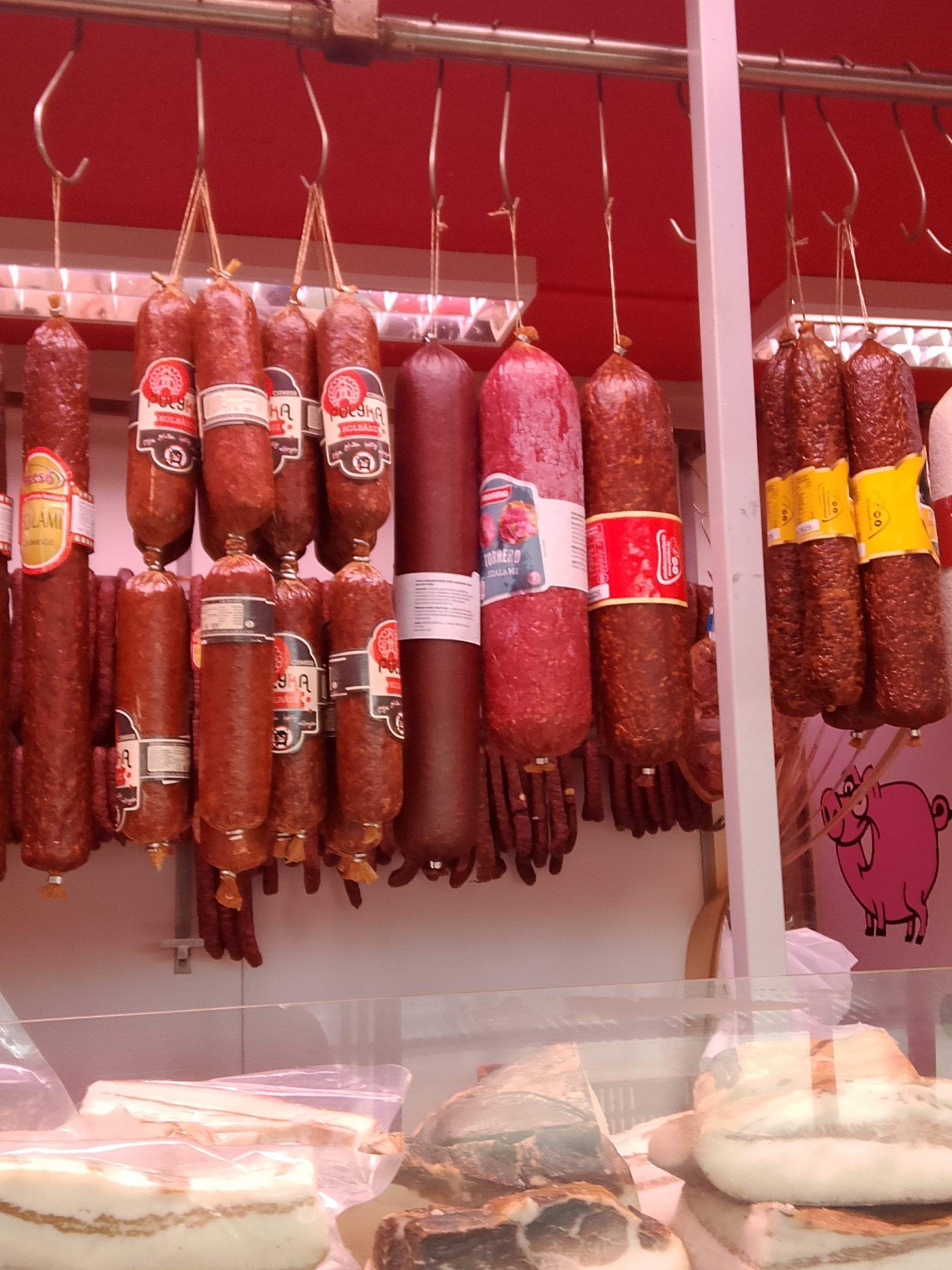
Walk into any European deli today and the diversity is staggering. Italian Salami Milano and Felino offer refined, mild profiles with distinct fat cubes that melt on the tongue. Spanish Chorizo Iberico, cured with smoked paprika, carries a deep crimson color and layered spice that reflects centuries of oak-forest pig husbandry. French Saucisson sec relies on little more than pork, salt, and time, achieving complexity through restraint. German Landjäger delivers a dense, portable snack historically carried by hunters and soldiers in leather pouches. American pepperoni, meanwhile, dominates global pizza culture with its smoky, slightly spicy snap and characteristic orange grease.
Yet this abundance masks a quiet extinction. Industrial hygiene regulations, while undeniably saving lives, have erased dozens of heritage varieties from existence. Traditional natural casings are routinely replaced with collagen tubes. Artisan smoking over hardwood has surrendered to liquid smoke flavoring. The European Union’s standardized meat-content rules forced small producers to abandon ancestral recipes that included wine, milk powder, or regional offal. Climate-controlled drying rooms have replaced the mountain air and seasonal humidity that once gave each valley’s sausage its unique microbial fingerprint.

Symbolically, the sausage carries surprisingly potent cultural weight. Medieval carnival celebrations featured oversized sausages as fertility symbols and instruments of social satire — the peasant’s humble food mocking aristocratic pretension. In Eastern European villages, the annual winter pig slaughter and communal sausage-making marked the calendar more reliably than any holiday, binding communities through shared labor and shared survival. Today, a curated charcuterie board signals cosmopolitan leisure; the cured slice has transformed from peasant insurance policy against famine to an Instagram-worthy lifestyle accessory.
The cured sausage industry generates tens of billions of dollars annually and underpins entire culinary identities. It enabled maritime exploration — sailors carried preserved meat on months-long voyages. It fueled urbanization — factory workers needed calorie-dense, shelf-stable protein that required no cooking. Now it drives gastronomic tourism, with travelers planning itineraries around Italian salumi trails and Spanish chorizo routes.