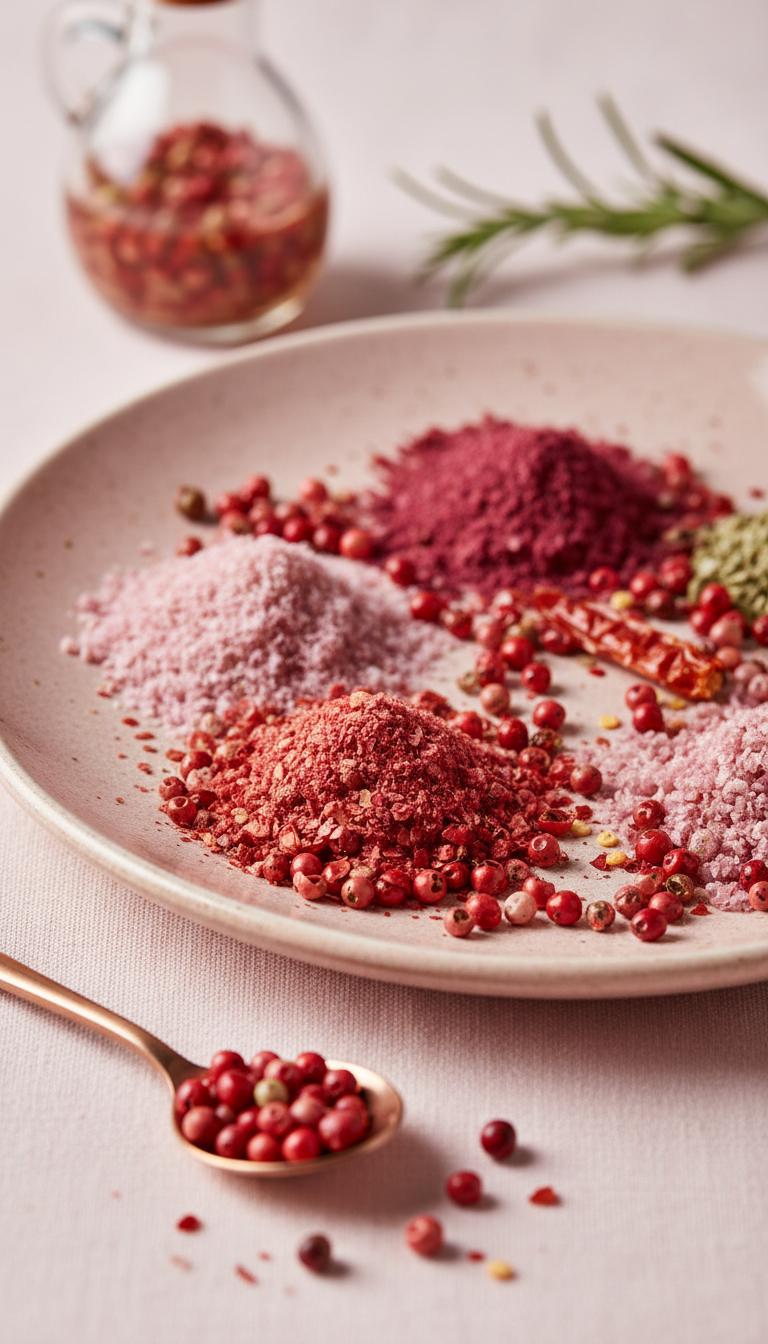
Pink peppercorns are not peppercorns at all. This is the first deception in a story layered with botanical confusion, culinary glamour, and the human tendency to name things by resemblance rather than truth. True pepper belongs to the genus Piper, native to the steamy monsoon forests of India’s Malabar Coast. Pink peppercorns, by contrast, are the dried berries of the Peruvian pepper tree, Schinus molle, a member of the cashew family that grows wild across the Andean highlands and has been naturalized in Mediterranean climates from California to Provence. The pink peppercorn looks like a peppercorn, crackles like a peppercorn, and is sold alongside peppercorns in gourmet shops, but it is a botanical impostor, a beautiful fraud that has fooled the culinary world for over a century.
The pink peppercorn arrived in Europe centuries after the biblical era, carried by Spanish and Portuguese colonists who recognized its ornamental value before its culinary potential. By the nineteenth century, French chefs had begun using pink peppercorns as a decorative garnish, their delicate pink hue and subtle resinous flavor adding visual drama to cream sauces and patés without the aggressive heat of true pepper.
The pink peppercorn gained international prominence in the 1970s, when French nouvelle cuisine embraced visual minimalism and pastel colors. Chef Michel Guérard and his contemporaries scattered pink peppercorns across plates like edible jewels, transforming a landscaping tree’s berries into a status symbol. The trend migrated to California, where the Peruvian pepper tree grows with weed-like abundance, and soon pink peppercorns were appearing in everything from goat cheese crusts to chocolate truffles. The spice had become a global commodity, harvested not from plantations but from suburban sidewalks and municipal parks.
Botanically, the pink peppercorn is fascinating and problematic. The tree Schinus molle is related to poison ivy and cashews, and the berries contain urushiol-like compounds that can trigger allergic reactions in sensitive individuals. The FDA has classified pink peppercorns as “unsafe for food use” in the United States, though enforcement is minimal and the berries continue to be sold as a spice. This regulatory ambiguity has not dampened demand; instead, it has added a frisson of danger to the pink peppercorn‘s glamour, a whisper of the forbidden that enhances its appeal.
Extremes of pink peppercorn culture are delightful. The largest pink peppercorn harvest in the world occurs not in Peru but in the French Riviera, where the trees line coastal roads and are harvested by hand each autumn for the gourmet market. At the opposite extreme, the “micro-harvest” movement has produced pink peppercorns gathered from single trees in California backyards, sold at farmers’ markets with provenance stories that rival fine wine. The most expensive pink peppercorn product is likely a limited-edition French moutarde that incorporates hand-harvested berries from a specific grove in Provence, retailing for over fifty dollars per jar.
Today’s pink peppercorn landscape is dominated by two primary sources: the Peruvian Schinus molle and the closely related Brazilian pepper tree, Schinus terebinthifolia. The latter is considered an invasive species in Florida and Hawaii, where it has displaced native vegetation, creating an ironic situation where environmentalists combat the tree while chefs celebrate its fruit. The berries are typically freeze-dried or gently dehydrated to preserve their color, then sold whole or lightly crushed. Some producers blend pink peppercorns with true black, white, and green peppercorns to create “rainbow pepper” mixes that appeal to visual-driven consumers.
What preceded the pink peppercorn was the ancient true pepper trade, which established the cultural expectation that small, round, pungent berries were valuable. The leap to pink peppercorn acceptance required French culinary innovation, the 1970s aesthetic revolution, and the human willingness to be deceived by beauty.
Today, pink peppercorns generate millions in global gourmet sales, though they remain a niche product compared to true pepper. Symbolically, they represent the triumph of appearance over authenticity, of the decorative over the functional. What changed most profoundly is the definition of “pepper” itself. Once, the word referred strictly to Piper nigrum; now, it encompasses any small, round, crackling berry that can be ground over food. The pink peppercorn that colonists planted as an ornamental shade tree has become a culinary celebrity, its impostor status forgotten by most who sprinkle it. Yet the deception is harmless, even charming—a reminder that in the kitchen, as in life, what matters is not always what something is, but what it does on the plate.