
Gatherings that merged worship, commerce, and spectacle have shaped human civilization since antiquity, though the structured fair as we recognize it today took definitive form during the medieval era. The history of fairs traces back to ancient Rome, where the term feria signified holy days when labor halted, courts closed, and citizens assembled for religious observance and barter. These early congregations were never purely about profit; they represented sacred interruptions in the agricultural cycle, establishing a rhythm that would outlast the empire itself.
By the Middle Ages, the history of fairs had matured into a powerful economic and social institution. European monarchs issued royal charters granting towns the exclusive right to host annual markets, typically aligned with saint feast days or harvest seasons. The Champagne region of northern France became synonymous with the grandest events, rotating across six towns for six-week cycles and drawing merchants from Flanders, Italy, and the Levant to exchange wool, spices, and illuminated manuscripts. Across the English Channel, gatherings like the Stagshaw fair, active since the thirteenth century, specialized in livestock and became fixtures of rural life. Biblical parallels surface in the commerce of the ancient Near East; while scripture does not describe medieval fairs directly, the bustling trade of Damascus, Tyre, and Jerusalem described in Ezekiel 27 mirrors the same spirit of exchange. Acts 18:3 mentions Paul working as a tentmaker in Corinth, a city famous for its Isthmian games and associated trading, suggesting that early Christian communities navigated the same marketplace culture that would eventually evolve into chartered fairs.
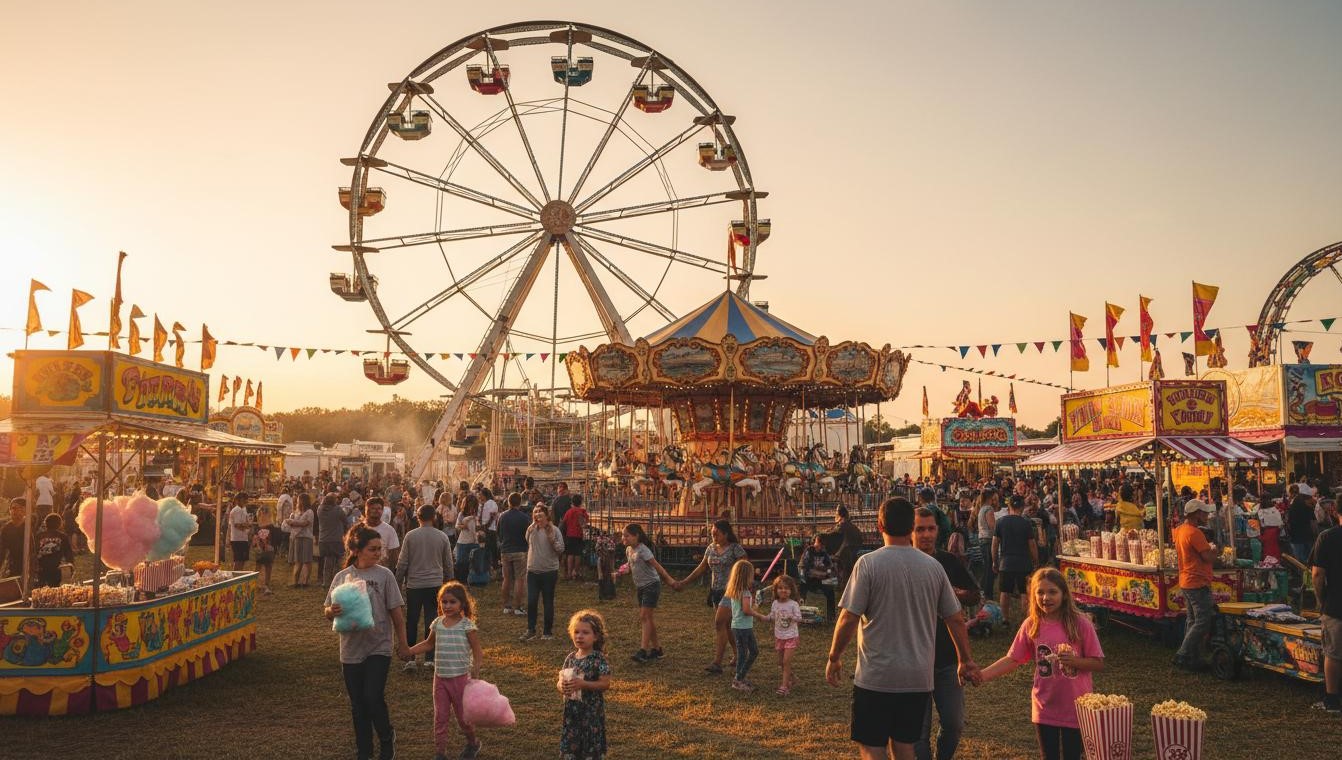
Modern types of fairs span a breathtaking spectrum. County and state fairs across North America draw millions each summer, combining agricultural competitions with Ferris wheels and deep-fried delicacies. International trade fairs in Frankfurt, Hong Kong, and Milan shape global industries, with exhibitors launching products that define consumer trends for years. Village fêtes and churchyard fairs persist across Europe, while Renaissance fairs and Asian temple festivals attract visitors seeking cultural immersion. Book fairs, art fairs, science fairs, and horse fairs each cultivate dedicated communities, proving that the fair adapts to any purpose.
Some historical forms have faded into memory. The great wholesale fairs of Champagne declined as permanent banking houses and reliable shipping routes made year-round commerce more efficient than seasonal concentration. Many medieval charter fairs collapsed under competition from newer neighboring markets, as royal grants often explicitly forbade new fairs from harming existing ones. The predecessor to all of these was the Roman feria and the weekly village market, but the annual fair distinguished itself through duration, scale, and the deliberate suspension of ordinary rules.
Extremes capture public imagination. The Louisiana Purchase Exposition in St. Louis, 1904, holds the Guinness record as the largest fair ever staged, covering over 500 hectares and drawing nearly 20 million visitors. On the intimate end, tiny village fêtes spanning a single parish green or community hall embody the same communal energy in miniature, often with fewer than a hundred attendees yet preserving the same essential character.
Global impact remains immense. The exhibition and trade fair industry generates hundreds of billions in annual economic activity, with Germany alone hosting world-leading events in optics, automotive technology, and consumer goods. The history of fairs reveals a trajectory from sacred market days to secular entertainment complexes, yet the core appeal endures: the temporary escape from daily routine. What began as religiously sanctioned trade breaks has evolved into agricultural showcases, consumer carnivals, and B2B showcases that launch multinational products.
Symbolically, fairs have always represented more than commerce. They were spaces where social hierarchies temporarily softened, where strangers mingled without the usual constraints of class, and where regional identity was performed and reinforced. The history of fairs demonstrates that these gatherings serve as cultural mirrors, reflecting what societies value most in any given era. Today, the history of fairs continues as drone light shows replace fireworks, virtual exhibitions complement physical booths, and sustainability becomes a central theme. What changed most dramatically is technology and scale, yet the fundamental human urge to gather, display, compete, and celebrate persists unchanged across centuries.