Crisp bites releasing sweet-tart juice have defined autumn for millennia, yet the apple’s journey from Central Asian thickets to global dominance is far more complex than any orchard postcard suggests. Apple history begins in the Tian Shan mountains of modern Kazakhstan, where wild Malus sieversii still grows in ancient forests. Genetic studies confirm that nearly every modern cultivar descends from this single species, meaning the apples in your kitchen share ancestry with fruit that fed nomadic horsemen over four thousand years ago. The Silk Road carried these seeds westward, and by the time of the Roman Empire, apples had established themselves across Europe as both food and symbol.
Biblical tradition has perhaps done more to shape apple history than any agricultural innovation. Genesis never names the forbidden fruit as an apple; that association emerged in medieval European art, where painters used the familiar round fruit to represent temptation. Yet scripture elevates the apple repeatedly once the misidentification took hold. Song of Solomon 2:3 compares the beloved to “an apple tree among the trees of the forest,” while 2:5 declares, “refresh me with apples.” Proverbs 25:11 offers the famous line: “A word fitly spoken is like apples of gold in settings of silver.” These passages established the apple as an emblem of wisdom, beauty, and divine favor across Christian cultures.
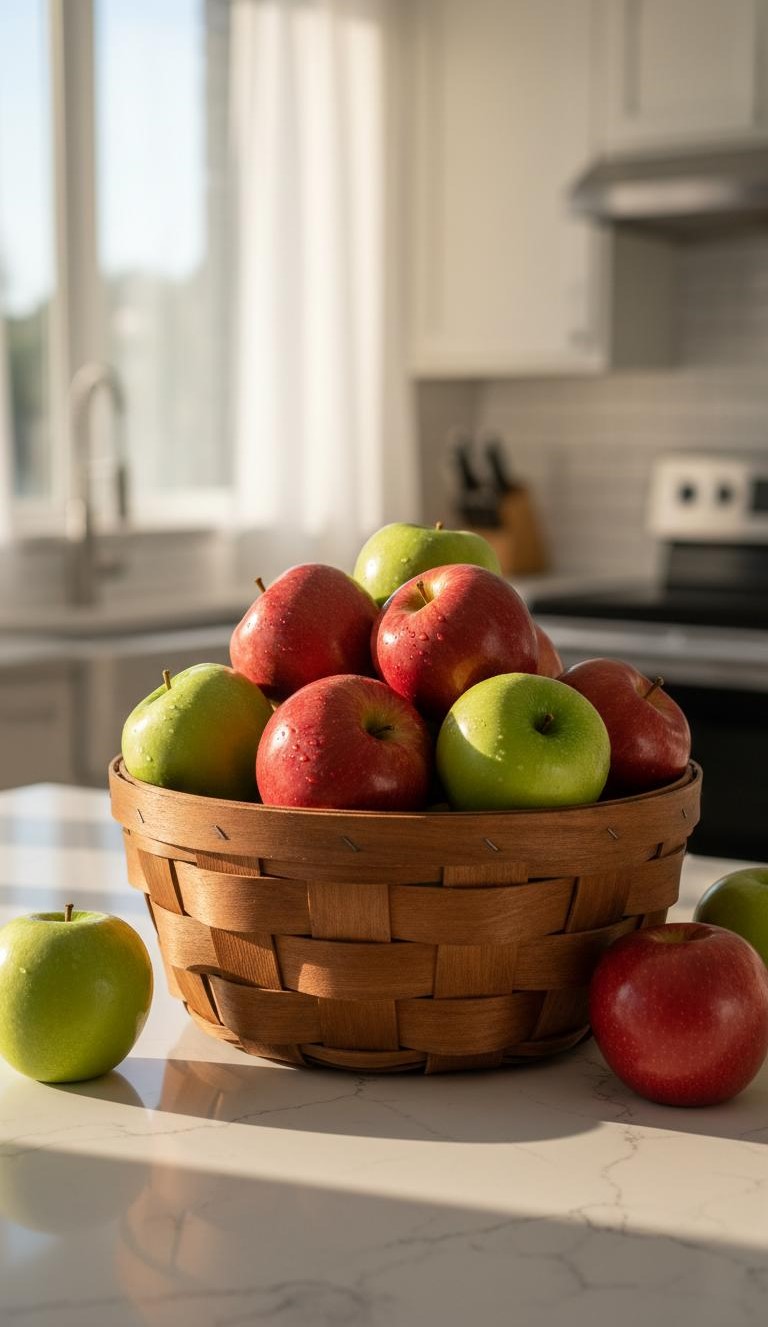
Several distinct varieties define the modern landscape. The Red Delicious, with its deep crimson skin and mild sweetness, dominated American orchards for decades before falling out of culinary favor. The Granny Smith, born from a chance seedling in an Australian grandmother’s compost pile in 1868, delivers piercing tartness that bakers prize. The Honeycrisp, developed at the University of Minnesota in 1960 and released in 1991, revolutionized the industry with explosive juiciness and shattering texture, commanding premium prices that transformed apple economics. The Gala, originally from New Zealand, has become the world’s most cultivated variety, while the Fuji, bred in Japan, offers dense sweetness that appeals to Asian palates. The Pink Lady and its sibling Lady Alice provide crisp acidity with floral notes, and heirloom varieties like the Knobby Russet and Cox’s Orange Pippin persist among connoisseurs who value flavor over shelf stability. Some historical forms have vanished entirely. The Esopus Spitzenburg, reportedly Thomas Jefferson’s favorite, has nearly disappeared due to disease susceptibility and poor storage. The predecessor to all of these was the wild Kazakh apple, a small, tart, often bitter fruit that bears little resemblance to the polished supermarket specimens of today.
Extremes in scale capture global attention. The largest apple ever recorded weighed over four pounds, grown in Japan under ideal conditions with extensive hand-pollination and thinning. At the opposite end, crabapple varieties produce fruits barely larger than cherries, valued for jelly and ornamental display rather than fresh eating. The smallest edible apples, certain miniature cultivars bred for container gardens, fit comfortably in a child’s palm.
Global impact is staggering. Apples rank among the top three most consumed fruits worldwide, with annual production exceeding eighty million tons. China dominates with over half of global output, while the United States, Poland, and Italy follow as major exporters. The apple industry supports entire regional economies, from Washington State’s Yakima Valley to the Aomori Prefecture in Japan, where apple-themed tourism generates significant revenue. Cider production, both alcoholic and fresh-pressed, has experienced a renaissance, with craft producers reviving ancient techniques and heirloom varieties.
Symbolically, the apple has shifted from forbidden fruit to health emblem. Where medieval theology associated it with sin, modern marketing promotes it as the ultimate healthy snack, an apple a day promising to keep the doctor away. What changed most profoundly is perception. Once a seasonal treat available only in autumn, the apple now fills produce aisles year-round through controlled-atmosphere storage and global shipping. From Tian Shan forests to lunchboxes and cider houses, apple history continues proving that the most widespread foods often carry the deepest cultural roots. What began as a wild fruit foraged by ancient nomads has become a symbol of health, temptation, and agricultural ingenuity all at once.