
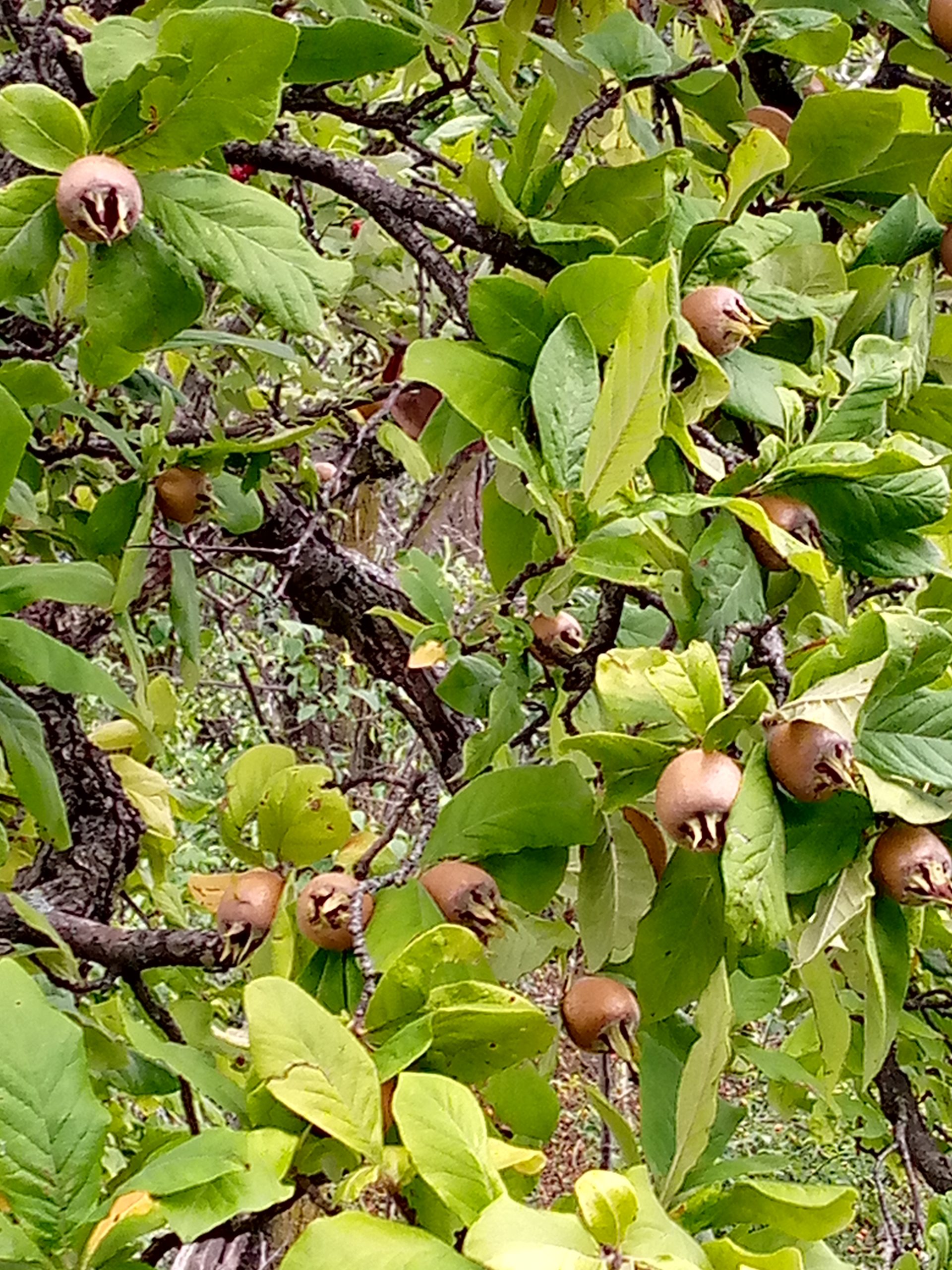
Medlar is a lesser-known fruit belonging to the rose family, which also includes apples, pears, quinces, and serviceberries. This family has over 100 genera and 3,000 plant species. The medlar tree can grow up to seven meters tall and starts bearing fruit while still young. Often grafted onto quince or pear rootstocks, it can produce fruit in the very first year.
Cultivated in Europe for millennia, especially in France, medlar was very popular during the Middle Ages. It is believed to have originated in Central Europe or the regions around the Caspian Sea.
The medlar tree blooms late, around the end of April, making its blossoms resistant to spring frosts. The flowers are pale pinkish-white, similar to apple blossoms. Its leaves are elongated, matte, dark green, and fuzzy, also resembling apple leaves. The fruit matures after about 180–190 days.
The medlar fruit itself looks like a small pear or apple, with colors ranging from greenish-brown to reddish or chocolate brown. It has a broad calyx and measures about five centimeters in diameter. When first picked—usually after the leaves start falling and even following early frosts—the fruits are hard, bitter, and astringent. They require several weeks of bletting (softening through overripening) until they become soft, juicy, slightly tart, and creamy in texture, often compared to apple butter. Some say the taste is reminiscent of cider or wine.
Medlar fruits are versatile and can be used to make marmalade, liqueur, and brandy.
In traditional folk medicine, medlar has been valued for its health benefits. It is said to improve eyesight, strengthen the liver and kidneys, nourish the blood, and help with ailments such as back and knee weakness, dizziness, and even impotence.
Nutritional and Medicinal Properties
Medlar fruits are rich in dietary fiber, antioxidants, vitamins (especially vitamin C), and minerals. The fruit’s antioxidant content helps fight free radicals, reducing inflammation and supporting overall health. Its fiber aids digestion and can help regulate blood sugar levels.
While there is limited scientific research specifically on medlar’s effects on impotence, its traditional use for improving circulation and vitality aligns with similar benefits attributed to related fruits in the rose family.
How to Enjoy Medlar
To enjoy medlar fruit, it’s best to wait until it becomes soft and bletted—this usually means leaving the harvested fruits at room temperature for several weeks. Once soft, they can be eaten raw or used in jams, jellies, desserts, or fermented beverages.