History of tablecloths begins not in a palace dining hall but in the practical necessity of keeping food and fingers separated from the surface beneath. Ancient Egyptians used linen sheets to cover their low tables, not for decoration but for hygiene, as bread and vegetables were often placed directly on the woven surface. By the time of the Roman Empire, the mappa—a cloth napkin that doubled as a personal table covering—had become standard at elite banquets, used to wipe hands and occasionally to wrap leftovers for the journey home. The tablecloth was never merely ornamental; it was a functional barrier between civilization and the mess of eating.
Bible grants the tablecloth a quiet but unmistakable presence. In Exodus 25, God commands Moses to craft the Tabernacle’s table and cover it with a cloth of pure blue, embroidered with cherubim—a sacred tablecloth for sacred bread. The Last Supper, described across the Gospels, almost certainly employed a simple linen cloth rather than the ornate damask of later imagination, a humbling reminder that the most sacred meal in Western history unfolded on modest, utilitarian ware. The prophet Isaiah’s command to “spread the table” implies a cloth as the foundation of hospitality, a surface prepared and made worthy of guests.
Medieval Europe transformed the tablecloth into a theatrical statement of wealth. The great halls of castles featured nappes—vast linen cloths that could stretch fifty feet or more, covering trestle tables that fed hundreds. These were not left in place; between courses, servants would dramatically remove and replace them, each fresh cloth signaling a new stage of the feast. The French court of Louis XIV elevated this into an art form, with tablecloths of lace and embroidered silk costing more than the silver they protected. The tablecloth became a canvas for display, a surface that announced the host’s power before a single dish arrived.
Industrial revolution democratized the tablecloth. Mechanized looms in nineteenth-century Lancashire and New England produced affordable cotton and linen cloths that middle-class families could own in multiples. The Victorian era introduced the “Sunday best” tablecloth—white, heavily starched, and reserved for the week’s most formal meal. By the early twentieth century, printed tablecloths with floral patterns and scenic designs had become standard in American kitchens, often made from oilcloth or vinyl for easy cleaning.
Extremes of tablecloth culture are delightful. Largest tablecloth ever woven was created for a state dinner in India, measuring over 3,000 square meters and requiring a team of weavers months to complete. At the opposite extreme, the “cocktail napkin”—technically a tablecloth reduced to its minimum function—measures mere inches, yet has launched careers and sealed deals in bars across the world. The most expensive tablecloth in existence is likely the Imperial Coronation tablecloth of Russian Tsar Nicholas II, embroidered with gold thread and precious stones, now preserved in the Kremlin Armoury.
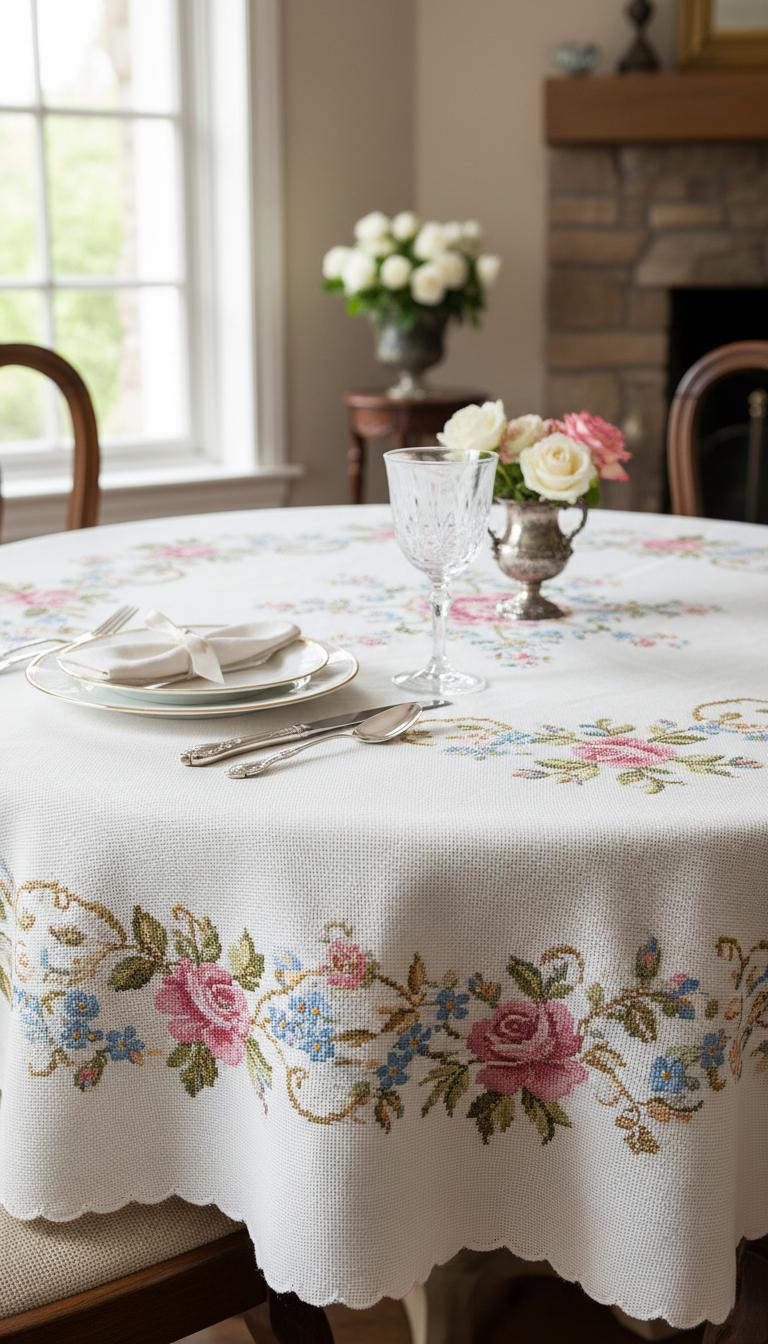
Today’s tablecloth landscape is vast and varied. Cotton remains the workhorse—absorbent, washable, and affordable. Linen, with its characteristic slubbed texture and increasing softness with each wash, commands premium prices and dominates upscale restaurants. Polyester blends offer wrinkle resistance and stain protection for busy households. Vinyl and oilcloth have survived as practical choices for outdoor dining and children’s tables. The “runner”—a narrow strip of fabric down the table’s center—has emerged as a minimalist alternative to full coverage. Yet some traditions have faded. The elaborate lace tablecloths of Victorian parlors, requiring hours of careful ironing, have largely disappeared from daily use. The “damask” weave, once the hallmark of formal dining, is now more commonly found in hotels than homes.
What preceded the modern tablecloth was the simple practice of laying clean plant fibers or animal skins on the ground or low surface before eating. The leap to woven textile required agriculture, spinning, and the social expectation that meals should be separated from the dirt of daily life.
Today, the global textile market for dining linens generates billions annually, though the tablecloth itself faces competition from the “bare table” aesthetic favored by contemporary design magazines. Symbolically, the tablecloth still represents hospitality, preparation, and care. The phrase “laying the table” implies not just placing dishes but creating a worthy space for human connection. What changed most profoundly is the frequency. Once, a tablecloth was changed for every meal; now, many families reserve them for holidays or skip them entirely in favor of placemats or bare wood. The tablecloth that once protected medieval feasts from grease now survives as a conscious choice, a small act of ceremony in an age of casual dining. Yet when a host spreads a clean cloth and sets the first plate upon it, something ancient still happens—a boundary is drawn between the ordinary and the shared, and the table becomes, for an hour, a sacred space.