Monogrammed napkins did not begin in a modern wedding registry but in the embroidered bedchambers of medieval European courts, where the marking of personal linen was a practical necessity in an age before washing machines and mass production. In the twelfth century, monasteries and noble households employed laundresses who handled vast quantities of identical white cloth, and the embroidered initial—first stitched in colored silk, later in fine linen thread—served as the only reliable way to distinguish one person’s napkin from another’s. The monogrammed napkin was born from bureaucracy, refined by pride, and eventually transformed into a symbol of identity that transcended mere utility.
Ancient Romans used mappae—cloth napkins that doubled as personal table coverings—and some scholars believe that elite households may have marked these with simple embroidered symbols to denote ownership. However, the true monogram as an intertwined, decorative cipher of initials emerged in the Byzantine Empire, where imperial craftsmen wove the Greek letters of the emperor’s name into silk garments and altar cloths. This tradition migrated to Western Europe through royal marriages and Crusader loot, eventually settling into the domestic sphere as the embroidered monogrammed napkin became a standard feature of aristocratic dining.
Renaissance Italy elevated the monogrammed napkin into an art form. Florentine and Venetian noblewomen competed to produce the most elaborate embroidered table linens, often spending years on a single set that would be displayed only at the most important state dinners. The monogram itself evolved from a simple initial into an intricate cipher, with letters interwoven with flowers, scrollwork, and family crests. Marie Antoinette’s household employed a team of embroiderers who produced monogrammed napkins for every occasion, each set costing more than a peasant’s annual wages. The monogram had become a language of power, readable only by those who understood the heraldic codes of European aristocracy.
Industrial revolution democratized the monogrammed napkin in unexpected ways. The invention of the embroidery machine in the 1860s allowed middle-class families to order personalized linens from department stores, and by the 1880s, mail-order catalogs offered monogrammed napkins in standardized fonts and thread colors. The Victorian era became obsessed with the practice, producing etiquette manuals that dictated precisely which initials should be used—husband’s first initial, wife’s first initial, and shared surname initial in the center—and in what order. A mis-monogrammed napkin was a social catastrophe, evidence of poor breeding or insufficient attention to detail.
Extremes of monogrammed napkin culture are delightful. Largest monogrammed napkin ever produced was created for the coronation banquet of Tsar Nicholas II in 1896, measuring over two meters square and embroidered with the imperial cipher in gold thread by a team of nuns working for eighteen months. At the opposite extreme, the “cocktail napkin” monogram—barely ten centimeters square—became a staple of mid-century American entertaining, with hostesses ordering hundreds of disposable paper versions stamped with their initials. The most expensive monogrammed napkin in the world is likely a set commissioned by the Duchess of Windsor from the House of Lesage in Paris, featuring platinum thread and microscopic pearls woven into the interlocking initials.
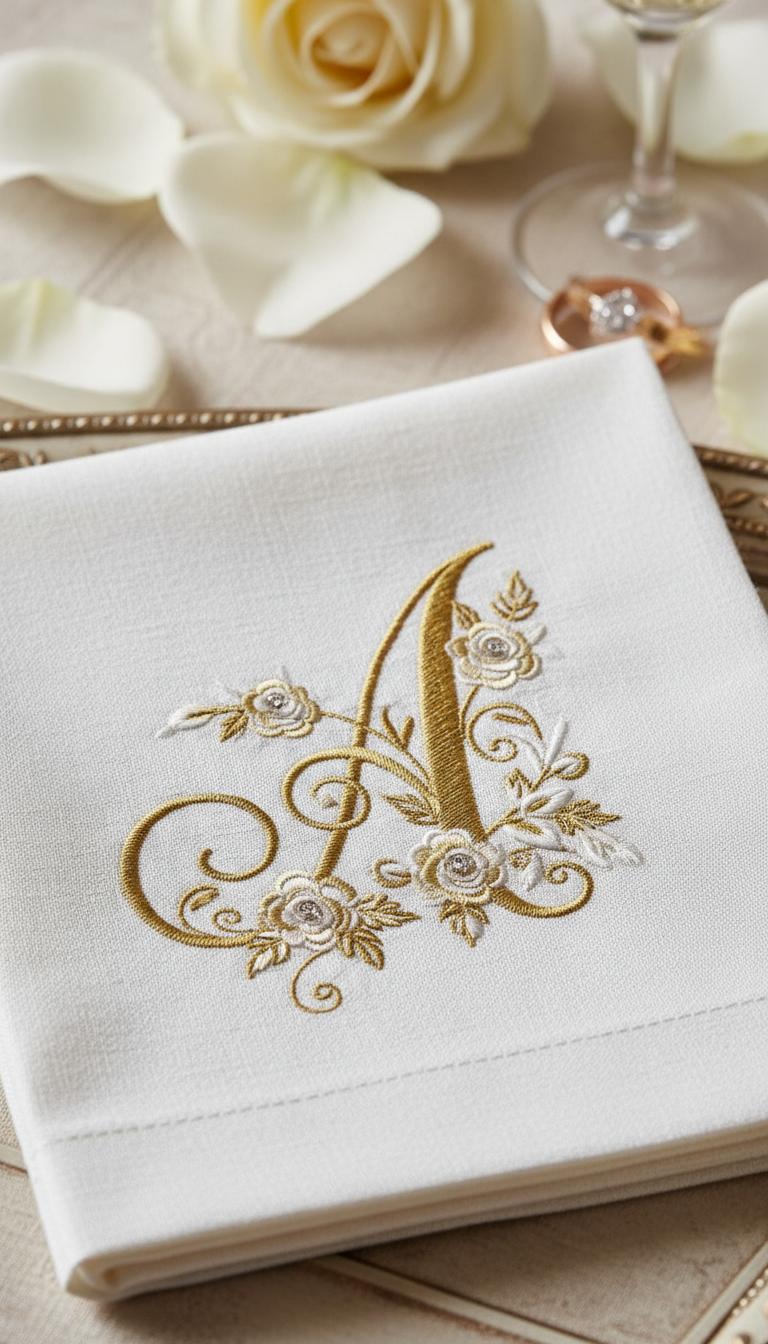
Today’s monogrammed napkin landscape is dominated by machine embroidery and digital customization. Cotton and linen remain the preferred fabrics, with thread colors ranging from classic white-on-white to bold contrasts that announce the monogram as a design feature rather than a discreet mark. The “wedding monogram“—combining the couple’s initials in a decorative cipher—has become a massive industry, with couples ordering hundreds of monogrammed napkins for reception tables, cake displays, and guest favors. The “corporate monogram” persists in high-end restaurants and hotels, where embroidered initials signal exclusivity and brand identity. Yet some traditions have faded. The elaborate hand-embroidery of Victorian parlors, where women spent evenings stitching their trousseau linens, has largely disappeared except among dedicated needlework enthusiasts. The “mourning monogram,” once standard on black-bordered napkins for funeral receptions, is now virtually unknown.
What preceded the monogrammed napkin was the simple practice of marking personal belongings with a stitch or a sign to prevent loss in communal laundry. The leap to decorative embroidery required leisure, literacy, and the social expectation that identity should be displayed even in the most private domestic moments.
Today, the personalized linen market generates millions annually, with monogrammed napkins anchoring a significant portion of wedding and gift commerce. Symbolically, the monogram still represents ownership, identity, and the claim that this particular object belongs to a specific person or family. The phrase “putting your mark on something” derives from this ancient impulse. What changed most profoundly is the speed. Once, a monogrammed napkin required weeks of hand-stitching; now, a machine can produce one in minutes, and digital embroidery files allow infinite variation without the years of apprenticeship once required. The monogrammed napkin that once announced aristocratic lineage now decorates mass-produced wedding favors and restaurant place settings. Yet when a bride opens a box of linens embroidered with her new initials, something ancient still happens—a name is claimed, an identity is formed, and the humble napkin becomes, for a moment, a canvas for the story of who she is becoming.