
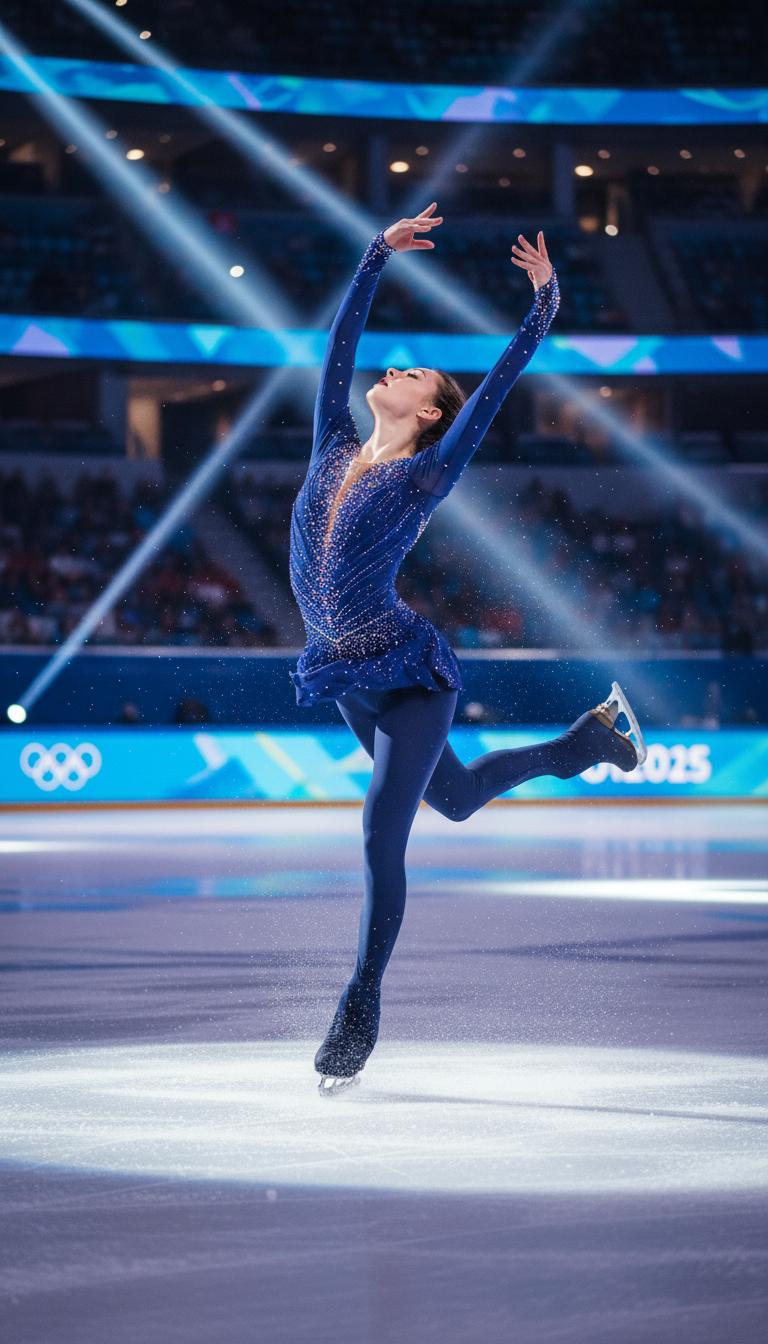
Figure skating history does not begin with triple axels or sequined costumes. It begins on the frozen canals of the Netherlands in the thirteenth century, where peasants strapped bone skates to their boots and glided across winter ice as a practical means of transportation. The earliest skates, found in archaeological sites across Scandinavia and Russia, date to roughly 3000 BCE—shaped from animal bones and tied to leather footwear with sinew. These were not tools of sport but survival, allowing hunters to cross frozen lakes and marshes that would have otherwise been impassable. The leap from transportation to art form took millennia, and when it finally happened, it transformed ice into a stage and the human body into its most eloquent performer.
The transformation from practical skating to artistic performance began in the eighteenth century, when British aristocrats began skating for pleasure on the frozen Serpentine in London’s Hyde Park. The first organized figure skating club, the Edinburgh Skating Club, was founded in 1744, and its members developed the “English style”—a formal, upright approach that emphasized tracing precise figures on the ice rather than athletic daring. The term “figure skating” itself derives from this practice, the compulsory “figures” that skaters were required to etch into the ice in perfect geometric patterns. These figures—eights, threes, brackets, and rockers—were judged not for speed or height but for the purity of the line, the silence of the blade, the absence of any scrape or waver.
Jackson Haines, an American ballet master and skater, revolutionized the sport in the 1860s by introducing music, fluid body movement, and the toe pick—a serrated edge at the front of the blade that allowed jumps and spins previously impossible. European purists initially rejected his “international style” as undignified, but by the early twentieth century, his innovations had become standard. The first World Championships were held in 1896, and figure skating was included in the 1908 Summer Olympics in London—the only winter sport ever contested at a Summer Games. The sport’s Olympic permanence was secured in 1924 at the first Winter Olympics in Chamonix, where eleven-year-old Sonja Henie of Norway finished last but would dominate the sport for the next decade, transforming figure skating into a global spectacle of glamour and athleticism.
Extremes of figure skating culture are staggering. Largest ice rink ever constructed for competition was the Medeu rink in Kazakhstan, sitting at 1,691 meters above sea level and stretching over 10,000 square meters. At the opposite extreme, the “short program” of modern competition compresses an entire athletic and artistic narrative into less than three minutes, a duration that would have seemed absurd to the Edwardian gentlemen who spent hours tracing figures in silence. The most expensive figure skating costume ever created, worn by a Russian Olympian, incorporated thousands of Swarovski crystals and required over 300 hours of hand-beading, costing more than a luxury automobile.
Today’s figure skating landscape is dominated by the four Olympic disciplines: men’s singles, women’s singles, pairs, and ice dance. The quadruple jump—four full rotations in the air—has become the benchmark of men’s competitive skating, while women have begun landing quadruple salchows and toe loops in competition, pushing the boundaries of what was once considered physically impossible. Ice dance, derived from ballroom dancing on ice, emphasizes musical interpretation and partnership over individual athleticism. Yet some traditions have faded. The compulsory figures, once the heart of the sport, were eliminated from international competition in 1990, deemed too boring for television audiences. The “school figures” that gave figure skating its name are now practiced only by a handful of enthusiasts and historians, their geometric precision replaced by the explosive athleticism of the jump.
What preceded modern figure skating was the ancient practice of gliding across frozen water for transportation and survival. The leap to art form required the leisure of aristocrats, the technology of the toe pick, and the cultural appetite for spectacle that defined the twentieth century.
Today, figure skating generates billions in global revenue through broadcasting rights, touring shows, and merchandising. It symbolizes grace under pressure, the union of athleticism and artistry, and the peculiarly human desire to make beauty out of ice and cold. What changed most profoundly is the standard of difficulty. Once, a clean double jump was sufficient to win Olympic gold; now, skaters must land quadruple jumps in combination to even qualify for podiums. The silent tracing of figures has been replaced by the roar of crowds and the flash of cameras. Yet when a skater steps onto clean ice and the first notes of music begin, something ancient still happens—a body surrenders to gravity and momentum, and for a few minutes, the frozen water becomes a stage for the most human of desires: to move beautifully, to be seen, and to be remembered.