
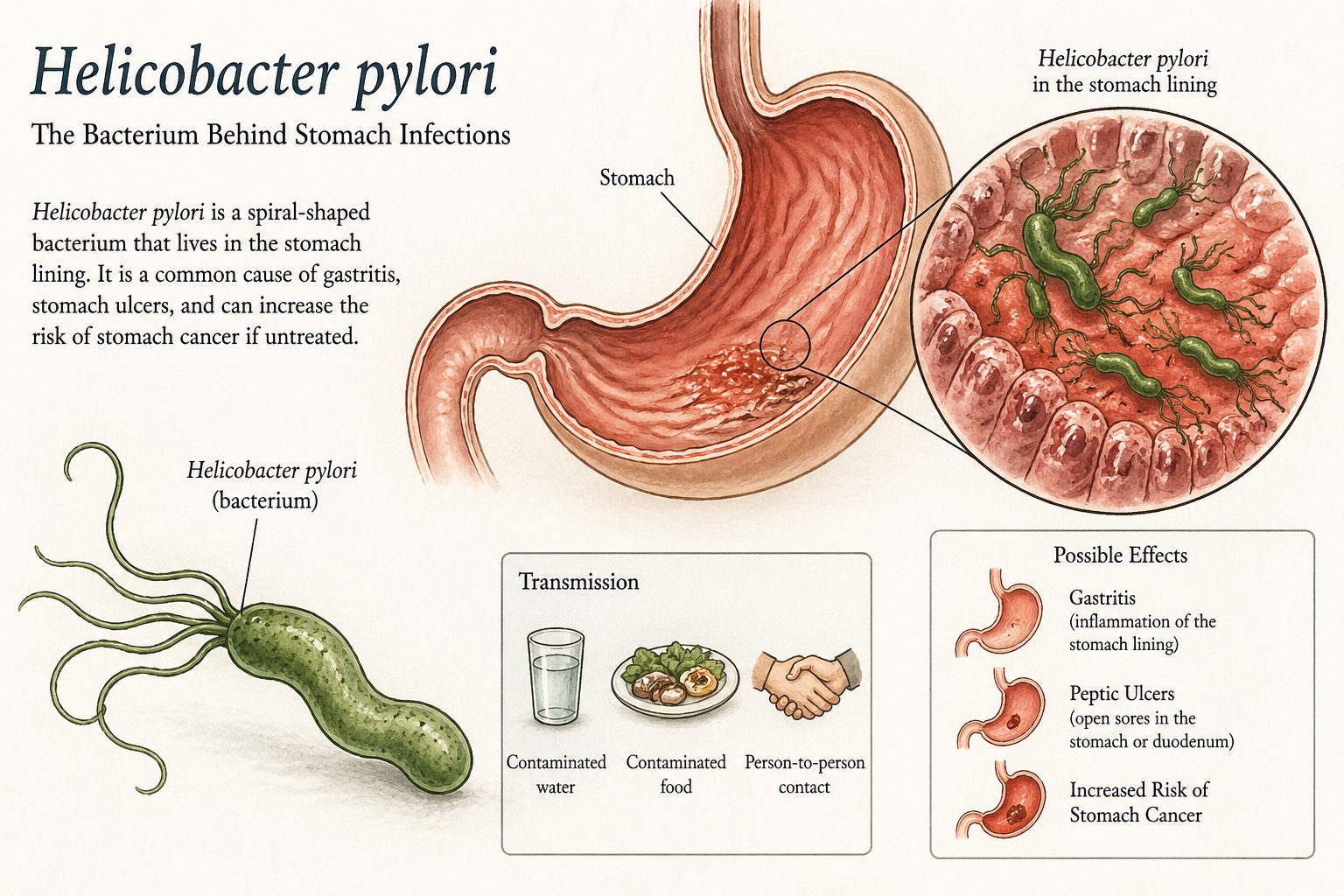
Helicobacter pylori: Friend or Foe?
The Helicobacter pylori bacterium is found in the stomachs of nearly half of the world’s population, a discovery that initially sparked disbelief. How could any organism survive in such a hostile environment full of acid and digestive enzymes? Yet, H. pylori does exactly that by creating a buffer around itself and embedding into the stomach lining, enabling it to thrive in an acidic environment. In the 1980s, scientists Dr. Barry Marshall and Dr. Robin Warren linked H. pylori to gastric inflammation and ulcers, challenging the prevailing view that stomach issues were psychosomatic or caused by excess stomach acid. Dr. Marshall even ingested the bacteria to demonstrate its effects and eventually relieved his symptoms with antibiotics, leading to scientific acceptance after nearly a decade.
Why H. pylori Is Considered Harmful
While not everyone with H. pylori experiences problems, this bacterium is a leading cause of gastric discomfort. In Germany, nearly one in three people are carriers, though only about 20% develop symptoms. The bacterium can damage the protective stomach lining, leading to ulcers and sometimes even inflammation in the small intestine. Around 75% of gastric ulcers and all small intestine ulcers are linked to H. pylori infections. When treated with antibiotics, symptoms often subside, though some studies suggest that concentrated broccoli extract, specifically sulforaphane, may inhibit the bacterium by blocking key enzymes and neutralizing stomach acid.
Potential Benefits of H. pylori
Surprisingly, H. pylori may offer certain health benefits. Long-term studies involving over 10,000 people suggest that while H. pylori carriers may be at higher risk for stomach cancer, they have a significantly lower risk of lung cancer or stroke. Experiments in mice show that H. pylori exposure at a young age may offer protection against asthma. When young mice are treated with antibiotics, their resistance to asthma diminishes, but when H. pylori is reintroduced, the protective effect partially returns. Although mice differ from humans, this pattern aligns with observations in industrialized nations where asthma, allergies, diabetes, and skin conditions are on the rise, while H. pylori prevalence decreases.
A Complex Relationship: The Good and the Bad of H. pylori
The impact of H. pylori varies depending on its interaction with the human body. It can produce harmful toxins or, conversely, offer protective effects. Factors such as our immune response, stomach lining health, and lifestyle choices—like smoking, alcohol use, and chronic stress—play significant roles. The World Health Organization recommends removing H. pylori in cases of gastric discomfort, especially for individuals with a family history of stomach cancer, lymphoma, or Parkinson’s disease.
(Excerpt from the medical bestseller by Julia Enders, Gut: The Inside Story of Our Body’s Most Underrated Organ.).