
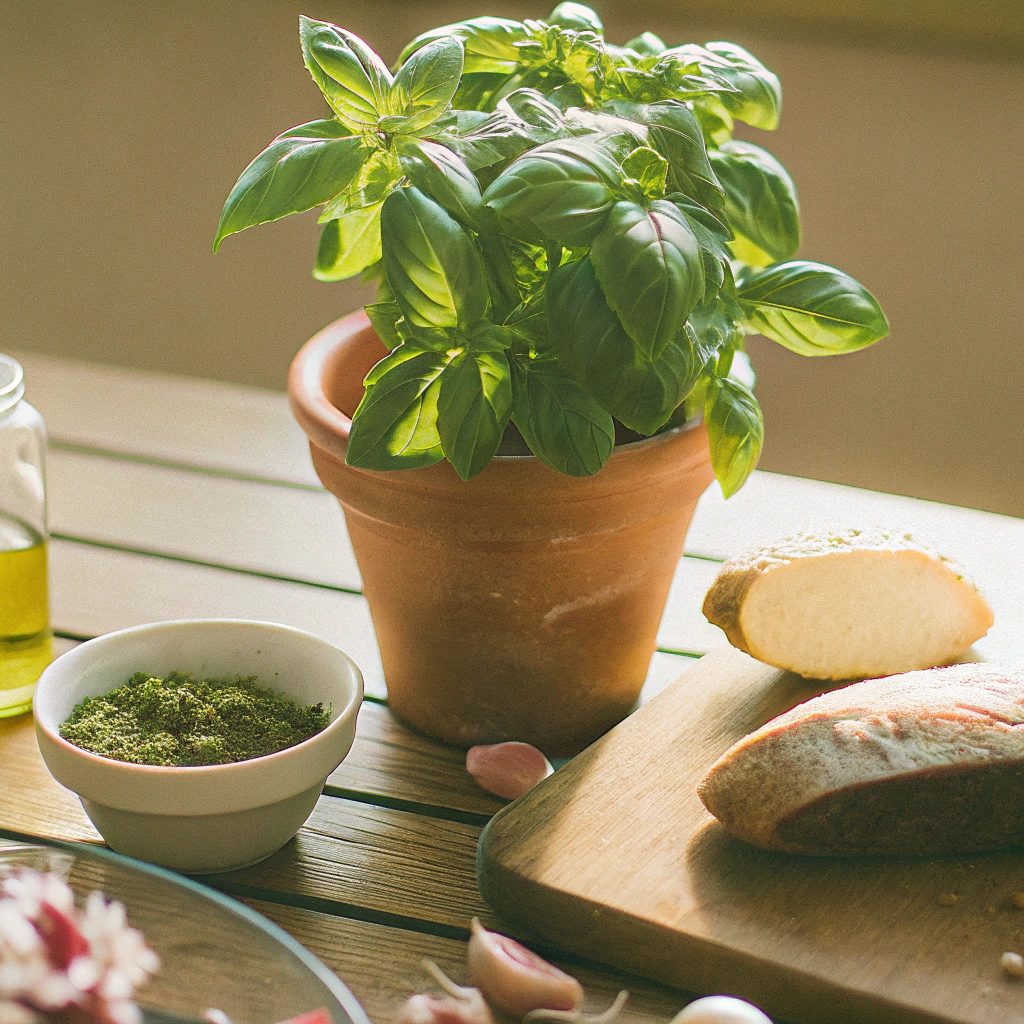
Basil is an aromatic, annual herb that grows 30 to 40 cm tall with a branched stem. The leaves are oval-shaped with pointed tips. The small, white, bilabiate flowers are found at the top of the stem. The leaves are attached to long petioles, and the flowers bloom in abundance at the top of the stem. They are multicolored, ranging from white to pinkish or purplish. The entire plant has a pleasant fragrance and aroma.
Basil originates from India. It was known to the Egyptians over 5,500 years ago, as evidenced by plant remains found in tombs from that era. Basil is a well-known and valued medicinal and culinary herb. According to ancient records, it was introduced to Central Europe by monks in the 12th century. Over time, it became established in new areas and is now grown in gardens. In the southern parts of Europe, it can occasionally be found outside of gardens. Basil thrives in fertilized, humus-rich soils and in sunny, sheltered locations. The plant is especially sensitive to low temperatures and does not tolerate watering with cold water. Basil is commonly grown in gardens and pots. The entire plant has a very pleasant scent.
Medicinal Uses: The whole basil plant, including the seeds, is used for medicinal purposes. Some of the proven active compounds include essential oils, cineol, methyl-cavicol, tinol, linoleol, camphor, a glycoside, and an acidic saponin, along with several other compounds that have yet to be fully researched.
Basil has a wide range of applications in traditional medicine for both humans and animals. It is commonly used to treat inflammation (stomach, intestines), coughing, early stages of tuberculosis, and urinary tract issues (kidneys, bladder). Most often, it is consumed in the form of herbal teas.
Therapeutic Properties: Basil is used for calming nerves, relieving stomach cramps, promoting easier urination, treating asthma, and alleviating kidney inflammation. It is also used to improve appetite and combat insomnia. Basil seeds are particularly helpful for treating urinary tract issues. The essential oils and other active compounds in basil contribute to its healing properties.
Culinary Uses of Basil:
Freshly picked basil leaves are perfect for adding to a salad with sliced radicchio. It should be added just before serving, as salad dressings containing vinegar can overpower basil’s fresh flavor.
Basil can be cut into thin strips, known as chiffonade, and used as a refined gourmet addition to soups, sauces, and bruschetta.
One of the most famous basil-based sauces is pesto, made from fresh basil leaves, garlic, pine nuts, olive oil, and grated Parmesan cheese. When poured over spaghetti, it transforms the pasta into a true gourmet experience and can also serve as a marinade. In addition to pesto, basil can be used to create excellent sauces for grilled steaks, chicken, or seafood.
Fresh basil can also be blended with butter, freshly ground pepper, and lemon zest to create a flavorful compound butter that pairs wonderfully with roasted meats and fish.
Basil is especially good when added to fatty dishes, such as roasted pork, ragù, lamb, or roast goose, as it enhances the flavor and aids in digestion.
Dried basil has a more intense flavor than fresh basil and is ideal for adding to stews and vegetable-based dishes, particularly those with peas, beans, or various salads and spreads.