
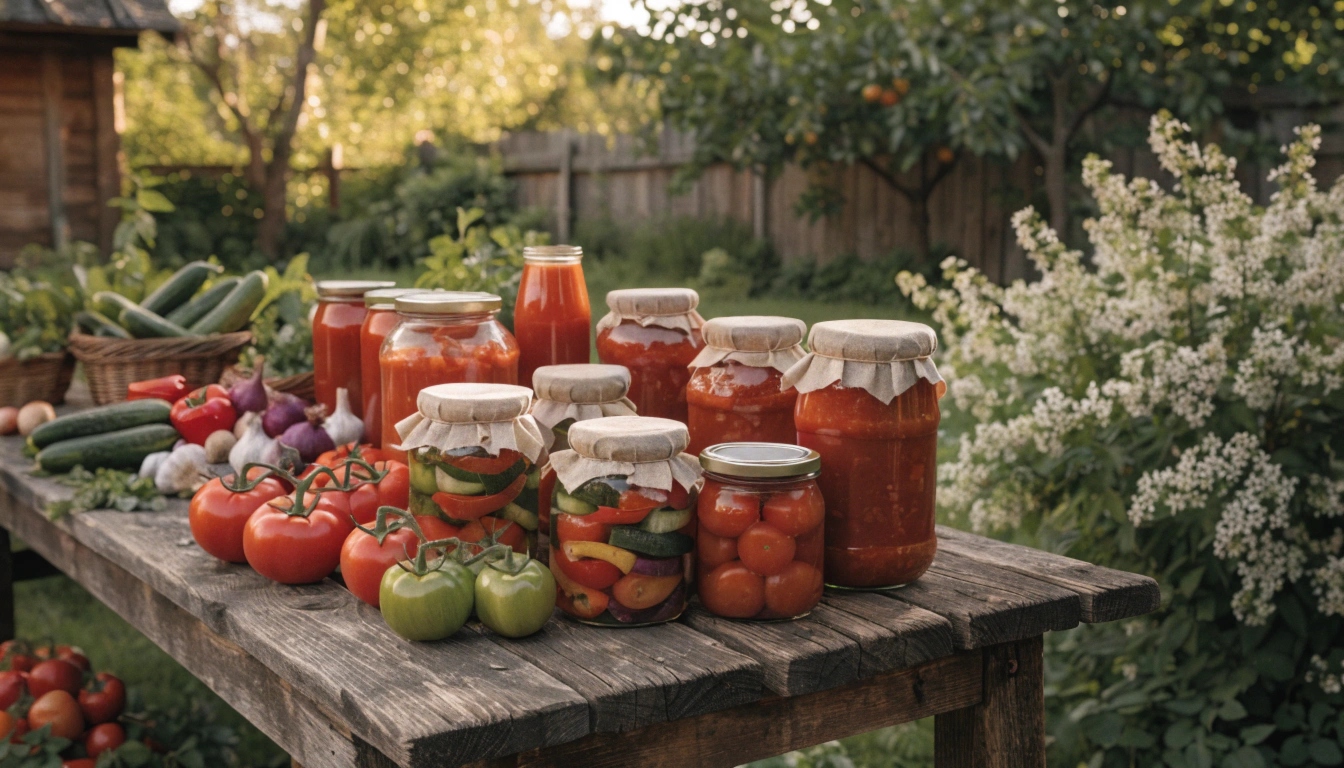
As the seasons shift and the garden’s bounty slows, preserving the flavors of summer becomes an art form. These time-honored recipes for tomato preserves and marinated vegetable salads bring a touch of rustic charm and wholesome goodness to your winter pantry. Simple yet flavorful, they embody the warmth and tradition of home-cooked preservation, allowing you to savor the garden’s gifts long after the harvest.
Tomatoes in Bottles for Winter – Simple Recipe
This is how I prepare tomatoes…
I peel them well and grate them into a large bowl, then fill glass bottles with the grated tomatoes.
I fill the glass bottle about 1 inch below the neck, then pour oil up to the top.
I put the bottles in the refrigerator and have tomato sauce ready for cooking all winter.
I also peel and cut the tomatoes into quarters, then put them in freezer bags and use them for cooking later.
French Salad
Slice thinly:
- 30 bell peppers (green and red) into rings
- 20 ripe tomatoes into slices
- 10 young cucumbers like for salad
- 15 heads of red onion into wedges
Salt each vegetable separately and let sit for 3 hours, stirring occasionally.
Afterward, squeeze the vegetables well by hand and mix them together.
Pour over the vegetables 3/4 cup (6.7 fl oz) of good quality oil, add 1 tablespoon of mustard seeds, and mix everything again.
Layer the salad tightly into a clean, wiped jar, pressing down with two crossed wooden boards.
Pour mild, boiled, and cooled vinegar diluted from essence over the salad. Temporarily cover the jar.
Place a small plate under each jar to catch any oil overflow during boiling.
When boiling is complete, add more oil to cover the vinegar by about 1/3 inch (1 cm).
Cover the jar with parchment paper soaked in vinegar and tie it tightly.
Store the salad in a cool place and use as needed throughout winter. Always ensure there is a layer of oil on top and the jar is tightly sealed.
Cooked and Sun-Dried Tomatoes
Take fully ripe and healthy tomatoes, wash them, cut into small pieces, and cook until completely soft. Then remove from heat, let cool, and first strain through a colander, then through a fine sieve. Boil the resulting juice vigorously until it thickens like jam. Pour the thickened tomato juice into shallow dishes and dry it in the sun for several days. Once fully dried and firm, remove the “cakes” of dried tomato from the dishes, stack them, and place them in a cloth bag. Tie the bag with a string and hang it in a drafty place. These dried tomato cakes are very concentrated, so use only a small piece at a time. Before use, soak a piece of the dried tomato cake in a little broth or warm water to achieve the desired consistency.