
In the sun-drenched highlands of Central America, ancient farmers began tending a peculiar fruit around 7000 BC. Archaeologists exploring prehistoric caves in Peru discovered pepper seeds that had survived millennia, confirming that the ancestors of modern bell peppers were among the earliest cultivated crops in the Americas. What began as a small, wild berry in the Capsicum annuum family would eventually circle the globe, transforming kitchens from Budapest to Bangkok.
The predecessor to today’s rainbow-colored bell peppers was a small, pungent wild fruit native to Mexico and Central America. When Christopher Columbus encountered these plants in the Caribbean, he mistakenly called them pimiento because their sharp flavor reminded him of black pepper from the East Indies. He carried seeds back to Spain in 1493, and from Iberian monasteries the plants spread rapidly across Europe. For decades, Europeans treated them as decorative curiosities rather than food, admiring their bright colors while suspecting they might be poisonous. It took generations of selective breeding to soften their heat and expand their walls into the thick, sweet blocks recognized today.
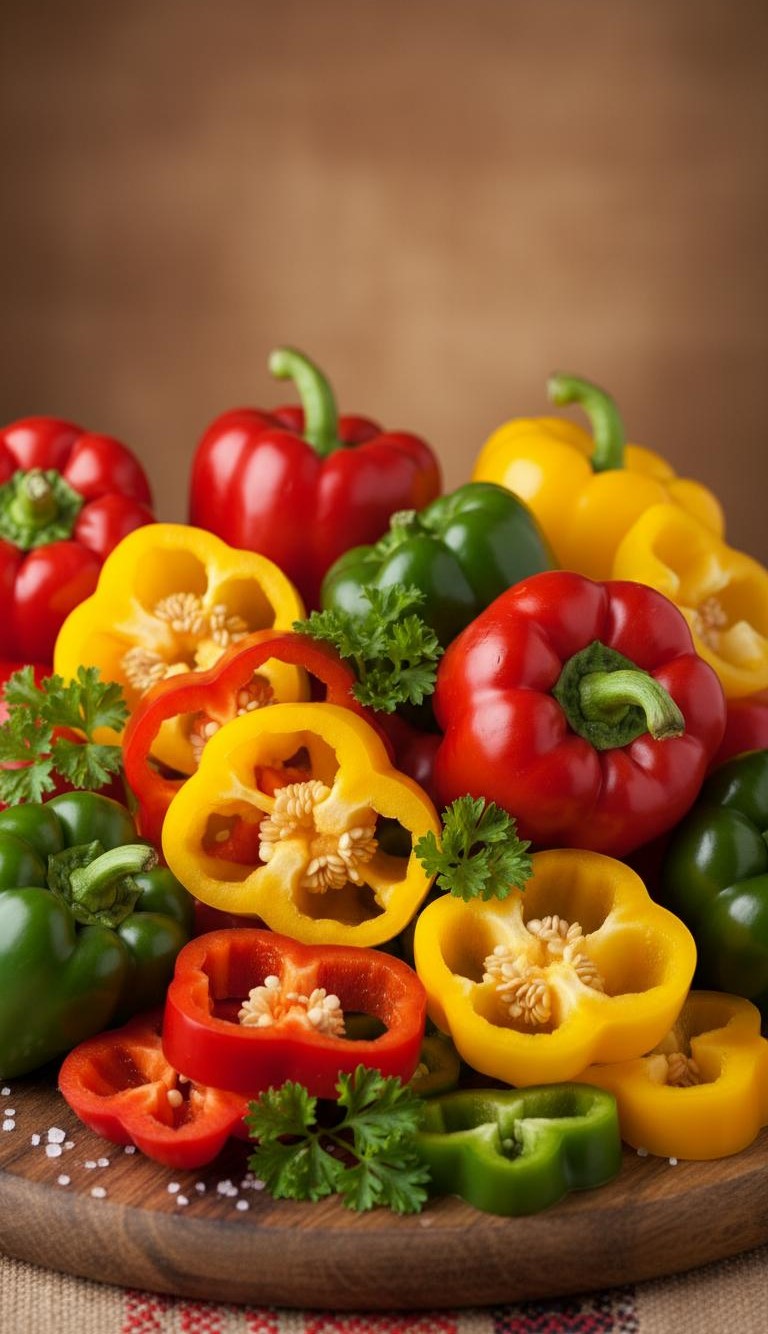
Today’s bell pepper landscape reveals a remarkable spectrum of color and nutrition. All bell peppers begin life as green; left on the vine, they mature through yellow and orange into deep red, growing sweeter and more nutrient-dense with each stage. A red bell pepper contains roughly three times more vitamin C than an orange, while yellow varieties deliver violaxanthin antioxidants and red ones offer lycopene. Purple, white, brown, and even nearly black cultivars now join the familiar traffic-light trio, giving chefs and home cooks an edible paintbox. Mini sweet peppers have surged in popularity as snack-sized alternatives, while ancient hot varieties have been bred out of the bell pepper lineage entirely, leaving the modern fruit completely without heat.
Extreme specimens capture global imagination. In September 2024, British grower Ian Neale shattered records at the UK National Giant Vegetable Championships with a single bell pepper weighing 966 grams—over two pounds—grown in the rich soil of Worcestershire. At the opposite end of the scale, miniature cultivars barely larger than a cherry tomato pack the same sweet crunch into bite-sized form, perfect for stuffing with cheese or serving raw on crudités plates.
Bell peppers began their ascent as a global staple through migration and trade. By the 18th century, English immigrants had carried seeds back to North America, where the fruit found new life in the New World it had left behind. Today the impact is staggering: global production exceeded 36 million tons in recent years, with China alone accounting for nearly half of worldwide supply. The market now values the industry at over 12 billion dollars annually, driven by demand for fresh, nutrient-rich produce and the explosion of hydroponic greenhouse farming that delivers perfect specimens year-round.
Symbolically, the bell pepper’s rainbow of colors has made it an emblem of health, diversity, and culinary possibility. In Hungarian kitchens, dried and ground sweet peppers became paprika, the national spice that colors goulash and defines an entire cuisine. Spanish pimentón, smoke-dried over oak fires in La Vera, offers a darker, more complex expression of the same fruit. Across cultures, the pepper’s ability to transform from bitter green to candy-sweet red represents patience and the rewards of letting nature finish its work.
What changed most profoundly is perception. Once feared as ornamental poison in European aristocratic gardens, bell peppers have become one of the world’s most popular vegetables, celebrated by nutritionists for their low calorie count and high antioxidant content. Modern breeders now prioritize disease resistance, shelf stability, and visual uniformity, sometimes sacrificing the complex flavors of heirloom varieties. Yet from ancient Peruvian caves to supermarket produce aisles, the bell pepper continues proving that a simple fruit, given enough time and human curiosity, can paint the world in every color.