
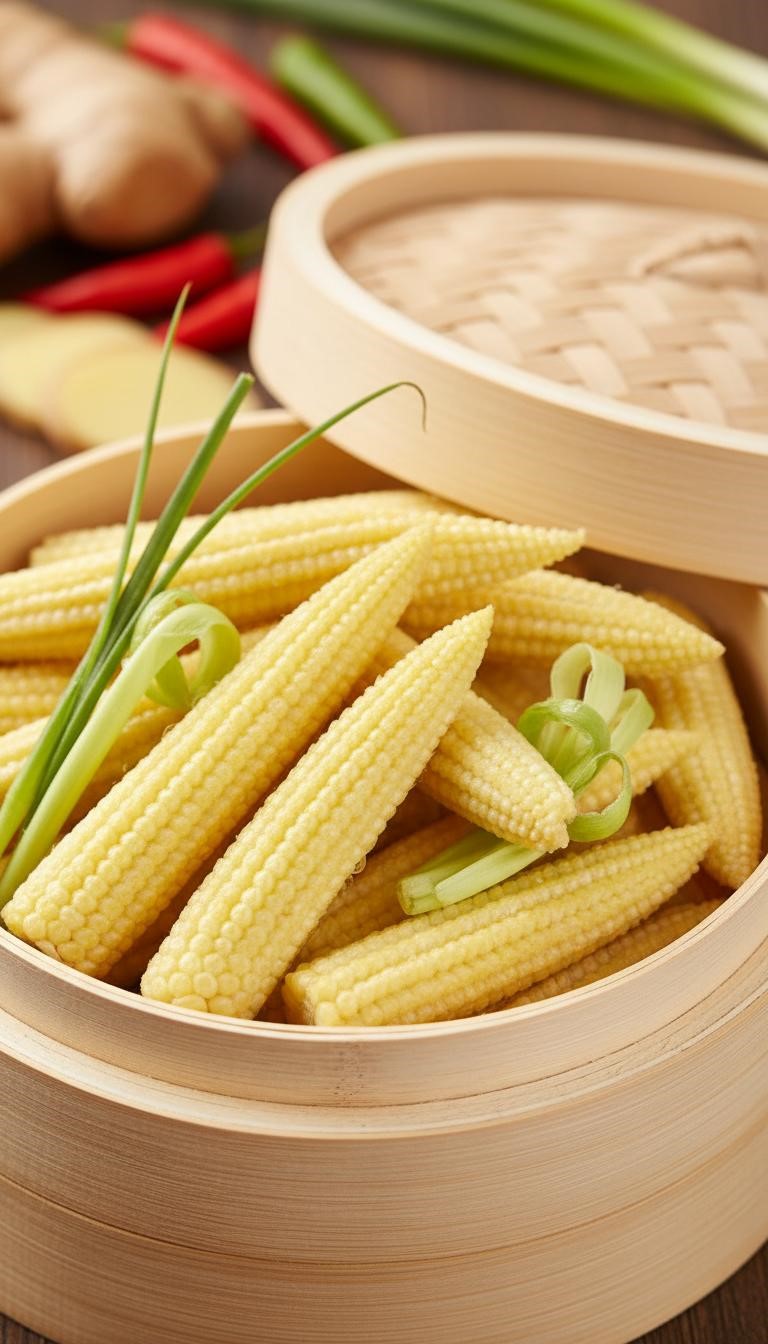
Miniature ears no larger than a finger have become fixtures in stir-fries and Asian-inspired salads, yet many consumers remain unaware that fresh baby corn cobs are not a separate species but simply immature versions of standard corn. The history of fresh baby corn cobs begins in the Americas, where maize was domesticated around 9,000 years ago in the Balsas River Valley of Mexico. Indigenous peoples consumed corn at every stage of development, including the tender young ears that we now call baby corn. When Spanish colonizers carried maize back to Europe in the fifteenth century, and then onward to Asia via Portuguese and Dutch trade routes, the practice of harvesting immature ears traveled with it.
The transformation of fresh baby corn cobs into a distinct commercial product occurred primarily in Thailand and Taiwan during the mid-twentieth century. Farmers discovered that removing the young ears from the stalk stimulated the plant to produce more, increasing overall yield while creating a valuable secondary crop. By the 1980s, Thailand had established itself as the dominant global exporter, canning and exporting millions of tons annually. The fresh version, however, remained largely confined to local markets until improved cold-chain logistics allowed air-freighted produce to reach Western supermarkets in the 1990s.
Biblical texts do not mention fresh baby corn cobs directly, which is expected given their New World origin and the geographic focus of scripture. However, the broader themes of harvest and grain abundance resonate throughout. Genesis 41 describes Pharaoh’s dream of seven fat ears of corn and seven thin ears, establishing corn as a symbol of prosperity and famine in ancient Near Eastern imagination. Ruth 2:23 notes that Ruth gleaned barley until the end of barley harvest and wheat harvest, reflecting the agricultural rhythms that governed ancient life. These passages frame the cultivation of grain at every stage as a divine blessing, a sentiment that extends logically to the tender young ears we now consume.
Several distinct varieties define the modern market. Standard yellow and white corn varieties harvested at two to three days post-silking produce the familiar miniature ears found in most supermarkets. Specialty varieties bred specifically for baby corn production yield smaller, more uniform ears with tighter kernel rows. Some Asian markets offer purple or red baby corn, though these remain niche products. The distinction between fresh baby corn cobs and canned versions is crucial; fresh specimens offer crisp texture and subtle sweetness that industrial processing destroys through heat and brine. Some traditional forms have faded. Indigenous American practices of consuming young corn raw or lightly roasted have largely disappeared, replaced by stir-frying and steaming techniques imported from Asian cuisines. The predecessor to all commercial fresh baby corn cobs was simply the immature ear plucked from any cornfield, a practice that predates organized agriculture.
Extremes in scale capture attention. Commercial operations harvest baby corn by hand, with workers walking through fields daily to catch ears at the precise moment of optimal tenderness. The largest producers in Thailand process hundreds of tons daily during peak season. At the opposite end, home gardeners occasionally discover forgotten ears that have grown past the baby stage but not yet reached full maturity, creating an intermediate vegetable too tough for raw eating but too small for standard corn preparation. The smallest fresh baby corn cobs, barely two inches long, appear as garnishes in high-end restaurants.
Global impact continues expanding. The baby corn market generates substantial revenue, with fresh versions commanding premium prices over canned alternatives due to shorter shelf life and higher transport costs. What began as a byproduct of standard corn cultivation has evolved into a dedicated crop, with farmers selecting varieties specifically for miniature ear production. From ancient Mexican fields to modern Thai processing plants and Western salad bars, fresh baby corn cobs demonstrate that the most delicate stage of a plant’s life often carries the most concentrated culinary potential.