
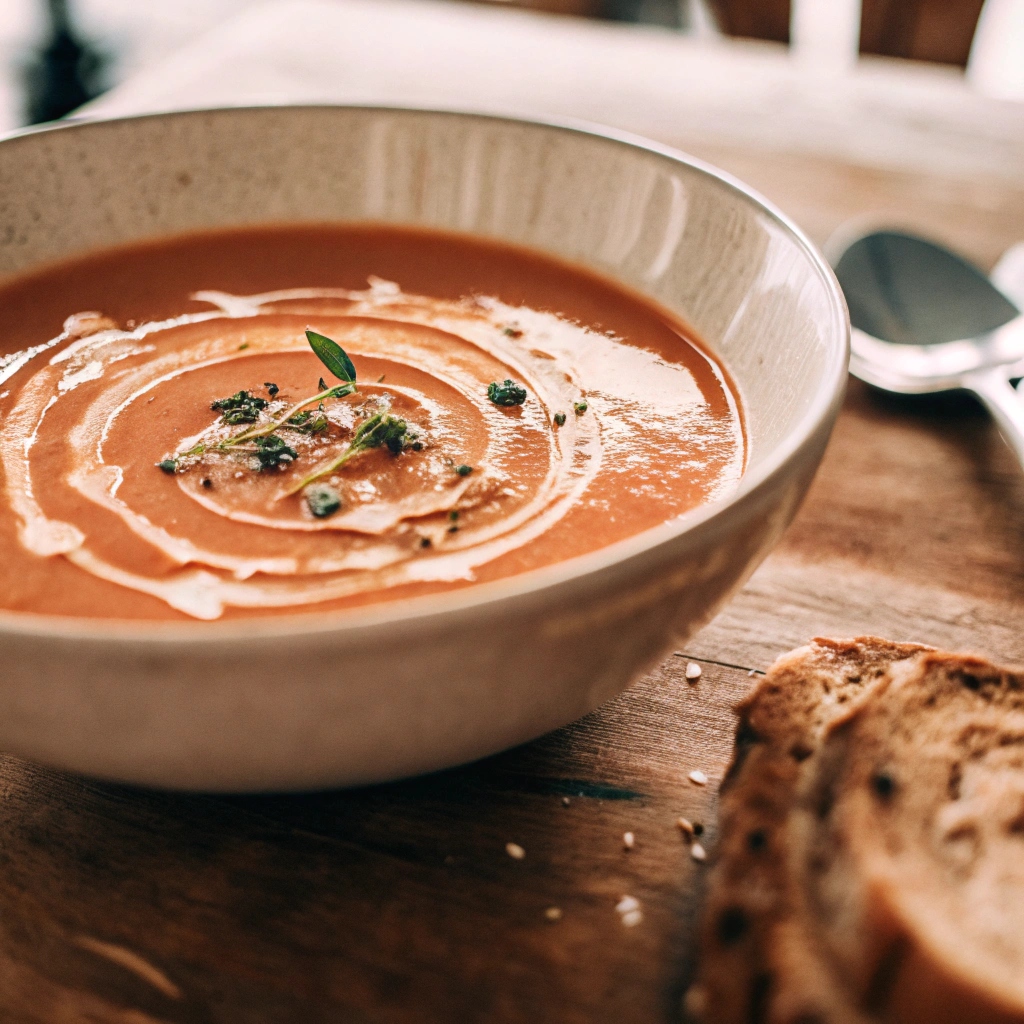
There is a particular kind of comfort that only a bowl of orange soup can provide. Not the bright, aggressive orange of a traffic cone, but the deep, burnished amber of autumn leaves held against late afternoon sun. This soup is that color. It begins with carrots that have been roasted until their edges caramelize and their natural sugars deepen into something almost nutty. Fresh ginger adds a quiet heat that builds slowly, warming the back of your throat without ever overwhelming. Coconut milk rounds everything into silk. I make this on days when the sky is gray and I need the kitchen to feel like a fireplace. It requires almost no attention once the carrots are in the oven, which means you can read a chapter, answer emails, or simply stand at the window and watch the rain while your house fills with the smell of roasting roots and spice.
What You’ll Need 2 lbs large carrots (about 8, peeled and cut into 2-inch chunks), 2 tbsp olive oil, 1 tsp kosher salt, ½ tsp black pepper, 2 large shallots (peeled and quartered), 1 tbsp fresh ginger (peeled and grated, about a 1-inch piece), 3 cloves garlic (smashed), 4 cups vegetable broth, 1 can (13.5 oz) full-fat coconut milk, 1 tbsp maple syrup, 1 tbsp white miso paste, 1 tsp ground cumin, ½ tsp ground coriander, ¼ tsp ground cardamom, 2 tbsp fresh lemon juice, 2 tbsp coconut oil, ¼ cup toasted pumpkin seeds, 2 tbsp fresh cilantro (chopped), flaky sea salt (for finishing).
How to Make It Preheat your oven to 425°F. Spread the carrot chunks and quartered shallots on a large rimmed baking sheet. Drizzle with olive oil, sprinkle with kosher salt and black pepper, and toss with your hands until evenly coated. Roast for 35 to 40 minutes, turning once halfway through, until the carrots are deeply tender and caramelized at the edges—almost burnt in spots, which is exactly what you want. The shallots should be soft and collapsed, their sweetness concentrated. Let them cool slightly. In a large Dutch oven or heavy pot, warm the coconut oil over medium heat. Add the grated ginger and smashed garlic, cooking for 1 minute until fragrant but not browned. Add the roasted carrots and shallots, followed by the vegetable broth, ¾ cup of the coconut milk (reserve the rest for swirling), maple syrup, white miso, cumin, coriander, and cardamom. Bring to a gentle boil, then reduce heat and simmer for 10 minutes to let the flavors marry. Remove from heat and blend until completely smooth using an immersion blender, or carefully transfer in batches to a standing blender. The soup should be velvety and thick, coating the back of a spoon. Stir in the fresh lemon juice, which brightens everything and balances the sweetness. Taste and adjust salt if needed. Ladle into warm bowls. Drizzle the reserved coconut milk over the surface in a thin spiral, then drag a toothpick or the tip of a knife through it to create a simple feather pattern. Scatter toasted pumpkin seeds, fresh cilantro, and a pinch of flaky sea salt over each bowl.
Roasting transforms carrots from sweet and simple into something complex and almost meaty. The high heat drives moisture out and concentrates their sugars, creating those dark, blistered edges that taste like caramel. Ginger brings a clean, spicy warmth that cuts through the natural sweetness and keeps the soup from feeling one-dimensional. The white miso is the secret ingredient—it adds an umami depth that makes the soup taste like it simmered for hours, not minutes. Coconut milk contributes body and richness without dairy, while the maple syrup bridges the gap between savory and sweet in a way that feels natural, not dessert-like. The lemon juice at the end is non-negotiable; without it, the soup is too heavy. With it, the flavors lift and sing. The cardamom is subtle, almost undetectable, but it adds a faint floral note that makes people pause and ask what that something-special is.
Use the largest carrots you can find; they roast better than thin ones, which tend to dry out. Do not skip the caramelization—those dark edges are where the flavor lives. If your soup is too thick after blending, thin it with a splash of broth or water. If too thin, simmer uncovered for a few more minutes. The miso should be stirred in after the soup is no longer boiling, to preserve its beneficial enzymes and delicate flavor. For a more substantial meal, serve with crusty bread spread with good butter, or float a few crispy chickpeas on top for crunch. The coconut swirl is optional but worth the extra thirty seconds—it turns a weeknight soup into something that looks like it came from a restaurant kitchen. This soup keeps beautifully for four days in the refrigerator and freezes well for up to three months, though the coconut swirl and garnishes should be added fresh.
Roasted Carrot & Ginger Soup with Coconut Swirl is the kind of recipe that reminds you how little you need to be satisfied. A few root vegetables, some warming spices, a can of coconut milk, and time. It is humble food made elegant through care and attention. Make it for someone who needs warming, or make it for yourself on a night when the world feels too loud and you need the quiet ritual of chopping, roasting, blending, and finally, cradling a warm bowl in both hands.
To simple things, done slowly. 🥕