
For most of human history, summer was not a season of liberation but of brutal, sun-scorched labor. The agricultural calendar of ancient Mesopotamia, Egypt, and medieval Europe treated the long days as a window of frantic activity—harvesting grain, threshing wheat, storing enough sustenance to survive the winter. The very word “summer” derives from Old English sumor, a time of plenty that demanded toil rather than rest. The concept of summer as a season of personal freedom is, in the grand sweep of civilization, a remarkably recent invention.
The ancient Greeks came closest to our modern sentiment with their calendar of festivals. The Panathenaea and the Olympic Games were held in high summer, accompanied by a sacred truce that suspended warfare across the Hellenic world. For a few weeks, citizens could travel, compete, and worship without fear of invasion. Yet this was communal liberty, not individual leisure. The Roman feriae of June and July offered similar respites, but for the vast majority of laborers, summer brought no reprieve from the fields or the mines.
The Bible captures summer’s dual nature with characteristic precision. In Psalm 74:17, the psalmist praises God for having “set all the borders of the earth” and established “the summer and winter.” Proverbs 6:8, in its praise of the industrious ant, warns against the laziness of summer: “Provide her meat in the summer, and gathereth her food in the harvest.” Yet Ecclesiastes offers a counterbalance, insisting that there is a time for every purpose under heaven—a theological latitude that would eventually make room for the idea that rest itself is sacred. The Jewish calendar’s Shavuot, the Feast of Weeks, arrives in early summer as both a harvest celebration and a commemoration of receiving the Torah, blending obligation and joy.
The modern architecture of summer freedom was built in the nineteenth century, and not for the reasons most assume. The American school summer vacation was not designed to accommodate farm children—harvest season is autumn—but to spare urban students from the cholera and heat of unventilated classrooms in July and August. By the 1870s, this administrative convenience had hardened into tradition, creating an annual mass migration of childhood into unstructured time. Simultaneously, the Industrial Revolution birthed the concept of the “paid holiday,” a radical notion that workers might be given time off without losing wages. Thomas Cook’s first organized railway excursion in 1841 launched the package tour industry, transforming summer from a season into a commodity.
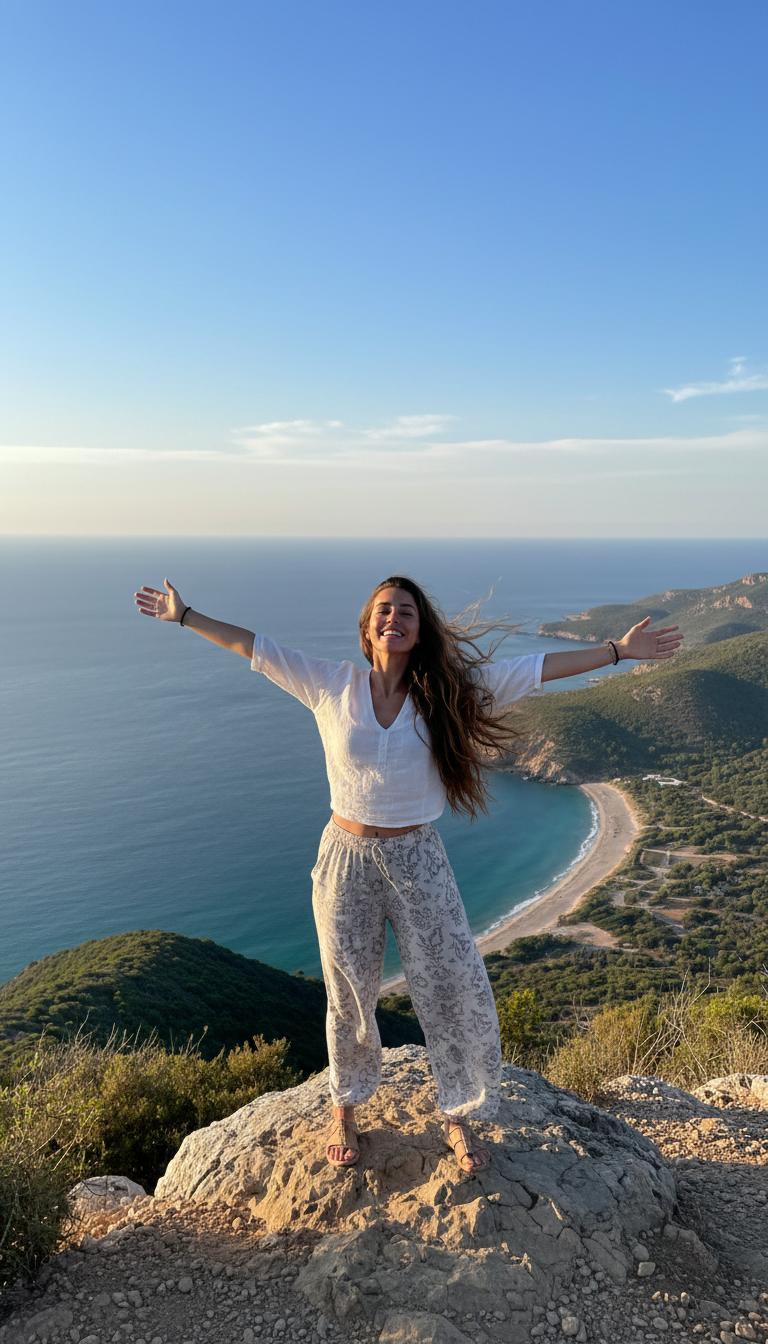
The expressions of this freedom range from the spectacular to the microscopic. The largest is arguably the modern global tourism industry, which swells to over a trillion dollars annually as hundreds of millions migrate toward coastlines and mountains each June through August. At the smallest scale, summer freedom can be found in a single hour—the stolen afternoon of a child reading in a treehouse, the after-work swim that lasts until sunset, the porch sitting that requires no destination and no documentation.
Historically, summer freedom wore different costumes. The European aristocratic “Season” of the eighteenth and nineteenth centuries saw elite families abandon London and Paris for spa towns and alpine retreats, a social choreography of wealth that collapsed with the world wars. The American “summer camp” movement of the early twentieth century, designed to toughen urban boys through wilderness exposure, has evolved into a billion-dollar industry of enrichment and resume-building. The unstructured, unsupervised childhood summers immortalized in twentieth-century literature have largely vanished, replaced by scheduled activities and digital tethering.
What preceded our modern concept was the ancient solstice celebration, the pagan Litha, and the medieval harvest festival—moments when agricultural labor paused for ritual rather than recreation. These were the ancestors of our vacation days, communal rather than individual, sacred rather than commercial.
Today, summer freedom carries enormous psychological and economic weight. Seasonal affective disorder has a summer variant, triggered by the pressure to enjoy oneself. Social media has turned leisure into performance, with the “summer body,” the “summer read,” and the “summer trip” becoming obligations rather than pleasures. Yet the symbolism endures: summer remains the liminal space between who we were and who we might become, the season of long shadows and longer possibilities.
What changed is the texture. Once earned through survival and measured in harvests, summer freedom is now purchased with vacation days and measured in Instagram stories. The ancient farmer feared the winter that followed the solstice; the modern worker fears the inbox that accumulates in their absence. But for a few weeks each year, the world still slows, the evenings still stretch, and the promise remains that somewhere, someone is wasting an afternoon in the sun—and calling it freedom.