
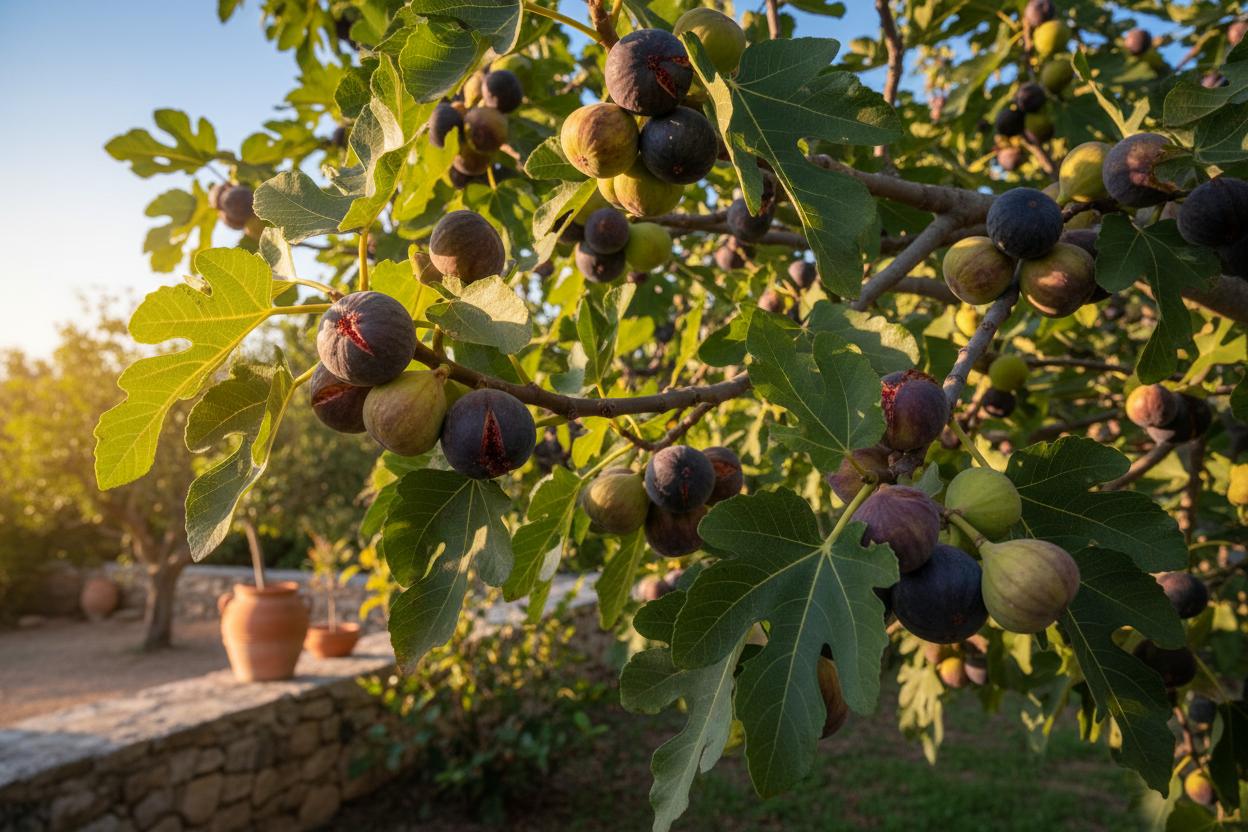
The fig was not merely eaten; it was witnessed. In the Jordan Valley, archaeologists uncovered carbonized figs dating to 9400 BCE, pushing the fruit’s domestication back to the very dawn of agriculture. Before humans cultivated wheat or domesticated cattle, they were already tending fig trees, making this soft, seeded fruit arguably humanity’s oldest agricultural companion. It arrived not as a discovery but as a partnership, a symbiosis so ancient that the tree and the farmer evolved together.
The Bible grants the fig a prominence no other fruit can claim. In Genesis 3:7, Adam and Eve sew fig leaves together to cover their nakedness after the Fall, transforming the fruit into an eternal symbol of modesty and shame. Yet the fig also carries brighter theological weight. The prophet Micah envisions peace as a time when every man shall sit “under his vine and under his fig tree; and none shall make them afraid.” Proverbs 27:18 declares that “whoso keepeth the fig tree shall eat the fruit thereof,” equating patience with reward. Most dramatically, the Gospels describe Jesus cursing a barren fig tree (Mark 11:12-14), a moment so potent that the tree withered overnight, becoming a parable of spiritual fruitfulness.
The ancient Greeks treated figs with a reverence bordering on obsession. Solon, the Athenian lawmaker, once decreed that fig exportation was a crime punishable by death, so precious was the crop to the city’s economy. Roman emperors gorged on them; Pliny the Elder catalogued dozens of varieties and noted that the aristocracy of his age had begun to fatten figs with manure and bird’s milk to achieve impossible sweetness. The fig was so entwined with Roman luxury that the word “sycophant”—literally “fig-shower”—referred to informants who illegally revealed the secrets of fig cultivation to outsiders.
The fig tree itself is a botanical marvel. The largest known fig tree, a Moreton Bay specimen in Queensland, Australia, spreads across one hectare and is estimated to be over 150 years old, though its fruit is not the sweet dessert fig of the Mediterranean. The largest edible fig variety, the Ficus carica ‘Black Mission’, can produce fruits the size of a child’s fist. At the opposite extreme, the tiny wild caprifigs of the Mediterranean measure mere centimeters, their value lying not in human consumption but in hosting the microscopic fig wasp essential for pollination—a relationship so intricate that neither species can survive without the other.
Today’s commercial landscape is dominated by varieties that would have astonished Pliny. The Black Mission, with its deep purple skin and crimson interior, anchors the California industry. The Calimyrna, golden and nutty, fills bulk bins in dried fruit aisles. The Adriatic fig, pale green and intensely sweet, commands premium prices at farmers’ markets. The Brown Turkey, hardy and prolific, thrives in backyard gardens from London to Melbourne. Yet dozens of ancient varieties have vanished. The Roman ‘Liviana’, praised by poets for its honeyed flesh, exists now only in agricultural texts. The ‘Marangiana’, once the pride of Sicily, was lost to blight in the nineteenth century.
What preceded the cultivated fig was the wild Ficus carica, a scraggly mountain tree whose fruit was smaller, drier, and less reliable. The leap from foraging to cultivation likely happened when some Neolithic farmer noticed that a cutting taken from a sweet tree reproduced the parent’s flavor, bypassing the genetic lottery of seeds.
Today, figs generate billions in global trade, from dried fruit exports to California fresh fig seasons. They symbolize abundance, fertility, and peace, yet also carry the shadow of that first garden, the leaves that hid rather than revealed. What changed most profoundly is their status. Once the caloric foundation of ancient civilizations, they have become a luxury item, a cheese-board garnish, an artisanal jam. The fruit that sustained the first farmers now arrives at gourmet shops wrapped in plastic, priced per piece. But in the heat of a Mediterranean August, when a fig splits open on the branch and drips its honey onto the earth, the ancient sweetness remains unchanged—a taste that predates history itself, waiting for the next hungry hand.