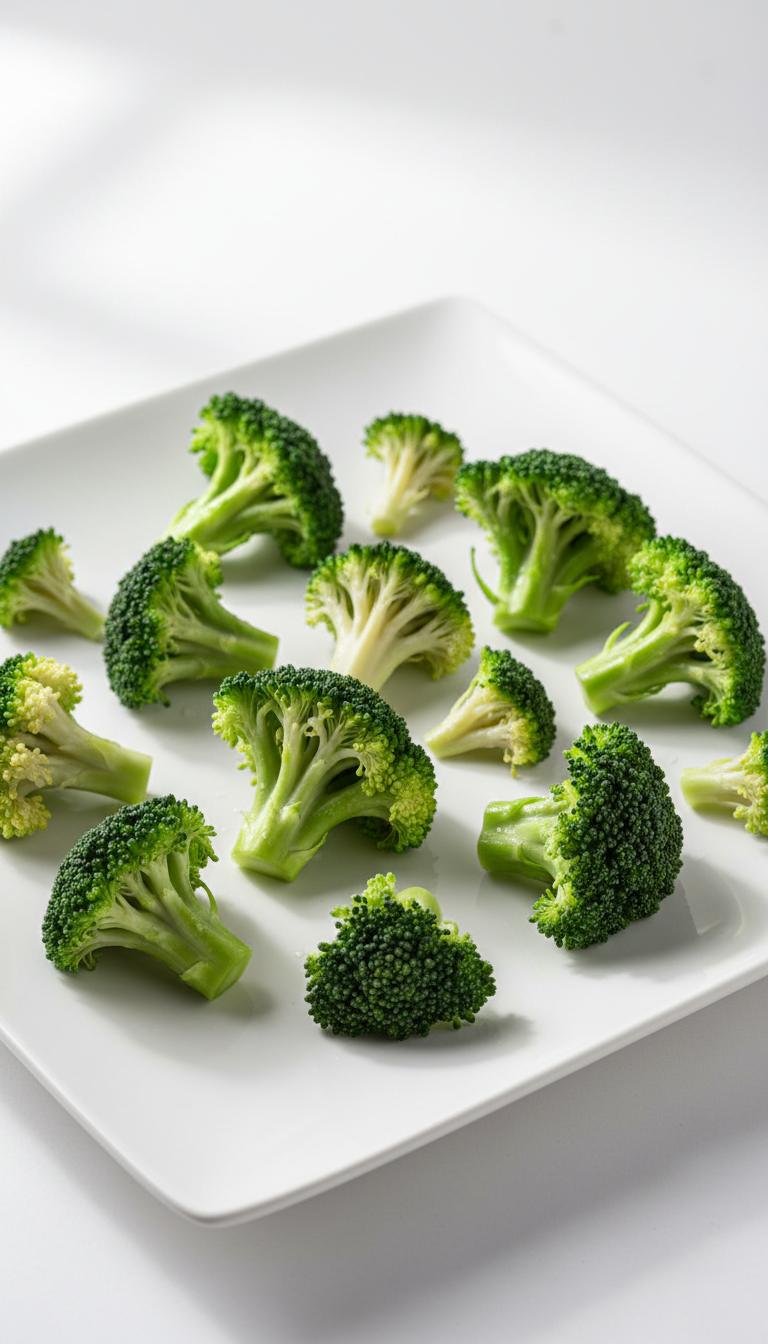

Few vegetables carry the weight of history quite like broccoli. This dense, tree-like green floret has journeyed from the rocky Mediterranean coastlines of ancient civilizations to the modern dinner plates of billions, yet its story remains surprisingly unknown to those who casually steam it for Tuesday night dinners. The narrative of broccoli is one of imperial gardens, selective breeding, religious symbolism, and global agricultural dominance—a tale far richer than its reputation as a childhood dinner table nemesis suggests.
The origins of broccoli stretch deep into antiquity, rooted firmly in the fertile crescent of human civilization. The Etruscans, an ancient Italian civilization predating the Roman Empire, were among the first to cultivate wild cabbage relatives in what is now Tuscany and Lazio. These early horticulturalists, operating roughly between the 8th and 2nd centuries BCE, developed primitive forms of broccoli through careful selection of wild Brassica oleracea plants growing along Mediterranean cliffs. The Romans, ever eager adopters of Etruscan agricultural wisdom, embraced these green-headed vegetables with particular enthusiasm. Pliny the Elder, writing in his Natural History around 77 CE, documented the existence of numerous cabbage varieties, including what scholars believe were early broccoli cultivars. Roman agricultural manuals from the 1st century CE describe vegetables matching broccoli’s distinctive characteristics—tight clusters of flower buds harvested before blooming.
The biblical connection to broccoli remains one of the more fascinating, if debated, chapters in its history. While the King James Version and most modern translations do not explicitly mention “broccoli,” biblical scholars and culinary historians have long speculated about its presence in ancient texts. The Hebrew word “mallow” or certain references to “green herbs” in passages like Job 30:4 and Proverbs 15:17 may have encompassed early brassica varieties. More compellingly, the Greek word “krambe” appears in classical texts and some Septuagint interpretations, potentially referring to broccoli’s cabbage ancestors. The apocryphal Book of Sirach, written around 200 BCE, mentions various cultivated greens that would have included brassicas. During the medieval period, monks in Italian monasteries meticulously copied these ancient texts while simultaneously cultivating broccoli in their walled gardens, effectively preserving both the literary and agricultural lineage of the vegetable.
The Renaissance marked broccoli’s transition from regional curiosity to internationally recognized crop. Catherine de Medici, the Florentine noblewoman who became Queen of France in 1547, famously brought her personal chefs and her beloved broccoli across the Alps when she married Henry II. This culinary migration introduced French kitchens to the vegetable, though it initially faced resistance from courtiers accustomed to more established fare. The name “broccoli” itself derives from the Italian “broccolo,” meaning “the flowering crest of a cabbage,” which traces further back to the Latin “brachium” meaning arm or branch—a fitting description of its stalky, branching structure. By the 16th century, broccoli had spread throughout the Italian peninsula, with distinct regional varieties emerging in Calabria, Sicily, and Rome.
The British encounter with broccoli began in earnest during the early 18th century, though it arrived not as a culinary treasure but as a botanical curiosity. Peter Collinson, an English cloth merchant and avid botanist, received seeds from Italian correspondents around 1720, noting in his correspondence that this “Italian asparagus” produced “heads of a most agreeable flavor.” The vegetable struggled to gain traction in British markets, where cabbage and cauliflower already dominated brassica consumption. Thomas Jefferson, ever the experimental horticulturist, planted broccoli at Monticello in the early 19th century, recording his trials in meticulous garden journals. His efforts helped establish broccoli in American soil, though it would take another century before it became a staple rather than an exotic novelty.
The 20th century witnessed broccoli’s meteoric rise to global prominence, driven by Italian immigration and changing nutritional science. Between 1880 and 1920, millions of Italian immigrants arrived in the United States, bringing their seeds, recipes, and agricultural knowledge. Broccoli cultivation concentrated in California’s Salinas Valley and the central coast, where Mediterranean-like climates proved ideal. The real turning point came in the 1970s and 1980s, when nutritional research began highlighting cruciferous vegetables’ health benefits. Broccoli emerged as a superstar, packed with sulforaphane, glucosinolates, fiber, and vitamins C and K. American consumption tripled between 1970 and 1990, transforming it from an ethnic specialty to a mainstream American vegetable.
Today’s broccoli landscape presents a fascinating paradox of abundance and loss. The most widely cultivated variety remains Calabrese broccoli, named for its Italian region of origin, producing the familiar large green heads with thick stalks. Sprouting broccoli, particularly the purple cultivars popular in England and Italy, offers multiple smaller shoots over extended harvest periods. Romanesco broccoli, with its mesmerizing fractal patterns and pale green hue, represents perhaps the most visually striking variety—a natural approximation of mathematical perfection that has captivated mathematicians and chefs alike. Chinese broccoli, or gai lan, with its thick, glossy leaves and slender stems, dominates Asian markets and represents a distinct evolutionary branch. Broccolini, a hybrid of broccoli and Chinese kale developed in Japan during the 1990s, has captured contemporary palates with its tender stalks and mild flavor.
Yet this diversity masks a troubling agricultural reality. The FAO estimates that over 90% of commercial broccoli production relies on fewer than ten hybrid varieties, with Calabrese derivatives dominating global trade. Heritage varieties like the Sicilian Violet, the ancient Romanesco di Jesi, and the sprawling Calabrian Cauliflower-broccoli crosses have vanished from commercial fields, preserved only in seed banks and small-scale heritage farms. The industrial demand for uniform maturity dates, mechanical harvest compatibility, and long-distance shipping durability has winnowed centuries of genetic diversity into a handful of commercially viable strains. Climate change poses an additional threat, as broccoli requires consistent cool temperatures between 60-70°F for optimal head development; rising global temperatures are pushing cultivation into higher latitudes and elevations, potentially displacing traditional growing regions.
The symbolic weight of broccoli has evolved dramatically across cultures and centuries. For the Romans, brassicas held medicinal and almost mystical significance—Cato the Elder devoted entire chapters to cabbage cures, believing the vegetable could treat everything from digestive ailments to wounds. Medieval European folklore associated broccoli and its relatives with protection against malevolent spirits, hanging dried stalks above doorways. In contemporary Japan, broccoli has become a symbol of healthy living and maternal care, frequently appearing in bento boxes as trees fashioned from the florets to encourage children’s vegetable consumption. The vegetable’s distinctive appearance has made it a visual shorthand for “healthy eating” in global advertising, often representing the sometimes reluctant relationship modern consumers have with nutritional virtue.
The prehistory of broccoli leads inevitably back to the sea cliffs of Europe and Asia Minor, where wild cabbage, Brassica oleracea, clung to limestone outcroppings thousands of years ago. This hardy coastal plant, with its thick leaves and salt-tolerant constitution, became humanity’s most successfully manipulated vegetable species. From this single wild ancestor emerged not just broccoli, but cabbage, cauliflower, kale, Brussels sprouts, collard greens, and kohlrabi—a botanical family tree so diverse that the casual observer would never guess these vegetables share a common ancestor. The transformation from scraggly cliff plant to the compact, domed heads of modern broccoli represents one of agriculture’s most remarkable achievements in selective breeding, accomplished without genetic engineering over roughly three millennia.
Broccoli’s contemporary global impact extends far beyond the produce aisle. The vegetable generates over $25 billion annually in global agricultural trade, with China, India, the United States, and Spain leading production. California alone produces 90% of American broccoli, concentrated in a geographic area vulnerable to drought and climate shifts. The crop has driven innovations in harvesting machinery, post-harvest cooling technology, and hybrid seed development. Nutritionally, it anchors public health campaigns worldwide, recommended by medical institutions for cancer prevention, heart health, and immune support. The discovery of sulforaphane’s potential neuroprotective properties has sparked new research into broccoli’s role in combating cognitive decline, potentially expanding its significance from dietary staple to pharmaceutical precursor.
What changed most dramatically between ancient Roman gardens and contemporary supermarkets was not the vegetable itself but humanity’s relationship with it. The Romans prized broccoli for its perceived medicinal properties and status as a cultivated luxury; medieval Europeans viewed it through the lens of monastic herbalism; Renaissance Italians celebrated it as culinary art; 20th-century Americans reluctantly accepted it as a nutritional obligation; and today’s global consumers approach it with unprecedented sophistication—roasting it to caramelized perfection, blending it into smoothies, or transforming it into gluten-free rice alternatives. The vegetable that once signified imperial privilege and later represented parental coercion now embodies the complex modern desire for food that is simultaneously healthy, sustainable, ethical, and delicious.
The future of broccoli hangs in a delicate balance between innovation and preservation. CRISPR gene-editing technology promises varieties with enhanced nutritional profiles and climate resilience, while the slow food movement fights to preserve heritage cultivars at risk of extinction. Vertical farming and hydroponic systems are experimenting with year-round local production, potentially reducing the carbon footprint of a vegetable that currently travels thousands of miles to reach northern climates. As the global population approaches ten billion, broccoli stands as both a solution and a symbol—proof that human ingenuity can transform a wild coastal weed into a global nutritional pillar, and a reminder that such transformations require the preservation of the very genetic diversity that made them possible.