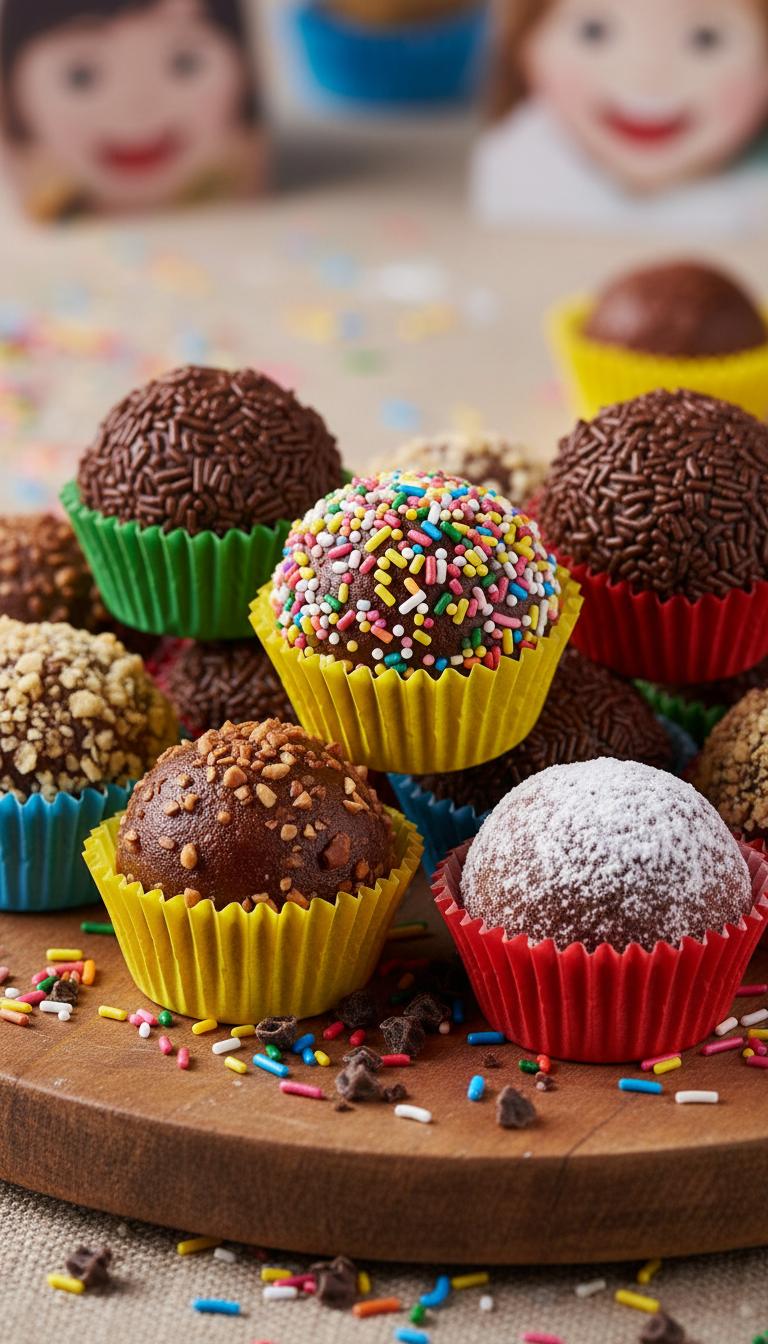
Condensed milk, butter, and cocoa powder—three humble ingredients, stirred over low heat until they thicken into a glossy, fudgy mass, then rolled into bite-sized spheres and coated in chocolate sprinkles. The brigadeiro is deceptively simple, yet it carries the weight of Brazilian national identity, political history, and the ingenuity of a culture that learned to create abundance from scarcity. No Brazilian birthday party is complete without a tray of these sticky, chocolate-dusted balls, and no Brazilian child grows up without the memory of licking the spoon while the mixture cools in the pot.
The brigadeiro was born in the 1940s, during World War II, when fresh milk and sugar were rationed and imported chocolates were virtually unavailable. Condensed milk, produced domestically and shelf-stable, became the foundation of Brazilian home baking. The original recipe—called brigadeiro after a popular political figure—was a makeshift solution to wartime deprivation, a way to satisfy the national sweet tooth when European confectionery was out of reach. Eduardo Gomes, a Brazilian Air Force brigadier and presidential candidate, inspired the name when supporters sold the candy at his campaign rallies in 1945. The dessert outlived the candidate’s political ambitions, becoming far more famous than the man himself.
The technique of the brigadeiro is specific and unforgiving. The mixture must be stirred constantly over low heat until it pulls away from the bottom of the pan in a thick, glossy mass—ponto de brigadeiro, the “brigadeiro point” that experienced cooks recognize by sight and texture rather than temperature or timing. Too little cooking, and the balls will not hold their shape; too much, and the mixture becomes grainy and stiff. This narrow window of perfection makes the brigadeiro a test of patience and intuition, a candy that cannot be rushed.
Extremes of brigadeiro culture are both spectacular and intimate. The largest brigadeiro ever made was a promotional giant in São Paulo, weighing over 80 kilograms and requiring industrial-scale mixing equipment. At the opposite extreme, the “mini brigadeiro“—barely larger than a grape—has become a popular party favor and wedding treat, often served in paper cups with a tiny spoon. The most expensive brigadeiro on record was created by a luxury confectioner in Rio de Janeiro, incorporating single-origin cocoa from the Amazon, Madagascar vanilla, and edible gold leaf, priced at over $10 per piece.
Today’s brigadeiro landscape has expanded far beyond the original chocolate. The beijinho—coconut brigadeiro rolled in shredded coconut—is the classic white alternative. Casadinho combines chocolate and coconut layers in a single bite. Brigadeiro de pistache, de maracujá, de café—pistachio, passion fruit, coffee—demonstrate the form’s adaptability. The brigadeiro de churros, incorporating cinnamon and dulce de leche, reflects the Hispanic influence on Brazilian sweets. The “gourmet brigadeiro” movement of the 2010s introduced premium ingredients, artisanal presentations, and boutique shops that elevated the humble party candy to luxury status. Yet some traditions have faded. The original wartime brigadeiro, made with rationed condensed milk and whatever cocoa powder was available, has been replaced by versions using imported Belgian chocolate and organic butter. The hand-rolled, home-kitchen brigadeiro of mid-century Brazilian households has been partially eclipsed by factory-produced versions sold in supermarkets.
What preceded the brigadeiro was the broader Latin American tradition of dulce de leche—milk and sugar slow-cooked until caramelized—and the European fudge and truffle traditions that arrived with colonization. The leap to the brigadeiro specifically required the availability of condensed milk, the political moment of Eduardo Gomes’s campaign, and the Brazilian genius for transforming limitation into celebration.
Today, the brigadeiro generates billions in Brazilian revenue and has begun to conquer global markets, with brigadeiro shops opening in Lisbon, London, and Los Angeles. It symbolizes Brazilian warmth, resourcefulness, and the national conviction that no gathering is complete without something sweet. What changed most profoundly is its status. Once a humble wartime substitute, the brigadeiro is now a gourmet export, a wedding essential, and a source of national pride. The condensed milk can that sustained Brazilian sweetness during rationing has become a luxury ingredient in international confectionery. Yet the essential pleasure remains unchanged: the sticky fingers, the chocolate-sprinkled lips, the communal ritual of gathering around the pot to scrape the last glossy traces. The brigadeiro that emerged from scarcity has become a symbol of abundance, proof that the sweetest things are often born from the leanest times.

Authentic Brigadeiro Recipe (Brazilian Fudge Balls)
Ingredients:
1 can (14 oz / 397g) sweetened condensed milk
2 tablespoons unsalted butter
4 tablespoons high-quality cocoa powder (or 7 tablespoons chocolate powder like Nescau)
Pinch of sea salt
1 teaspoon vanilla extract (optional)
Chocolate sprinkles (granulado) for coating
Instructions:
Prep your station: Before heating, set out a plate with chocolate sprinkles and grease a small plate or tray with butter. Have a small bowl of cold water ready for testing consistency.
Combine base ingredients: In a heavy-bottomed saucepan or non-stick pan, mix condensed milk, butter, cocoa powder, and salt. Whisk until completely smooth before applying any heat—this prevents lumps.
Cook low and slow: Place over medium-low heat. Stir constantly with a wooden spoon or silicone spatula, scraping the bottom and sides continuously. The mixture will gradually thicken from liquid to glossy paste over 10-15 minutes.
Test for “ponto de brigadeiro”: The candy is ready when it thickens enough to:
Pull away cleanly from the bottom of the pan when stirred
Form a distinct trail that holds its shape for several seconds
Pass the “cold water test”: drop a small amount into cold water—it should form a soft ball that holds together when rolled between fingers
Cool properly: Immediately transfer to your greased plate. Spread slightly to speed cooling. Let rest at room temperature until cool enough to handle, about 30-45 minutes. Do not refrigerate—this hardens the texture.
Shape with buttered hands: Rub palms with butter. Scoop teaspoon-sized portions and roll into smooth balls between your palms. Work quickly while mixture is still pliable.
Coat generously: Roll each ball immediately in chocolate sprinkles until fully covered. Place in paper candy cups or on a serving plate.
Rest before serving: Let brigadeiros set at room temperature for 1-2 hours. They develop better texture and deeper flavor after resting overnight.
Pro Tips:
Pan matters: Use a non-stick pan or well-seasoned heavy saucepan. Thin pans scorch the bottom.
Never stop stirring: Even 10 seconds of neglect can burn the base, ruining the entire batch.
Butter your hands generously: Re-butter between every 3-4 balls to prevent sticking.
Texture test: If mixture won’t hold shape, return to heat for 2-3 more minutes. If too stiff, add 1 teaspoon warm milk and knead.
Storage: Keep in airtight container at room temperature 3-4 days, or refrigerate up to 2 weeks. Bring to room temperature before serving.
Flavor Variations:
Beijinho: Replace cocoa with 5 tablespoons coconut cream, roll in shredded coconut
Casadinho: Make half chocolate, half coconut, press together into two-tone balls
Ninho: Omit cocoa, add 3 tablespoons milk powder, roll in milk powder
Yield: 18-20 brigadeiros
Prep time: 5 minutes
Cook time: 15 minutes
Cooling time: 45 minutes
Total time: 1 hour 5 minutes