
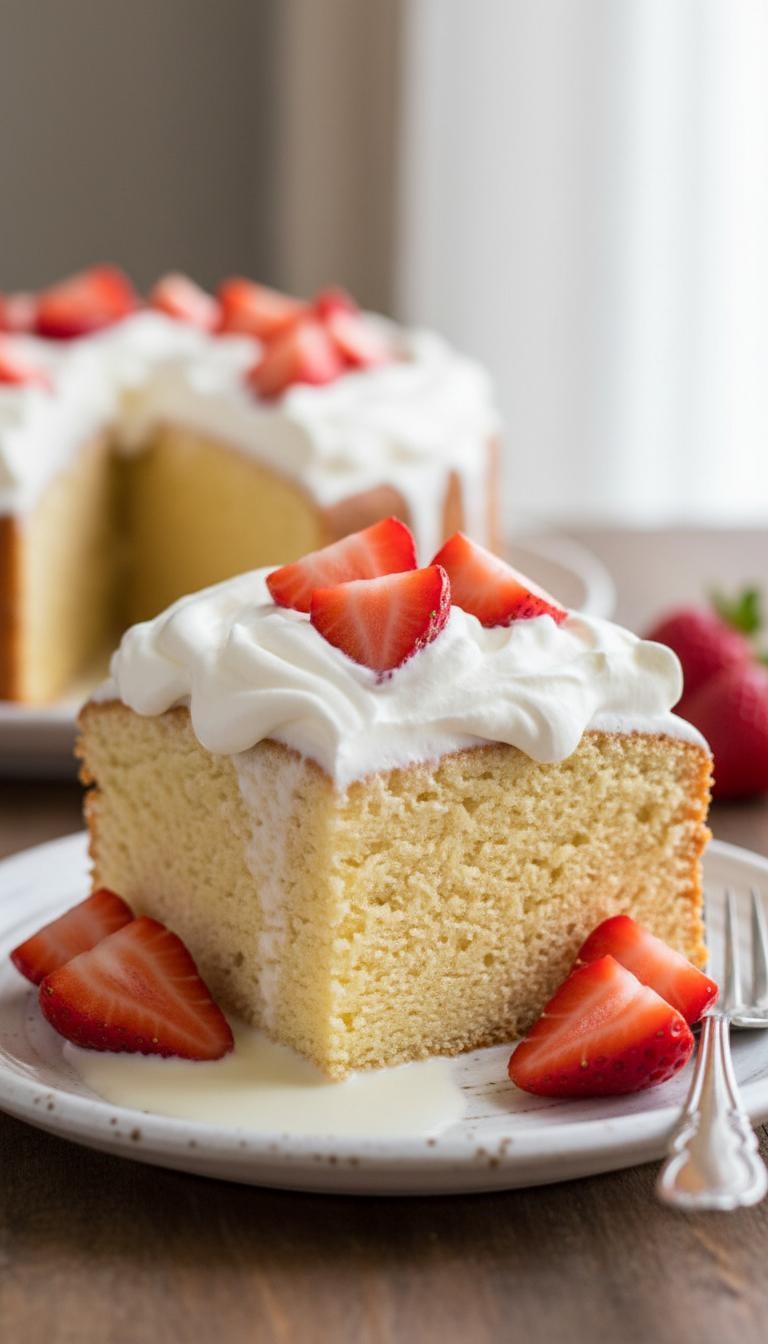
A sponge cake saturated with three milks until it becomes impossibly moist has become one of Latin America’s most beloved desserts, yet its precise origins remain deliciously disputed. Tres Leches Cake traces its lineage to the nineteenth century, when evaporated milk and sweetened condensed milk became widely available through industrial canning. Nestlé claims credit for popularizing the recipe in Latin America by printing it on condensed milk labels, though food historians argue that the concept of milk-soaked cakes predates the corporation by centuries. Medieval European cooks prepared sopas de pan, bread soaked in sweetened milk, while English trifles and Italian tiramisu share the same fundamental principle of saturated starch absorbing creamy liquid.
The most widely accepted origin places Tres Leches Cake in Nicaragua, where it became a national dish so cherished that it was officially declared part of the country’s cultural heritage. From there, it spread through Central America and the Caribbean, with each country adapting the recipe to local tastes. Mexican immigrants later carried it northward, where it became a fixture at quinceañeras, weddings, and family celebrations across the southwestern United States. Some food historians trace an even earlier lineage to Albania, where trilece features a similar three-milk soaking technique, suggesting that the concept may have traveled with European immigrants to the Americas.
Biblical texts do not mention Tres Leches Cake directly, which is expected given its modern origins. However, scripture celebrates the ingredients that define it. Exodus 3:8 describes the Promised Land as flowing with milk and honey, while Proverbs 27:27 notes that goats’ milk is enough for food. These passages frame milk as divine sustenance, a sentiment that resonates with the cake’s luxurious, almost excessive richness. The three milks — evaporated, condensed, and whole cream or coconut milk — create a trinity of dairy that echoes spiritual symbolism without directly referencing it.
Several distinct variations define the contemporary landscape. The classic Nicaraguan version keeps the sponge simple, allowing the milk mixture to dominate. Mexican interpretations often incorporate rum or brandy into the soaking liquid and top the cake with toasted meringue rather than whipped cream. Cuban versions frequently add a layer of guava paste or pineapple between the sponge and the milk soak. Puerto Rican bizcocho de tres leches sometimes substitutes coconut milk for whole milk, creating a tropical profile that pairs with the island’s climate. Some historical forms have faded. Early versions made with fresh, unpasteurized milk have largely disappeared due to food safety regulations. The original Nicaraguan sponge, baked in wood-fired ovens, has been replaced by modern gas and electric baking, though purists argue the flavor suffers.
Extremes in scale capture attention. The largest Tres Leches Cake on record was created in Mexico City for a charity event, measuring over three meters in length and requiring hundreds of liters of milk to saturate. At the opposite end, individual portions served in small glasses or jars have become popular at upscale restaurants, offering the same flavor in a more elegant format. The predecessor to Tres Leches Cake was the simple European milk-soaked bread or cake, a frugal dessert that used stale starch and available dairy.
Global impact is substantial and growing. Tres Leches Cake has transcended its Latin American origins to appear on dessert menus from London to Tokyo, often adapted with local flavors like matcha or passion fruit. In the United States, it has become a symbol of Hispanic cultural pride, featured prominently during Hispanic Heritage Month celebrations and in mainstream baking competitions. Social media has amplified its visual appeal; the gleaming white surface and clean slice reveal make it exceptionally photogenic.
Symbolically, Tres Leches Cake represents abundance and communal sharing. Where a simple cake might serve eight, the saturated sponge stretches to feed twelve or more, making it ideal for large gatherings. What changed most profoundly is context. Once a regional specialty prepared for family celebrations, Tres Leches Cake now appears in supermarket bakeries and chain restaurants, sometimes made with mixes and pre-made soaks rather than from scratch. Yet the core remains unchanged: a humble sponge transformed by patience and dairy into something that tastes like pure comfort. From Nicaraguan kitchens to global dessert trends, Tres Leches Cake continues proving that the simplest techniques often produce the most memorable flavors.
Original Recipe: Classic Tres Leches Cake
Ingredients:
For the Sponge:
- 1½ cups all-purpose flour
- 1 teaspoon baking powder
- ½ teaspoon salt
- 5 large eggs, separated
- 1 cup granulated sugar, divided
- ⅓ cup whole milk
- 1 teaspoon vanilla extract
For the Three Milks:
- 1 can (12 oz) evaporated milk
- 1 can (14 oz) sweetened condensed milk
- 1 cup heavy cream
- 1 teaspoon vanilla extract
- 2 tablespoons dark rum (optional)
For the Topping:
- 2 cups heavy cream, chilled
- ¼ cup powdered sugar
- 1 teaspoon vanilla extract
- Ground cinnamon for dusting
Method:
Preheat the oven to 350°F. Grease and flour a 9×13 inch baking pan. Whisk flour, baking powder, and salt together in a bowl. In a separate large bowl, beat egg yolks with ¾ cup sugar until pale and thick, about 3 minutes. Stir in milk and vanilla. Fold in dry ingredients until just combined.
In a clean bowl with clean beaters, whip egg whites until soft peaks form. Gradually add remaining ¼ cup sugar and beat until stiff but not dry. Gently fold one-third of whites into yolk mixture to lighten, then fold in remaining whites until no streaks remain. Pour into prepared pan and smooth top.
Bake for 25-30 minutes until golden and a toothpick comes out clean. Cool in pan for 10 minutes, then invert onto a wire rack to cool completely. Return cake to the pan or place on a deep serving platter with raised edges.
Whisk evaporated milk, condensed milk, heavy cream, vanilla, and rum if using. Pierce the cooled cake all over with a fork, spacing holes about ½ inch apart. Slowly pour the milk mixture over the cake, allowing it to absorb before adding more. Use all the liquid even if it seems excessive; the sponge will eventually drink it in. Cover and refrigerate for at least 4 hours, preferably overnight.
Before serving, whip heavy cream with powdered sugar and vanilla until stiff peaks form. Spread over the soaked cake. Dust with cinnamon. Serve chilled, cut into squares. The cake keeps refrigerated for up to 3 days and improves in flavor as it sits.