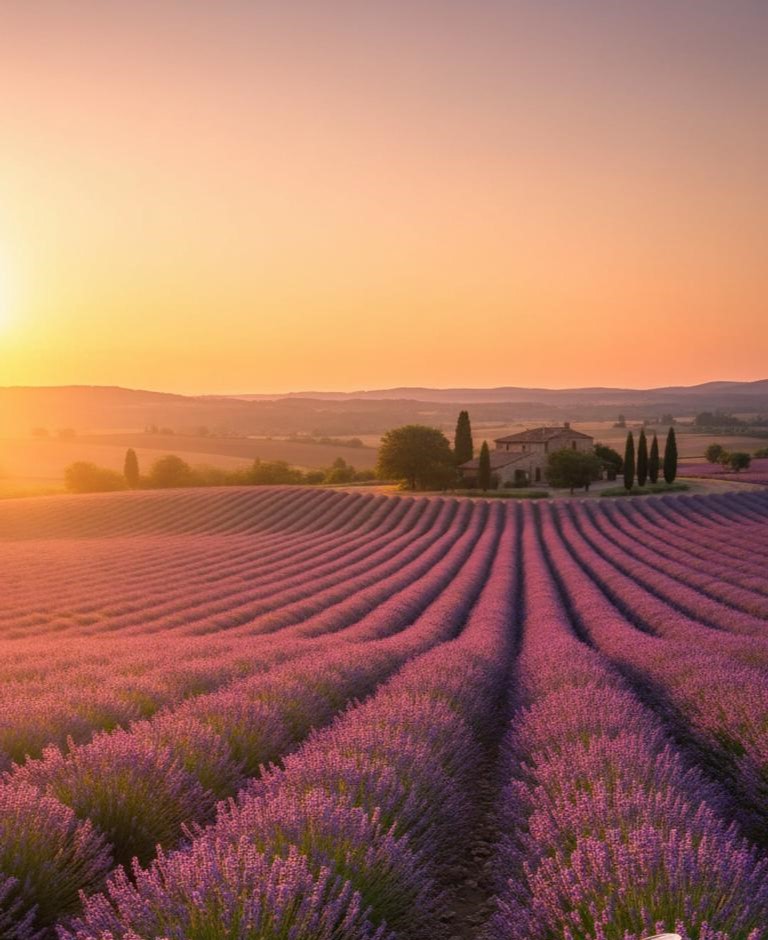
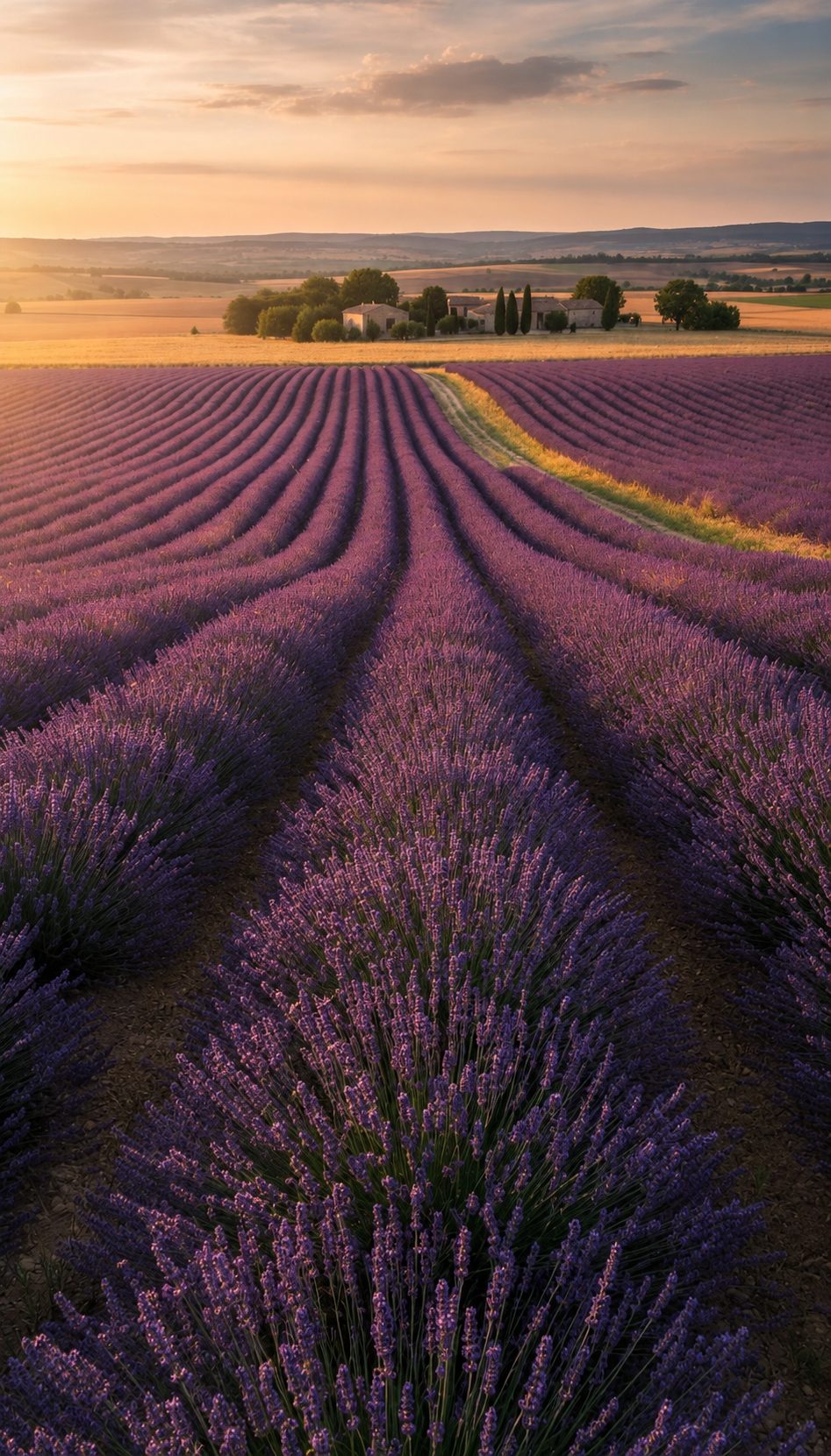
The first thing you notice is the color. Not the flower itself, which is small and unassuming, but the field—the impossible saturation of violet and silver stretching to a horizon that seems to have been dyed by a brush too generous with pigment. Then comes the smell, dry and medicinal, cutting through heat with the authority of something that knows its own power. Lavender does not ask for attention. It commands it, and it has been doing so for longer than most civilizations have existed.
Botanically, lavender belongs to the genus Lavandula, a member of the mint family that includes some forty-seven species native to the Mediterranean basin, the Middle East, and parts of Africa. The most widely cultivated species, Lavandula angustifolia—often called English lavender despite its French origins—thrives in the poor, calcareous soils and hot, dry summers of Provence, where it has been harvested for at least two thousand years. The wild ancestor likely grew on the rocky hillsides of the Arabian Peninsula and North Africa, its silvery foliage an adaptation to drought and intense sunlight.
The Bible mentions lavender, though not with the clarity modern readers might expect. The Hebrew word nard or spikenard, which appears in the Song of Songs and the Gospels, refers to an aromatic oil derived from Nardostachys jatamansi, a plant native to the Himalayas. However, many scholars believe that the biblical “nard” was a generic term for precious fragrant oils, and that lavender—locally abundant in the Levant—may have been included in the mixtures used for anointing and embalming. The Gospel of John describes Mary of Bethany anointing Jesus’ feet with a pound of pure nard, an act of such extravagance that Judas Iscariot objects to the waste. Whether lavender was present in that specific oil is debated, but the association of fragrant herbs with sacred ritual was deeply established in the biblical world.
The ancient Egyptians used lavender in the mummification process, packing the resin-soaked linen with dried flowers to preserve and perfume the dead. The Romans adopted lavender with characteristic thoroughness, adding it to bathwater—the very name derives from the Latin lavare, “to wash”—and using it in cooking, medicine, and insect repellent. Roman soldiers carried lavender oil into battle as an antiseptic for wounds, and Pliny the Elder catalogued its properties in his Naturalis Historia. The Roman habit of scenting public baths with lavender established a cultural association between the herb and cleanliness that persists in the modern word “lavatory.”
Medieval Europe elevated lavender to a position of almost supernatural significance. It was strewn on church floors to purify the air, tucked into royal linens to repel moths, and distilled into “four thieves vinegar,” a concoction said to protect against plague. The herb’s antiseptic properties were not understood scientifically, but empirical observation had established that lavender seemed to keep illness at bay. Monastic gardens across Europe cultivated it systematically, and the Cluniac order in particular became known for the quality of their lavender harvests, which they traded as far as the Baltic.
The true commercialization of lavender began in 16th-century France, when the wild fields of Provence were first cultivated systematically. By the 19th century, the town of Grasse had become the center of French perfumery, and lavender was its foundational ingredient. The ciste and lavande harvests of the Alpes-Maritimes employed thousands of seasonal workers, and the distillation of lavender essential oil became a defining industry of the region. The introduction of the steam distillation process in the 1820s revolutionized production, making lavender oil affordable enough for mass-market soaps and cosmetics.
The taxonomy of lavender today is surprisingly complex. Lavandula angustifolia, the true or English lavender, remains the gold standard for oil production, with its high concentration of linalool and linalyl acetate—the compounds responsible for the characteristic scent. Lavandula latifolia, spike lavender, produces a sharper, more camphoraceous oil favored in medicinal applications. Lavandula x intermedia, a hybrid of the two known as lavandin, dominates commercial cultivation because it yields more oil and grows more vigorously, though purists argue its scent lacks the depth and complexity of true angustifolia. Dozens of ornamental varieties have been developed for garden use, ranging from deep purple to pale pink, white, and even yellowish-green.
Geographically, Provence remains the spiritual home of lavender, though Bulgaria has overtaken France as the world’s largest producer of essential oil, thanks to lower labor costs and vast plantations established after the fall of communism. Australia, particularly Tasmania, has developed a significant lavender industry, and the United Kingdom—where the plant has been cultivated since Roman times—still produces specialty oils from Norfolk, Kent, the Cotswolds, and Yorkshire. The Bridestowe Lavender Estate in Tasmania and the fields of Hokkaido, Japan, have become major tourist destinations, proving that lavender’s visual appeal now rivals its olfactory value.
What has changed most dramatically is lavender’s migration from medicine to lifestyle. For centuries, it was valued primarily as an antiseptic, an insect repellent, and a treatment for nervous disorders. Victorian physicians prescribed lavender oil for hysteria, fainting, and digestive complaints. During World War I, hospitals used lavender oil to dress wounds when conventional antiseptics ran short. Today, these medicinal applications have been largely supplanted by synthetic alternatives, and lavender has been rebranded as a wellness and relaxation product. Its essential oil is diffused in bedrooms, added to bath salts, sprayed on pillows, and marketed as a natural remedy for anxiety and insomnia.
The scientific validation for these claims is mixed. Several studies have shown that lavender oil inhalation can reduce heart rate and cortisol levels in stressful situations, and the compound linalool has demonstrated anxiolytic effects in animal models. However, the evidence for lavender as a treatment for clinical anxiety or sleep disorders remains inconclusive, and the U.S. Food and Drug Administration has not approved lavender oil for any medical indication. The wellness industry, unsurprisingly, has been undeterred.
Symbolically, lavender occupies a space of almost excessive richness. It represents purity, silence, devotion, and calm. In the Victorian language of flowers, it signified distrust—an interesting counterpoint to its modern association with relaxation. In contemporary LGBTQ+ culture, the lavender stripe in the original rainbow flag represented diversity, and “lavender” became slang for the perceived effeminacy of gay men in mid-20th-century America, a usage that has been reclaimed and rejected in equal measure. The color itself—pale, muted, neither assertively masculine nor traditionally feminine—has made lavender a symbol of the non-binary and the in-between.
From an Egyptian embalming chamber to a suburban bedroom diffuser, lavender has proven that the most enduring plants are those that adapt to human need. It does not merely smell good. It sells a promise—the promise of calm in a frantic world, of purity in a polluted one, of a field in Provence that exists forever just beyond the reach of our ordinary lives. The purple hush persists. We simply listen more carefully now.