
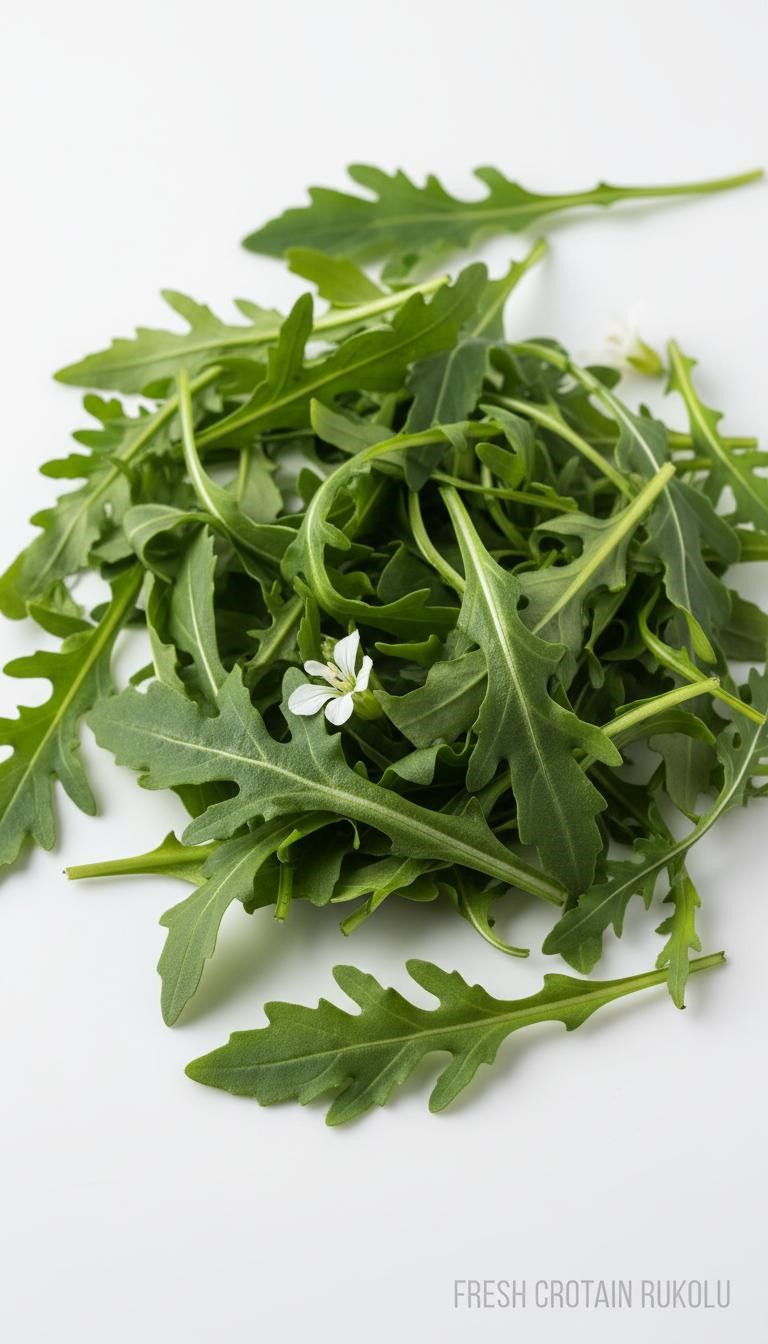
If vegetables could claim royal lineage, arugula would trace its bloodline directly to the Caesars. This unassuming leafy green, with its distinctive bite and delicate lobed leaves, has spent two millennia oscillating between sacred aphrodisiac and common weed, only to emerge in the twenty-first century as the definitive symbol of culinary sophistication. Its story winds through Roman poetry, medieval monastery gardens, Victorian neglect, and the plate of every contemporary bistro from Brooklyn to Brisbane—a trajectory as unexpected as the peppery kick that defines its flavor.
Botanists place arugula’s origins in the sun-scorched Mediterranean basin, where wild Eruca vesicaria clung to limestone soils and coastal scrub long before human cultivation. Unlike many domesticated greens, arugula was not dramatically transformed by agriculture; rather, early civilizations recognized and refined what nature had already perfected. The ancient Egyptians, whose agricultural records reveal a sophisticated understanding of bitter greens, likely harvested wild arugula from the Nile Delta as early as 2000 BCE, though definitive cultivation evidence remains elusive. The plant’s natural drought tolerance and ability to thrive in poor, rocky soils made it an inevitable companion to early farming communities struggling with marginal land.
The Romans elevated arugula from survival food to cultural institution. Pliny the Elder, never one to understate botanical significance, categorized arugula among the most potent medicinal greens, recommending its seeds for digestive ailments and its leaves as a stimulant. Roman agricultural writers of the period documented specific cultivation techniques—sowing in cool seasons, harvesting young leaves before flowering, and mixing seeds with mustard for sequential harvests. The poet Ovid reportedly consumed arugula before romantic encounters, cementing its reputation as an aphrodisiac among the Roman elite. This association became so entrenched that monks during the early Middle Ages were formally prohibited from growing arugula in monastery gardens.
Biblical connections to arugula remain tantalizingly ambiguous. The Hebrew Bible’s references to “bitter herbs” consumed during Passover, particularly in Exodus 12:8 and Numbers 9:11, have sparked centuries of scholarly debate. While modern Jewish tradition primarily identifies these as lettuce, endive, or chicory, some Talmudic commentators and ethnobotanists argue that arugula—known in Hebrew as “eruca” or related ancient terms—may have been among the bitter greens consumed during the Exodus narrative. The plant’s sharp, peppery flavor certainly aligns with the textual description of herbs recalling the bitterness of slavery. Additionally, the apocryphal Book of Sirach mentions “greens that bring vigor,” which certain medieval interpreters connected to arugula’s stimulant properties.
Following the collapse of Rome, arugula maintained its presence in Italian and Spanish peasant cooking even as it faded from aristocratic tables. The Renaissance revived interest in classical foods, and arugula reappeared in the gardens of Florence and Naples by the 16th century. However, the vegetable’s expansion northward into France and Germany stalled; cooler, wetter climates produced bitter, tough leaves that failed to match the tender, nutty specimens of the Mediterranean. By the Victorian era, arugula had nearly vanished from English-speaking culinary consciousness, dismissed as a coarse foreign green unsuited to polite tables.
The modern arugula renaissance represents one of the most dramatic rehabilitation stories in vegetable history. Italian immigrants reintroduced the green to American soil in the late 19th century, particularly in Philadelphia and Boston, where it grew in backyard gardens as “rocket” or “roquette.” Yet mainstream American consumers remained indifferent until the 1990s, when California chefs and the emerging farm-to-table movement rediscovered the leaf. Alice Waters at Chez Panisse famously championed wild arugula in the 1980s, sparking a demand that transformed the green from ethnic specialty to supermarket staple. Between 1990 and 2005, American arugula consumption increased by over 400%, with the leaf becoming shorthand for “sophisticated eating” in a way no other salad green had achieved.
Today’s commercial arugula landscape reveals a tension between wild authenticity and agricultural standardization. The most common supermarket variety, often labeled simply “arugula” or “rocket,” derives from cultivated Eruca sativa strains bred for rapid growth and mild flavor—particularly the ‘Astro’ and ‘Apollo’ cultivars, which produce large, pale leaves with minimal heat. ‘Wild Rocket’ (Diplotaxis tenuifolia), also called Sylvetta or rucola selvatica, offers smaller, deeply serrated leaves with significantly more intense pepperiness; it remains the darling of Italian chefs and high-end restaurants. ‘Italian Cress’ varieties produce broader, more upright leaves suited to mechanical harvesting. The ‘Dragon’s Tongue’ or red-veined arugula, with its striking purple stems and sharp visual contrast, has captured the attention of modern food stylists and Instagram-era plating aesthetics.
This commercial concentration has come at a cost. Dozens of regional Italian landraces—such as the slow-growing Rucola di Cerignola from Puglia, the deeply lobed Rucola di Napoli, and the frost-hardy mountain varieties of Abruzzo—have disappeared from commercial seed catalogs, maintained only by heritage preservation organizations and elderly farmers in isolated valleys. The industrial demand for bolt-resistant, uniform leaves that withstand plastic clamshell packaging has effectively erased centuries of regional genetic diversity. The wild arugula that once carpeted Mediterranean hillsides faces habitat pressure from coastal development, while its cultivated cousins grow increasingly homogeneous.
The predecessor to all modern arugula remains the wild Mediterranean Eruca vesicaria, a plant that looks remarkably similar to its domesticated descendants but packs a more aggressive, wasabi-like punch. This wild ancestor contains higher concentrations of glucosinolates—the sulfur-containing compounds responsible for arugula’s characteristic bite—which likely evolved as chemical defenses against herbivorous insects. Human palates, perversely, developed an appetite for these defensive compounds, transforming a plant’s survival mechanism into a culinary virtue. The genetic distance between wild and cultivated arugula is surprisingly narrow; unlike the dramatic transformation from wild teosinte to modern corn, arugula domestication represents a lighter touch, preserving much of its wild character.
Arugula’s contemporary global impact extends well beyond the salad bowl. The green anchors a multi-billion-dollar specialty crop industry across California, Arizona, Mexico, Italy, and Morocco. Its short growing cycle—harvestable within three to four weeks of sowing—makes it economically attractive for farmers, while its status as a “superfood” rich in nitrates, vitamin K, and cancer-fighting compounds drives consistent consumer demand. The leaf has become a cultural signifier: its presence on a menu suggests farm-fresh authenticity, while its absence marks a restaurant as hopelessly dated. In the United Kingdom, “rocket” became so associated with upscale pretension during the 2000s that it spawned a minor backlash, with critics mocking its ubiquity in gentrified neighborhoods.
What has shifted most dramatically is arugula’s symbolic meaning. For Romans, it signified virility, luxury, and poetic inspiration. For medieval monks, it represented temptation to be vigilantly avoided. For Victorian Britons, it embodied foreign coarseness. For 1990s Americans, it announced culinary adventurousness. And for today’s global consumer, it occupies a peculiar dual role—simultaneously representing accessible health consciousness and elite gastronomic discernment. The leaf that once required specific Mediterranean soils and careful hand-harvesting now arrives in pre-washed plastic bags at every suburban grocery, its wild peppery soul gradually softened by breeding programs designed to offend no palate.
The future of arugula may depend on whether consumers can embrace its wilder nature. As climate change renders traditional lettuce cultivation increasingly difficult in warming regions, arugula’s heat tolerance and minimal water requirements position it as a crucial crop for agricultural adaptation. Heritage seed movements are slowly reviving lost regional varieties, while chefs increasingly seek out the aggressively peppery wild forms that first captivated Roman poets. The peppery leaf that monks feared and emperors craved now faces its most paradoxical chapter: celebrated as never before, yet drifting toward the very blandness that once made it forgettable.