Every year, the pepper harvest saves its best for last.
While summer peppers rush to ripen in the heat — often thin-walled, watery, a little impatient — October peppers are something else entirely. Cool nights slow them down, concentrate their sugars, and turn their skins glossy and deep. The result? The sweetest, most flavorful peppers of the entire year.
And most people completely miss them.
What Makes Autumn Peppers Special?
There’s real science behind this. When temperatures drop, peppers convert more of their starches into sugars as a kind of natural antifreeze. It’s the same reason a carrot pulled after the first light frost tastes sweeter than a midsummer one.
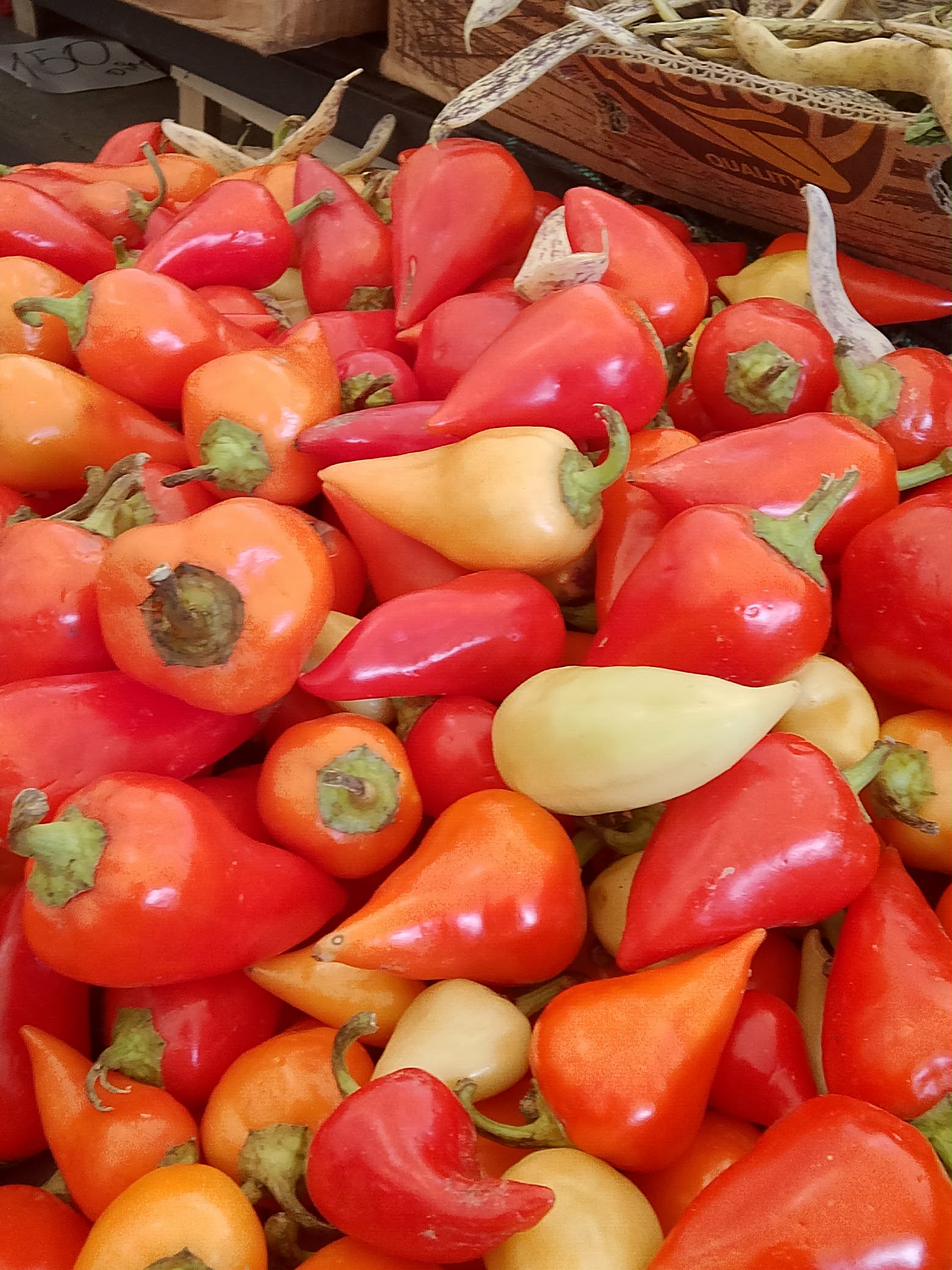
The peppers in your basket — deep red, blushing orange, pale gold — have been hanging on the plant as long as possible. They’ve absorbed everything the season had to give. Thick walls. Complex sweetness. A gentle warmth that has nothing to do with spice.
This is peak pepper. Everything after this is greenhouse imitation.
The Basket on Your Table
Look at those colors. Red like October sunsets. Orange like turning maple leaves. Pale yellow like morning light through fog.
That basket isn’t just produce — it’s a still life of the season itself. And the best part? These peppers don’t need much. In fact, the less you do to them, the better.
Recipe: Slow-Roasted Autumn Peppers with Garlic and Olive Oil
Prep Time: 10 minutes | Cook Time: 30 minutes | Total Time: 40 minutes Yield: 4 servings | Difficulty: Easy
This is the recipe I make every year when the pepper harvest comes in. It’s simple and completely addictive.
Ingredients:
- 6–8 large sweet peppers (mixed colors)
- 4 cloves garlic, sliced
- 3 tablespoons olive oil
- 1 teaspoon sea salt
- Fresh black pepper
- Optional: a sprig of fresh rosemary or thyme
Instructions:
- Preheat your oven to 400°F (200°C).
- Cut the peppers into wide strips, removing seeds and membranes. Don’t make them too thin — thick strips hold their sweetness better.
- Toss with olive oil, garlic, salt, and pepper on a large baking sheet.
- Roast for 25–30 minutes, turning once, until the edges are blistered and caramelized in spots.
- Optional but wonderful: turn off the oven, crack the door, and let them sit inside for another 10 minutes. They become meltingly soft.
- Serve warm or at room temperature, drizzled with a little more olive oil.
That’s it. No fancy techniques. No exotic ingredients. Just heat, time, and peppers at their absolute best.
What to do with them:
- Pile onto crusty bread with fresh cheese
- Toss into pasta with a handful of parsley
- Blend into a silky soup with roasted tomatoes
- Layer into sandwiches all week long
- Or eat them straight from the pan while standing at the counter (my preferred method)
One More Idea: Quick Pickled Peppers
If your basket is overflowing — and in October, it usually is — slice the peppers into rings and cover them with a simple brine: equal parts vinegar and water, a spoonful of sugar, a teaspoon of salt. Into the fridge they go.
In two days, you have crisp, tangy pepper rings that wake up everything from salads to sandwiches to grilled meats. They’ll keep for a month, but they never last that long.
Don’t Let the Season Slip Away
The peppers in your basket have one foot in summer and one in autumn — they’ve seen the whole season through. In a few weeks, the plants will be pulled up, the ground turned over, and that will be it until next June.
So roast them. Pickle them. Stew them into something that warms you from the inside. Or simply slice one open, take a bite, and taste what October has been quietly building toward all season.
Your future winter self will thank you for every jar, every frozen bag, every memory of peppers at their absolute peak.
What’s your favorite way to use late-season peppers? I’d love to hear — especially if it’s a family recipe passed down through generations. Drop it in the comments below.