The Ancient Roots of Viola Odorata
Long before greenhouses and garden centers existed, wild violets pushed through forest floors across the Mediterranean basin and slowly spread their roots throughout southern Europe, northwest Africa, and western Asia. These hardy perennials—commonly called sweet violets, English violets, or wood violets—have flourished along woodland edges for thousands of years, preferring the dappled light where winter sun still reaches before summer canopies close overhead.
The plant’s scientific name speaks to its most treasured quality. Viola odorata translates simply to “fragrant violet,” a label earned through centuries of human appreciation. Greek pastoral poetry mentioned these flowers as early as 300 BC, and by medieval times, European markets actively traded violets for their perfume, medicine, and culinary value. Early colonists carried the plant to North and South America, where it naturalized so successfully that many now mistake it for native wild growth.
What complicates the violet’s origin story is humanity’s long obsession with cultivating it. Botanists still debate the precise boundaries of its truly wild range versus areas where ancient gardeners established populations that later escaped into surrounding countryside. The plant’s adaptability only deepens this mystery—it thrives in varied soils and climates, making it difficult to distinguish between native stands and historical introductions.
Why Violets Herald the End of Winter
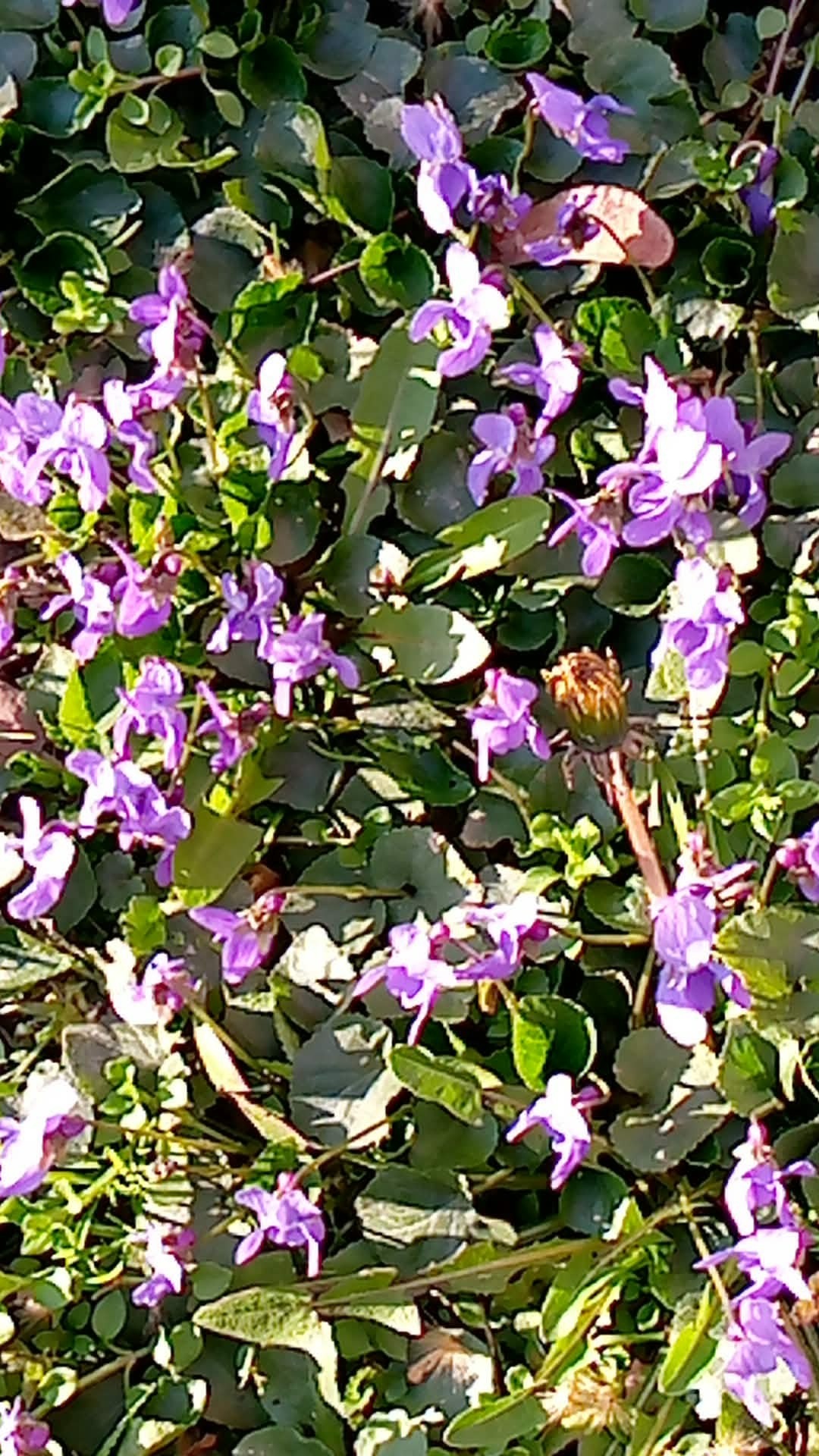
When snowdrops fade and crocuses retreat, violets step forward as spring’s true ambassadors. Depending on latitude and local weather patterns, these low-growing blooms typically emerge between late February and April, transforming drab landscapes into carpets of deep purple, soft white, and occasional yellow. Their arrival signals that soil temperatures have shifted, that daylight hours have crossed some invisible threshold, that the earth has tilted back toward warmth.
The violet’s reproductive strategy reveals remarkable biological intelligence. Each plant produces two distinct types of flowers. The familiar spring blossoms open wide to attract early pollinators desperate for nectar after winter scarcity. Meanwhile, hidden beneath the soil surface, the plant generates secret underground flowers that self-pollinate in complete darkness. This dual approach ensures survival regardless of weather volatility—if spring storms destroy above-ground blooms, the hidden flowers guarantee seed production.
Ecologically, violets colonize specific niches. They establish themselves in woodland clearings, hedgerow bottoms, and shaded lawns where winter and early spring sunlight penetrates before tree leaves emerge. Heart-shaped basal leaves hug the ground while hairy stems creep outward via above-ground runners, forming expanding colonies that return reliably year after year. This spreading habit makes them excellent groundcover despite their diminutive stature.
Culturally, spotting the first violet carried supernatural weight across European folklore. Finnish tradition suggested these flowers marked fairy portals, their scent attracting supernatural beings invisible to human eyes. Celtic peoples carried violets as protection against malevolent spirits. Victorian flower language assigned them meanings of modesty, faithfulness, and eternal love—sentiments that persist in contemporary gift-giving. The practical reality echoes the poetry: when violets appear, winter has genuinely ended.
Culinary Possibilities: Eating Spring’s First Flowers
Beyond visual appeal, violets offer genuine culinary versatility. Both leaves and blossoms contribute delicate flavors to sweet and savory preparations, with historical cookbooks documenting their use across centuries.
Fresh applications showcase the flower’s beauty. Whole blossoms scattered across spring salads create stunning color contrast against pale greens. Pressed petals embedded into cream cheese spreads or butter add elegance to simple sandwiches. Frozen into ice cubes, they transform ordinary beverages into conversation pieces. Scattered over pancake or cake batter before cooking, they create edible art that surprises and delights.
Preservation extends the violet’s kitchen utility through multiple techniques. Candied violets—fresh petals painted with egg white and coated in fine sugar, then dried until crisp—adorned Victorian celebration cakes and remain gourmet staples today. Violet syrup, created by steeping flowers in hot water before adding sugar and reducing, yields fragrant sweeteners for cocktails, lemonades, and dessert drizzles. Violet honey, made by infusing wilted flowers into warmed honey, produces aromatic spreads with subtle floral complexity. Even vinegar takes on new character when purple blossoms tint the liquid and add flavor dimensions impossible to achieve through herbs alone.
Historical recipes reveal deep familiarity with these techniques. Ancient Romans reportedly enjoyed violet wine, while seventeenth-century English cookery books regularly featured “cakes of violet” and “conserve of violets.” Before artificial flavoring existed, the flower’s ability to color and scent liquids made it valuable for natural food enhancement.
Nutritionally, violet leaves contain impressive densities of Vitamins A and C, plus rutin—a quercetin glycoside with documented antioxidant and anti-inflammatory properties. The soluble fiber content supports cardiovascular health by helping lower cholesterol and feeding beneficial gut bacteria populations.
Traditional Medicine: Healing with Humility
For generations before pharmaceutical manufacturing, herbalists recognized violet as more than ornamental. Traditional European medicine employed Viola odorata extensively for respiratory complaints, particularly persistent dry coughs, bronchial irritation, and whooping cough. The plant’s demulcent properties—its natural ability to coat and soothe irritated mucous membranes—made it invaluable when modern cough suppressants did not exist.
Medicinal applications extended across multiple body systems. Practitioners used violet preparations for chronically swollen lymph nodes, employing it as a gentle stimulant to lymphatic circulation and blood cleansing. Topical preparations including poultices and salves addressed eczema, minor abrasions, insect bites, and varicose veins. Compresses applied to inflamed skin or hemorrhoids leveraged the plant’s anti-inflammatory compounds. Some historical texts even recommended violet for headache relief and insomnia treatment.
The plant contains salicylic acid, the precursor to modern aspirin, explaining traditional use as a pain reliever dating back to the 1500s. Contemporary herbalists prepare violet medicine through various methods: hot water infusions for immediate consumption, alcohol tinctures for long-term storage, sugar-based syrups for palatability and throat coating, oil infusions for topical application, and moist compresses for external inflammation.
Safety considerations apply despite general tolerability. Individuals with G6PD deficiency should avoid internal violet use due to risk of hemolytic anemia—a rare but serious reaction. As with any botanical medicine, consultation with qualified healthcare providers remains prudent before therapeutic use.
Fragrance Alchemy: The Perfumer’s Challenge
No flower has frustrated and fascinated perfumers quite like the violet. Its scent defies easy description—simultaneously sweet and powdery, floral yet earthy, with what enthusiasts recognize as melancholic undertones. The fragrance contains ionones, chemical compounds that temporarily suppress human smell receptors after initial detection. This creates the strange sensation that the scent has vanished, only to mysteriously return moments later when neural pathways recover.
This olfactory disappearing act made violets precious in ancient perfumery. Greek courtesans reportedly used violet to scent their skin, while Romans extracted fragrance through enfleurage—pressing flowers between fat layers that slowly absorbed essential oils. Napoleon Bonaparte so adored violets—allegedly because they were his wife Josephine’s signature scent—that he adopted “Corporal Violet” as his exile code name. Supporters identified each other by asking “Do you like violets?” and responding with the recognition phrase “Eh bien.”
Modern perfumery still values violet, though true violet essential oil remains rare and expensive. Most contemporary “violet” notes are synthetic recreations or derived from violet leaves rather than flowers. The absolute—solvent-extracted oil—appears in high-end fragrances seeking that nostalgic, powdery sweetness that no other botanical replicates exactly.
Brewing Spring: The Art of Violet Tea
Among the most accessible ways to experience violets is through tea—simple infusions that capture both therapeutic benefits and aesthetic pleasure.
Basic preparation requires minimal equipment. Harvest fresh violet leaves and flowers, ensuring positive identification and pesticide-free sources. Dry material thoroughly in baskets or paper bags away from direct sunlight to preserve color and volatile compounds. Store dried herbs in airtight glass containers in cool, dark locations. For brewing, use approximately one tablespoon dried material per cup of hot water. Steeping times vary from ten minutes to several hours—longer extraction yields more mucilage and nutrients but requires patience.
The resulting brew offers subtle, slightly sweet liquid with noticeable demulcent properties that coat the throat. For enhanced flavor profiles, combine violet leaves with complementary herbs: peppermint for digestive support, lemon balm for calming effects, elderflower for immune enhancement, or rose hips for additional vitamin C.
Nutritive preparations differ from simple tea. Strong overnight infusions using one ounce dried violet leaves per quart of boiling water, strained after four to eight hours, create mineral-rich beverages suitable for drinking throughout the day. This method extracts deeper nutritional content than brief steeping.
Cultivation: Growing Your Own Spring Herald
Gardeners seeking to establish violet colonies will find forgiving requirements. The plants prefer partial shade to dappled sunlight, avoiding harsh afternoon exposure that scorches delicate leaves. Soil should remain consistently moist but well-drained—the plants tolerate varied pH levels but suffer in waterlogged conditions. Spacing of six to twelve inches accommodates their spreading habit via above-ground runners.
Container cultivation suits small spaces beautifully, while mass plantings create enchanting groundcover beneath deciduous trees where spring light penetrates. Late autumn pruning of excess runners encourages more vigorous spring blooming by concentrating the plant’s energy.
Propagation occurs easily through division of established clumps or by rooting runners in adjacent soil. The plant’s resilience makes it suitable for novice gardeners, though its spreading tendency requires monitoring to prevent unwanted colonization of formal garden beds.
The Persistence of Small Beauty
From ancient Mediterranean woodlands to contemporary kitchen gardens, from Napoleonic secret codes to modern herbal medicine cabinets, the humble violet has demonstrated remarkable cultural persistence. These first flowers of spring accomplish more than seasonal signaling—they connect present moments to centuries of human relationship with the botanical world.
Whether encountered carpeting forest floors, crystallizing in sugar, steeping in teacups, or perfuming skin, violets offer tangible participation in spring’s renewal. Their dual nature—simultaneously fragile and resilient, visible and hidden, ancient and perpetually new—mirrors the season they announce. The first violets transcend mere flower status; they become purple-edged proof that winter, however prolonged, eventually yields to growth.