
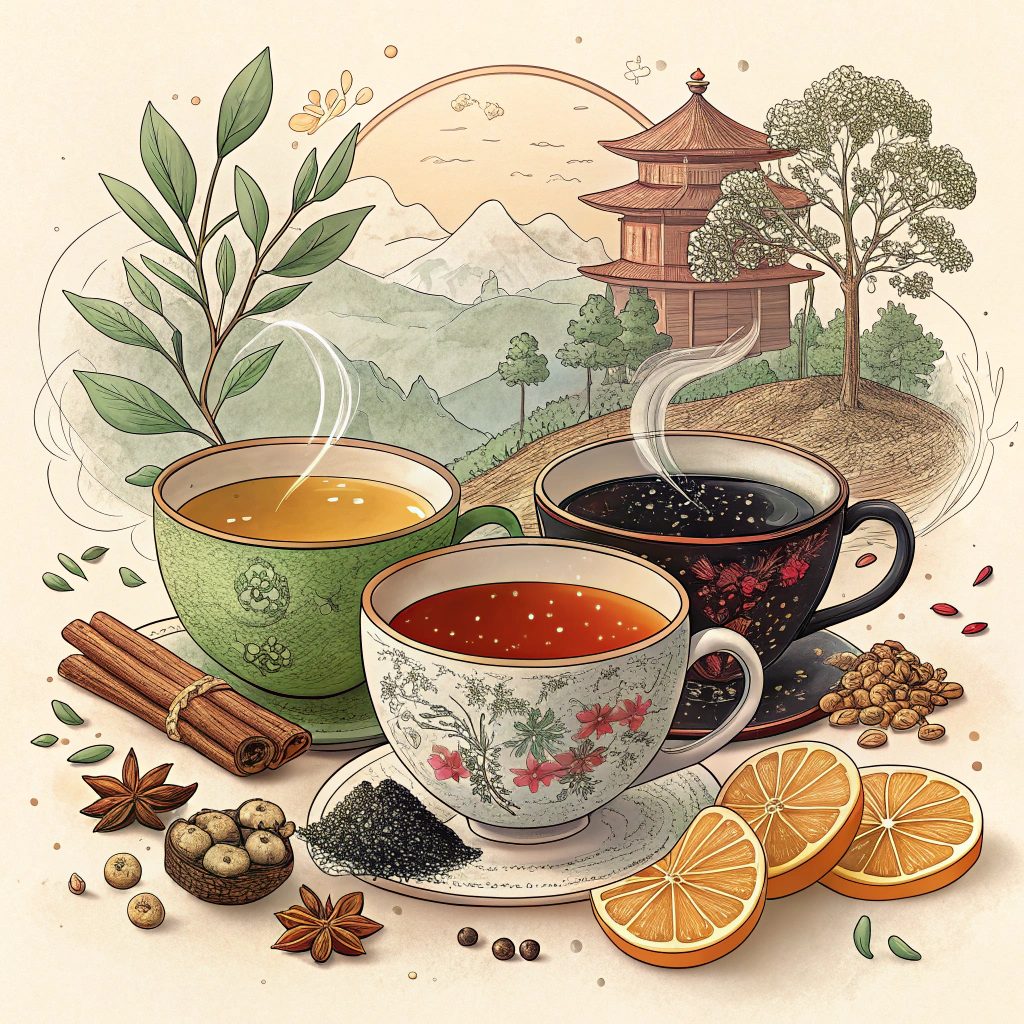
The Diverse World of Tea –
Tea’s origins trace back to ancient China, with historical records suggesting it was consumed as early as 2737 BCE. Legend has it that Emperor Shen Nong first discovered tea when leaves from a wild tree blew into his pot of boiling water. From China, tea spread to Japan, India, and eventually Europe, where it became entrenched in culture and society.
Tea is one of the most widely consumed beverages globally, enjoyed by millions for its unique flavors, soothing qualities, and health benefits. Tea is in various cultures, becoming a staple in daily routines and ceremonial occasions alike. With dozens of varieties available, tea can be classified into several main categories, each offering distinct flavors and characteristics.
Green Tea, known for its light, refreshing taste, green tea is made from unoxidized leaves. It is packed with antioxidants, making it a popular choice for health enthusiasts.
Black Tea, the most widely consumed type of tea, black tea is fully oxidized, resulting in a robust flavor and dark color. Popular varieties are popular worldwide for their rich flavors and stimulating effects.
Herbal Tea, technically not a “true” tea, herbal teas are infusions made from various plants, flowers, and spices. Common types include chamomile, peppermint, and hibiscus. Each offers unique benefits and flavors, catering to different preferences.
Among the myriad varieties, green and black teas stand out as the most popular worldwide. Green tea is particularly favored for its perceived health benefits, including weight management and cancer prevention, attributed to its high antioxidant content. Black tea, on the other hand, is admired for its stimulating effects, making it a favored morning drink in many cultures.
Regular consumption of tea has been linked to improved cardiovascular health, reduced risk of chronic diseases, and better brain function. The antioxidants found in tea help combat oxidative stress, which contributes to aging and various diseases. Additionally, herbal teas can offer other therapeutic advantages, such as aiding digestion, promoting relaxation, and relieving stress.
Tea is typically prepared by steeping leaves in hot water, allowing the flavors to infuse. Many people enhance their tea experience by adding ingredients such as honey, lemon, or milk, depending on personal taste and the type of tea being consumed.
Its rich history and cultural significance make it more than just a beverage; it’s a bridge between tradition and modernity. With an expansive variety of teas available, there is something for everyone. Whether you prefer the briskness of a black tea or the floral notes, exploring the world of tea can be an enlightening and pleasurable journey. Drinking tea is not just about taste; it is about embracing a lifestyle that values health, wellness, and connection. So, pour yourself a cup and savor the experience that tea has to offer.