
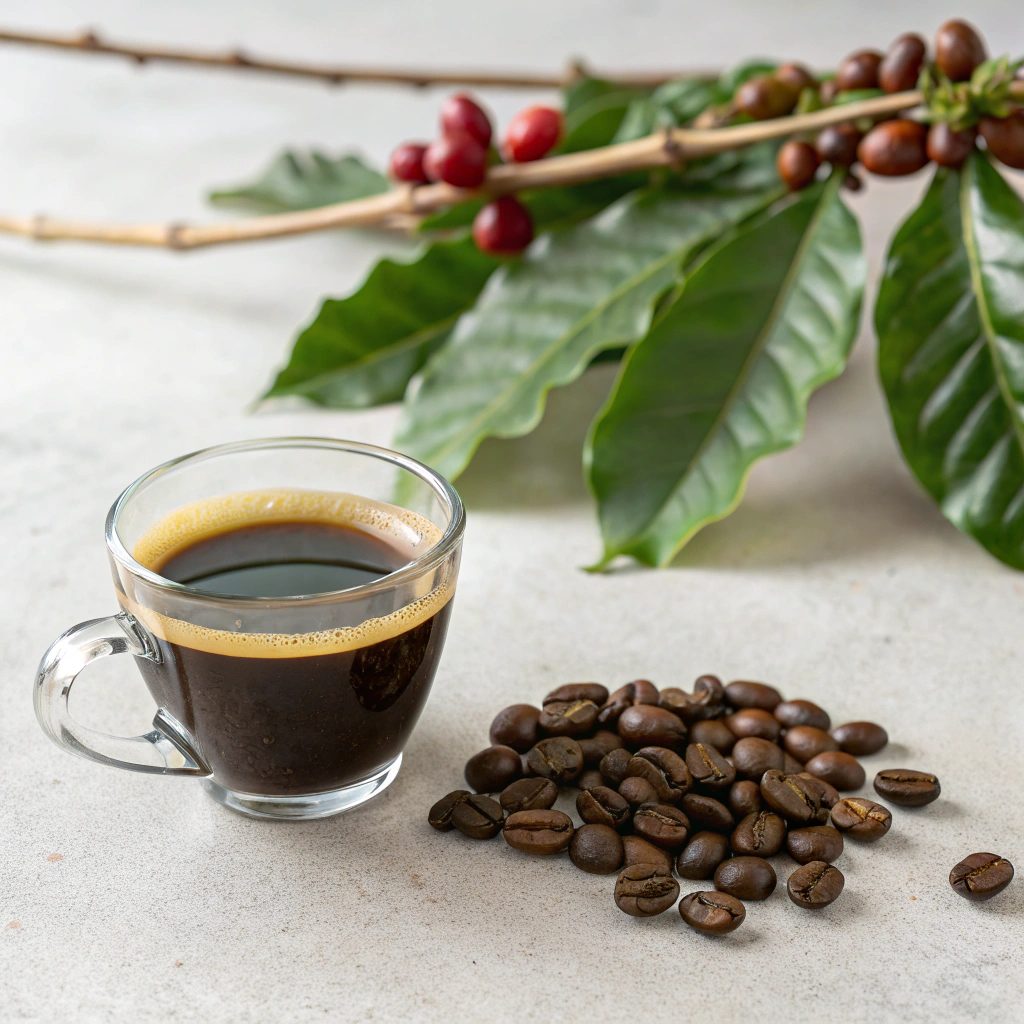
Robusta coffee, a key player in the global coffee market, accounts for roughly 25% to 40% of all coffee production. Known scientifically as Coffea canephora, Robusta was first discovered in 1898 in the Congo. Unlike Arabica, which thrives at high elevations and cooler temperatures, Robusta is a hardy coffee plant that grows well in more flexible conditions, making it popular among growers.
The Robusta coffee plant is a sturdy shrub that can reach 10 to 12 feet in height. It thrives at lower elevations, typically from sea level up to about 2,600 feet, and requires less maintenance than Arabica. Its shallow root system allows it to be more resilient, and its coffee cherries take around 11 months to fully mature. These cherries are durable and can remain on the plant after ripening without spoiling, making Robusta more reliable for farmers in challenging climates.
Robusta grows best in tropical and subtropical regions, primarily in the Eastern Hemisphere. Key production areas include West and Central Africa, Southeast Asia, and select regions of South America. Its ability to withstand pests, rough handling, and variable rainfall contributes to higher yields and lower production costs compared to Arabica.
In terms of taste, Robusta coffee generally has a stronger, more bitter flavor and higher caffeine content—roughly twice that of Arabica. While it is often considered inferior to Arabica in terms of nuanced flavor, high-quality Robusta is valued in espresso blends for adding rich body and crema. Typically, only 5–15% of espresso blends contain Robusta, complementing Arabica beans to enhance the overall depth of flavor.
Although Robusta is less commonly sold as single-origin coffee, it plays an essential role in many coffee beverages and instant coffee products. Its resilience, high caffeine content, and robust body make it a versatile and indispensable coffee variety worldwide.