
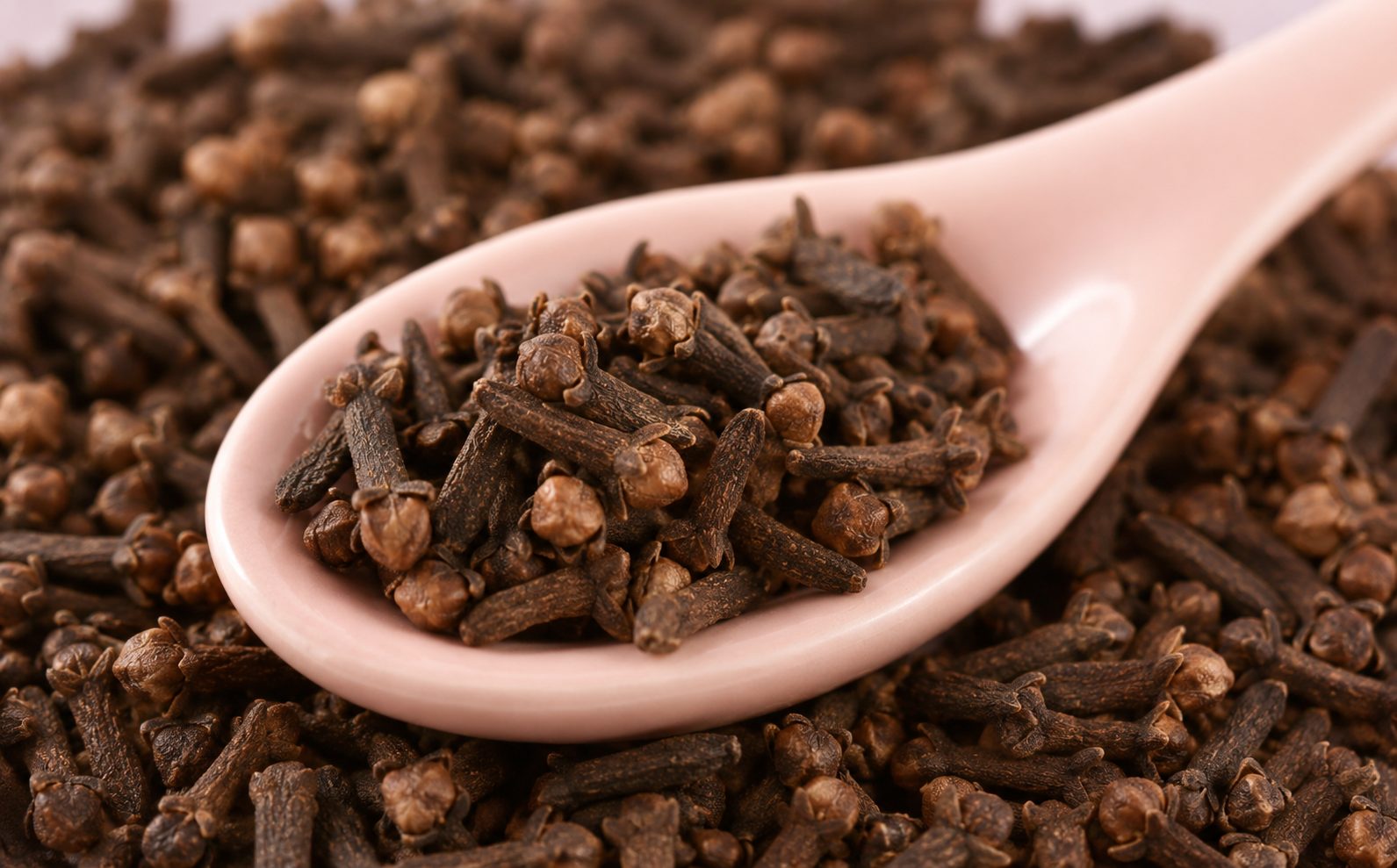
Few spices carry the weight of history quite like the clove. What appears to be a modest dried flower bud has, over two millennia, launched naval armadas, bankrupted kingdoms, and redrawn the map of the world. Its story begins in the volcanic Maluku Islands of Indonesia — the legendary Spice Islands — where the clove tree (Syzygium aromaticum) grew wild for thousands of years, unknown to the outside world yet destined to become one of humanity’s most coveted commodities.
The earliest documented use of cloves stretches back to China’s Han Dynasty around 200 BCE, where courtiers would place them in their mouths to sweeten their breath before addressing the emperor. This wasn’t mere vanity — cloves were prized for their antimicrobial properties, making them one of the first breath fresheners with genuine medicinal backing. From China, the spice traveled westward along maritime routes, reaching India by 1700 BCE and the Mediterranean by the first century CE. Pliny the Elder, writing his Natural History around 70 CE, described cloves as “caryophyllom” — a grain resembling pepper but larger and more fragile, imported for its aroma. Roman Emperor Constantine the Great reportedly gifted Saint Silvester 150 pounds of cloves, a staggering quantity that underscores the spice’s immense value in antiquity.
The clove’s journey through the ancient world is fascinating precisely because its origin remained shrouded in mystery. Arab and Indian traders who dominated the Indian Ocean trade for centuries either genuinely didn’t know where cloves came from or guarded the secret with extraordinary discipline. By the year 1000, an Arabic writer named Ibrahim Ibn Wasif-Shah recorded a fantastical account of the “Valley of Cloves,” claiming that genies harvested the spice and that merchants traded by leaving goods on the shore overnight, returning to find cloves in their place. The reality was more prosaic but no less remarkable: Indonesian sailors, particularly the Javanese, controlled the eastern routes to the Maluku Islands, ensuring that the spice passed through multiple hands before reaching European markets.
When Rome lost North Africa in the seventh century, Europe’s direct access to Asian spices was severed. The resulting desperation to reestablish trade routes became one of the primary catalysts for the Age of Discovery. It took over a century of exploration, multiple circumnavigations, and extraordinary investments of wealth before European powers finally located the Spice Islands. The Portuguese arrived first in the mid-15th century, followed by the Spanish, English, and Dutch. Magellan’s ill-fated voyage of 1519-1522 — which began with five ships and over 250 men and ended with one ship and 18 survivors — was nevertheless considered a financial success because its cargo of approximately 50 tons of cloves and nutmeg was worth more than the entire expedition’s cost. At the time, cloves and nutmeg were literally worth more than their weight in gold.
The Dutch, upon establishing dominance in the 17th century, implemented one of the most brutal monopoly systems in economic history. To maintain scarcity and keep prices astronomical in European markets, they systematically destroyed clove trees across the Moluku Islands, restricting cultivation to a few controlled islands. The infamous “hongi fleets” patrolled the archipelago, burning unauthorized plantations and enforcing quotas. Each household on the permitted islands was required to plant ten new trees annually. This ecological vandalism had devastating consequences for local communities, but it also transformed the Moluccans’ understanding of their native resource — they became acutely aware that spices possessed value far beyond their traditional ceremonial and medicinal uses.
The clove’s symbolic significance runs deeper than its economic weight. In ancient China, cloves represented purification and respect — the act of freshening one’s breath before imperial audiences was a ritual of deference. In Ayurvedic medicine, they symbolized warmth and healing, used to stimulate digestion and reduce inflammation. Persian tradition embraced cloves as aphrodisiacs. The very name “clove” derives from the Latin clavus, meaning “nail” — a reference to the bud’s shape, but perhaps also to its penetrating, almost aggressive aroma that seems to nail itself into the senses.
Biblical references to cloves are notably absent, which is itself telling. While the Bible mentions numerous spices — frankincense, myrrh, cinnamon — cloves never appear, likely because they hadn’t yet reached the Levant in significant quantities during the period of biblical composition. Their absence from scripture didn’t diminish their spiritual cachet, however. In medieval Europe, cloves became associated with the divine precisely because of their rarity and cost. Monks at Switzerland’s St. Gall monastery used them to season fasting fish in the 9th century, transforming bland religious fare into something approaching luxury. When the king and queen of Scotland celebrated the Feast of the Assumption in 1256, their banquet required four pounds of cloves alongside fifty pounds each of ginger, pepper, and cinnamon — a ratio that reveals how precious the smaller quantity truly was.
Today, the clove landscape has transformed dramatically. Four main varieties dominate global cultivation: Ambon, Siputih, Zanzibar, and Sikotok, with Zanzibar prized for producing the highest volume of flowering buds. Madagascar has emerged as a premier producer, its cloves recognized for superior quality, rich oil content, and intense aroma. Indonesia remains the historical homeland, but the Dutch monopoly’s destruction of trees and subsequent colonial disruptions altered cultivation patterns permanently. Some traditional varieties cultivated for centuries in specific island microclimates vanished entirely, lost to the fires of economic warfare.
The modern clove industry carries a shadow of its former imperial self. While no longer worth more than gold, cloves remain economically significant — not merely as a culinary spice but as a source of eugenol, the aromatic compound that makes clove oil one of the most effective natural antiseptics and dental analgesics. The global market for clove essential oil drives pharmaceutical, cosmetic, and food industries, with Madagascar and Indonesia competing for dominance. Yet the spice has democratized in ways the Dutch could never have imagined: what once graced only royal banquets now flavors mulled wine in European Christmas markets, perfumes Indonesian incense, and seasons everyday curries from Mumbai to Marrakech.
The clove’s cultural footprint has shifted too. Where it once symbolized imperial power and colonial exploitation, today it represents something more democratic — the warmth of holiday traditions, the comfort of home remedies, the aromatic bridge between ancient medicine and modern science. Its journey from a secret guarded by genies in medieval imagination to a supermarket staple encapsulates the paradox of globalization: the very forces that once hoarded and weaponized the spice ultimately democratized it.
What remains unchanged is the clove’s essential character — that piercing, warm, slightly medicinal sweetness that seems to contain within it the heat of the tropics and the patience of centuries. From Chinese imperial courts to Dutch trading posts, from Ayurvedic healers to modern dental offices, the clove has proven itself far more than a flavoring. It is a testament to humanity’s endless appetite for the exotic, our capacity to transform natural abundance into economic obsession, and our remarkable ability to find meaning — spiritual, medicinal, and cultural — in something as small as a dried flower bud.