Every December, Italian families face a delicious question: panettone or pandoro?
At first glance, the difference seems simple. One is filled with raisins and candied fruit, while the other is a golden, buttery cake with a delicate dusting of powdered sugar. But behind these two Christmas favorites lies a fascinating story of regional traditions, culinary creativity, and a rivalry that has become part of Italy’s holiday culture.
And while panettone comes from Milan, pandoro proudly calls Verona home.
A Sweet Tradition Before Pandoro Had a Name
Long before modern pandoro appeared in Italian bakeries, the people of Verona had their own festive cakes. One of them was Nadalin, a traditional Christmas sweet associated with the city’s medieval history. It was shaped like a star, although flatter and quite different from the tall, airy pandoro we recognize today.
Another local preparation, known as levà, was connected with Christmas Eve traditions. According to the historical account preserved by the Melegatti company, women gathered in the kitchens of Verona’s courtyards to prepare a simple leavened dough made with flour, milk, and yeast.
These older traditions helped create the foundation for something new. However, it would take one inventive pastry chef to transform them into a dessert that would eventually become famous throughout Italy.
The Man Who Created Modern Pandoro
The story takes us to Verona in the late 19th century, where pastry chef Domenico Melegatti was experimenting with richer, softer festive doughs.
In 1894, he introduced a new creation called Pan d’oro, meaning “golden bread.” A newspaper advertisement in March of that year announced his new dessert, praising its delicate texture, lightness, and attractive appearance.
On October 14, 1894, Melegatti registered his invention through an industrial patent. The patent covered the name, recipe, and distinctive shape of the new cake.
His creation was inspired by local festive baking traditions, but he transformed the dough by adding more butter and eggs and developing a lighter texture.
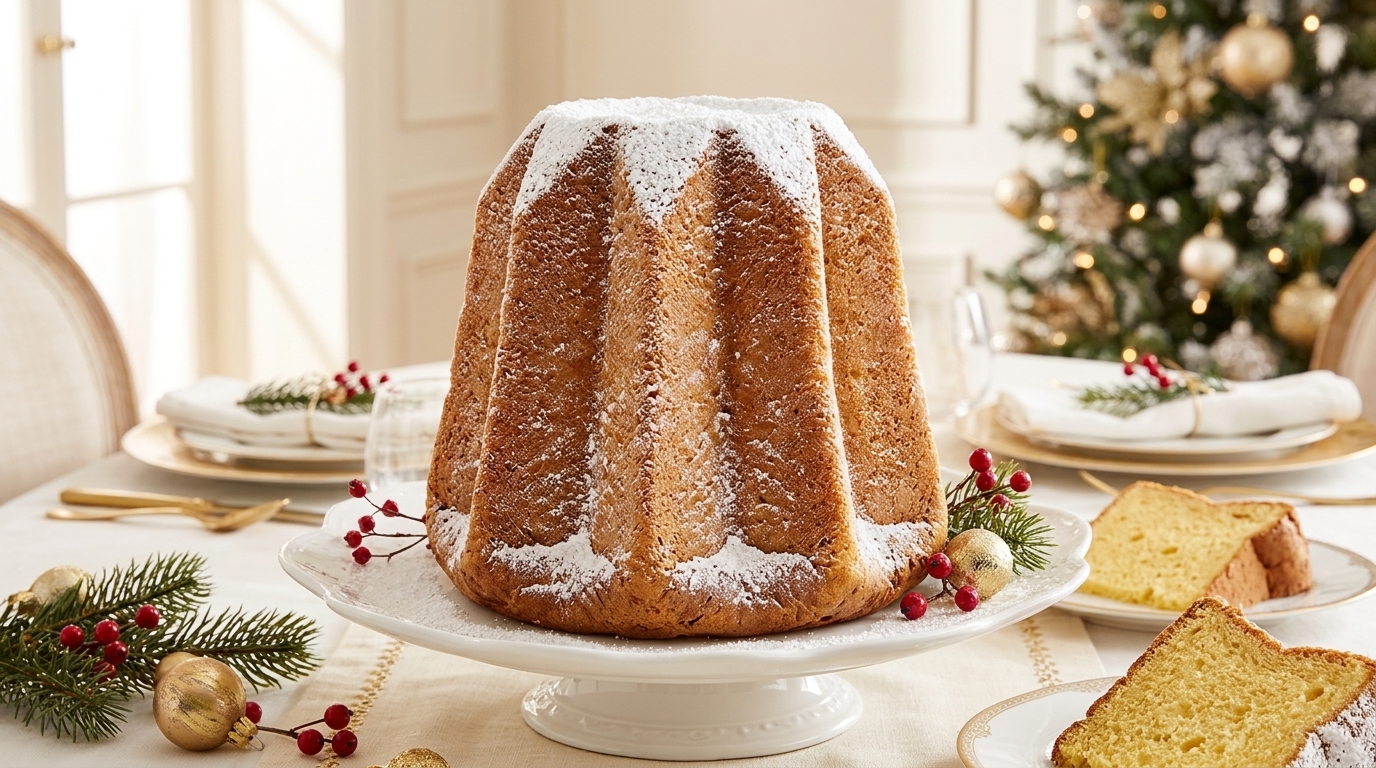
He also introduced a special metal baking mold with an eight-pointed star-shaped base. This gave pandoro its unmistakable tall, elegant silhouette.
There is even a charming family legend about the name. According to the story, a young shop assistant saw a slice of the golden cake illuminated by sunlight and exclaimed, “It’s truly a golden bread!” Whether or not the words were spoken exactly this way, the name perfectly captured the dessert’s appearance.
Why Does Pandoro Look Like a Golden Star?
The shape is one of the most recognizable features of pandoro. Its tall, eight-pointed star form makes it stand out on Christmas tables and gives every slice a beautiful appearance.
Unlike panettone, traditional pandoro contains no raisins or candied citrus peel. Its character comes from a rich, buttery dough made with flour, eggs, sugar, butter, yeast, and vanilla flavoring.
Once baked, the cake has a soft, delicate interior and a naturally golden color. Before serving, it is traditionally dusted with powdered sugar, creating a beautiful snowy effect.
Some people associate its star shape with Christmas imagery, while others simply appreciate its elegant design. Although its exact symbolic meaning is not historically established, it certainly looks at home among holiday decorations.
Two Cakes, Two Different Personalities
Panettone and pandoro share an important characteristic: both are enriched, leavened Christmas cakes from northern Italy. Yet their personalities could hardly be more different.
Panettone, closely associated with Milan, is famous for its airy interior, raisins, and candied citrus peel. Its preparation involves natural sourdough fermentation and carefully controlled rising stages.
Pandoro, on the other hand, celebrates simplicity. Its golden dough is rich with butter and eggs, while vanilla adds a gentle fragrance. There is no fruit competing for attention, just a soft texture and delicate sweetness.
Over time, these differences became the foundation of a friendly Italian Christmas rivalry. Families developed their preferences, bakeries offered both varieties, and holiday conversations often included the inevitable question: which one belongs on the Christmas table?
From Verona to Christmas Tables Around the World
Pandoro’s popularity grew beyond Verona as Italian bakeries and food companies introduced it to a much wider audience. Its distinctive shape, soft texture, and simple flavor helped make it a recognizable symbol of Italian Christmas baking.
Today, it can be found far beyond Italy, including in American supermarkets and specialty food stores during the holiday season.
For many Italian families, serving pandoro is about more than choosing a dessert. It is a way of keeping a familiar Christmas tradition alive, whether enjoyed plain, with a little cream, or alongside a cup of coffee.
And what about the great rivalry?
Perhaps there is no need for a winner. Panettone brings the flavors and traditions of Milan, while pandoro carries the golden legacy of Verona. Both have earned their place at the Italian Christmas table.
After all, some holiday traditions are simply too delicious to choose between.