
What dietary fiber actually does for your body — and why most of us don’t get enough of it
Walk down any supermarket aisle and you will see the word “fiber” printed on cereal boxes, snack bars and supplement bottles. Marketing has made the term familiar — but familiarity is not the same as understanding. So what exactly is dietary fiber, and why do nutrition experts keep insisting we need more of it?
What is fiber, really?
Dietary fiber is the portion of plant-based food that your body cannot break down or absorb. Unlike carbohydrates, proteins and fats, it passes through your stomach and small intestine largely intact. It provides no energy, no vitamins, no minerals — and yet removing it from the diet quietly undermines your health in ways most people never connect to their plate.
Science divides fiber into two main categories, and each one works differently inside the body.
Soluble fiber: the gel that guards your heart
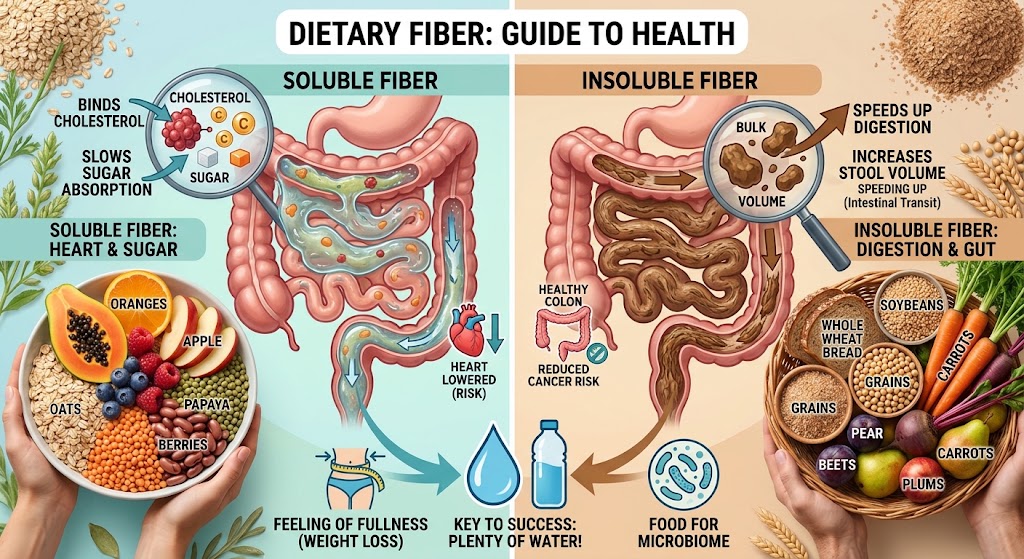
Soluble fiber dissolves in water and forms a thick, sticky gel during digestion. This gel is where the magic happens. As it travels through your digestive system, it binds to cholesterol particles and helps escort them out of the body before they can enter the bloodstream. It also slows the rate at which sugar is absorbed, preventing the sharp spikes and crashes in blood glucose that strain your metabolism over time.
You can find soluble fiber in oat bran, legumes, carrots, and fruits such as papaya, oranges and apples. Regular intake of these foods is consistently linked with lower cholesterol levels and a reduced risk of heart disease.
Insoluble fiber: nature’s digestive accelerator
Insoluble fiber does the opposite of dissolving — it stays firm and bulky, and that bulk is precisely its strength. Found throughout the plant kingdom, including beans, soybeans, sesame seeds, beet fiber, and fruits eaten with their skins like pears, plums and apples, it works as a natural accelerator for the digestive tract.
By adding volume and softness to stool, insoluble fiber speeds up intestinal transit, keeping waste from lingering in the colon. That simple mechanical effect plays a role in preventing constipation, hemorrhoids, diverticulitis and — significantly — colorectal cancer, one of the most common cancers worldwide.
Beyond the gut: weight control and your microbiome
The digestive benefits are only part of the story. Fiber is also a quiet but effective ally against excess weight. It creates a lasting feeling of fullness, which naturally curbs overeating, and it interferes with the absorption of dietary fat, meaning a portion of the fat you consume simply never gets used by the body.
Perhaps most fascinating is fiber’s role as a prebiotic — essentially, food for the trillions of beneficial bacteria living in your intestines. A well-fed microbiome keeps harmful, disease-promoting bacteria in check and supports everything from immune function to mood regulation.
How much do you need — and where to find it
The recommended intake for adults falls between 25 and 30 grams per day, with roughly 70% coming from insoluble sources and 30% from soluble ones. The good news: no special products are required. Bran, oats, nuts, vegetables, legumes, whole grains and wholemeal bread — spread across your daily meals — will cover your needs comfortably.
The one mistake everyone makes
Here is the catch that catches almost everyone: fiber needs water to work. If you increase your fiber intake but not your fluid intake, the fiber can actually worsen constipation — the very problem you were trying to fix. Think of fiber as a dry sponge; without liquid, it cannot do its job of moving things along.
The formula, then, is beautifully simple: eat a varied, plant-rich diet, drink plenty of water throughout the day, and give your body the one “nutrient” it cannot digest — but absolutely cannot do without.