Canning is one of the oldest and most satisfying kitchen skills you can learn. It turns August’s abundance into January’s comfort, saves you money, and fills your pantry with ingredients that taste like sunshine on a cold afternoon. If you have never canned before, do not worry. The process is far simpler than it looks, and the results are worth every minute.
The Two Methods You Need to Know
Before you fill your first jar, you need to understand the difference between the two canning methods. Choosing the wrong one is the only real danger in this process.
Water bath canning is your starting point. You submerge filled jars in boiling water and process them at 212°F. This method is safe for high-acid foods like fruits, tomatoes, pickles, jams, and anything with plenty of vinegar or sugar. Bacteria cannot survive in that acidic environment, so the boiling water is enough to seal the deal.
Pressure canning is for everything else. Low-acid vegetables like green beans, corn, carrots, and any kind of meat or broth need the higher heat that only a pressure canner can reach — 240°F — to destroy dangerous spores. If you are just starting out, stick with water bath recipes. They are easier, faster, and just as rewarding.
What You Actually Need
You do not need a fancy kitchen. A large stockpot deep enough to cover your jars with one to two inches of water is enough to get started. You will also need mason jars with two-piece lids, a jar lifter, a wide-mouth funnel, a clean damp cloth for wiping rims, and a little patience. That is it.
Three Beginner Recipes to Try This Weekend
Classic Dill Pickles
Wash four pounds of small pickling cucumbers and trim off the blossom ends. Sterilize four pint jars. Into each jar, place two peeled garlic cloves, one teaspoon of dill seed, and a few black peppercorns. Pack the cucumbers in tightly, standing upright if they fit.
Bring two cups of white vinegar, two cups of water, and three tablespoons of pickling salt to a boil. Pour the hot brine over the cucumbers, leaving a half-inch of headspace. Remove bubbles, wipe the rims, seal fingertip-tight, and process in a boiling water bath for ten minutes. Let them cool undisturbed for twenty-four hours. Wait two weeks before opening for the best crunch.
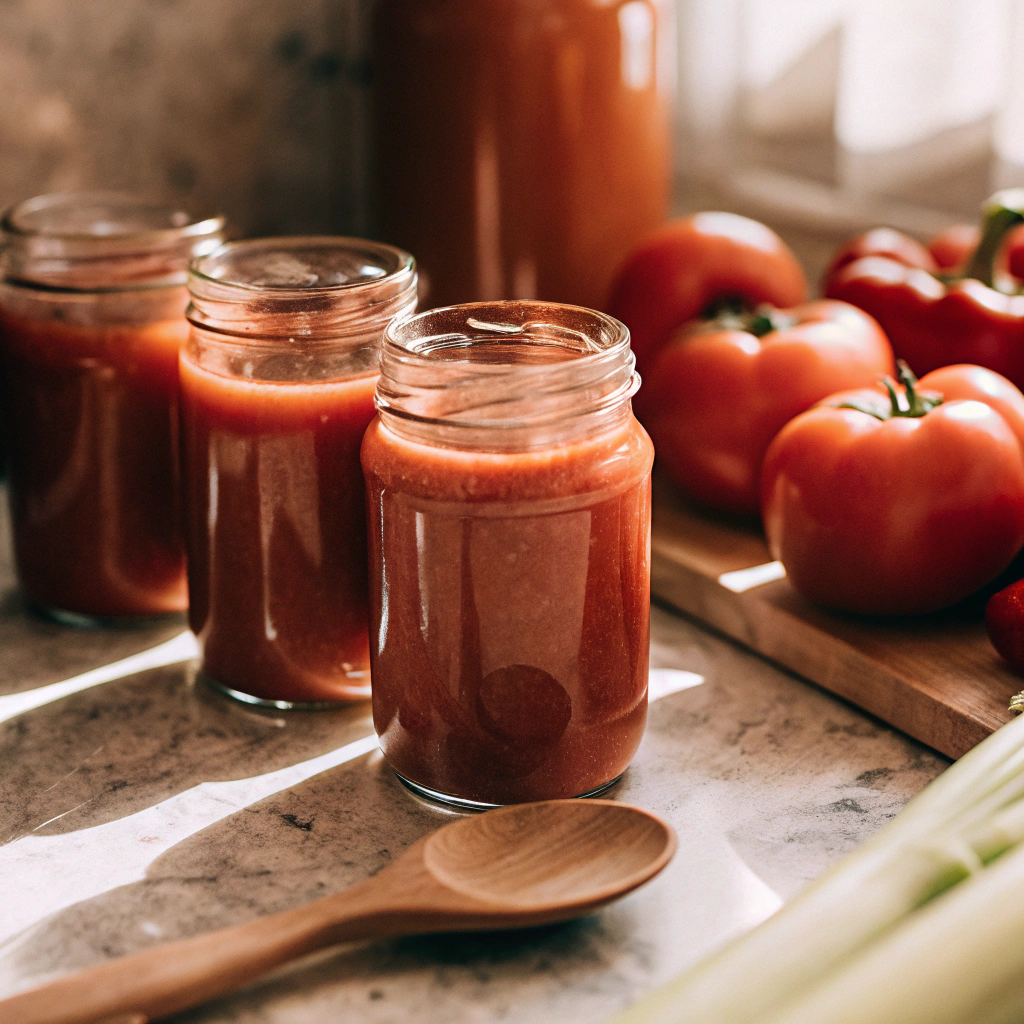
Simple Summer Tomato Sauce
Core and roughly chop six pounds of ripe tomatoes. Sauté one diced onion and four minced garlic cloves in three tablespoons of olive oil until soft. Add the tomatoes, one teaspoon of sea salt, half a teaspoon of black pepper, and a handful of fresh basil. Simmer for forty-five minutes until thickened.
Stir in two tablespoons of bottled lemon juice per pint jar — this ensures safe acidity. Ladle the hot sauce into sterilized pint jars, leaving a half-inch of headspace. Process in a water bath for thirty-five minutes. This sauce will carry you through pasta nights until spring.
Peach Jam with No Added Pectin
Pit and chop two pounds of ripe peaches. Combine them in a large pot with one and a half cups of sugar and three tablespoons of fresh lemon juice. Bring to a boil over medium-high heat, stirring frequently. Reduce the heat and simmer for thirty to forty minutes, mashing the fruit as it softens.
The jam is ready when it passes the cold plate test: drop a spoonful onto a frozen plate, let it sit for thirty seconds, then run your finger through it. If it wrinkles, it is done. Ladle into sterilized half-pint jars, leaving a quarter-inch of headspace, and process for ten minutes.
How to Store Your Jars
Once cooled and sealed, label every jar with the contents and the date. Store them in a cool, dark, dry place — a pantry shelf or basement works perfectly. Avoid direct sunlight and temperature swings. Properly canned high-acid foods will keep for twelve to eighteen months, though you will probably eat them long before then.
Canning is not about perfection. It is about preservation — of food, of flavor, and of a season that never lasts long enough. Start with one batch of pickles or one pot of jam. Feel the satisfaction of that first lid popping as it seals. Before you know it, your shelves will be lined with color, your winter meals will taste like August, and you will wonder why you ever bought a jar of sauce from the store.
Your pantry is waiting. Fill it up.