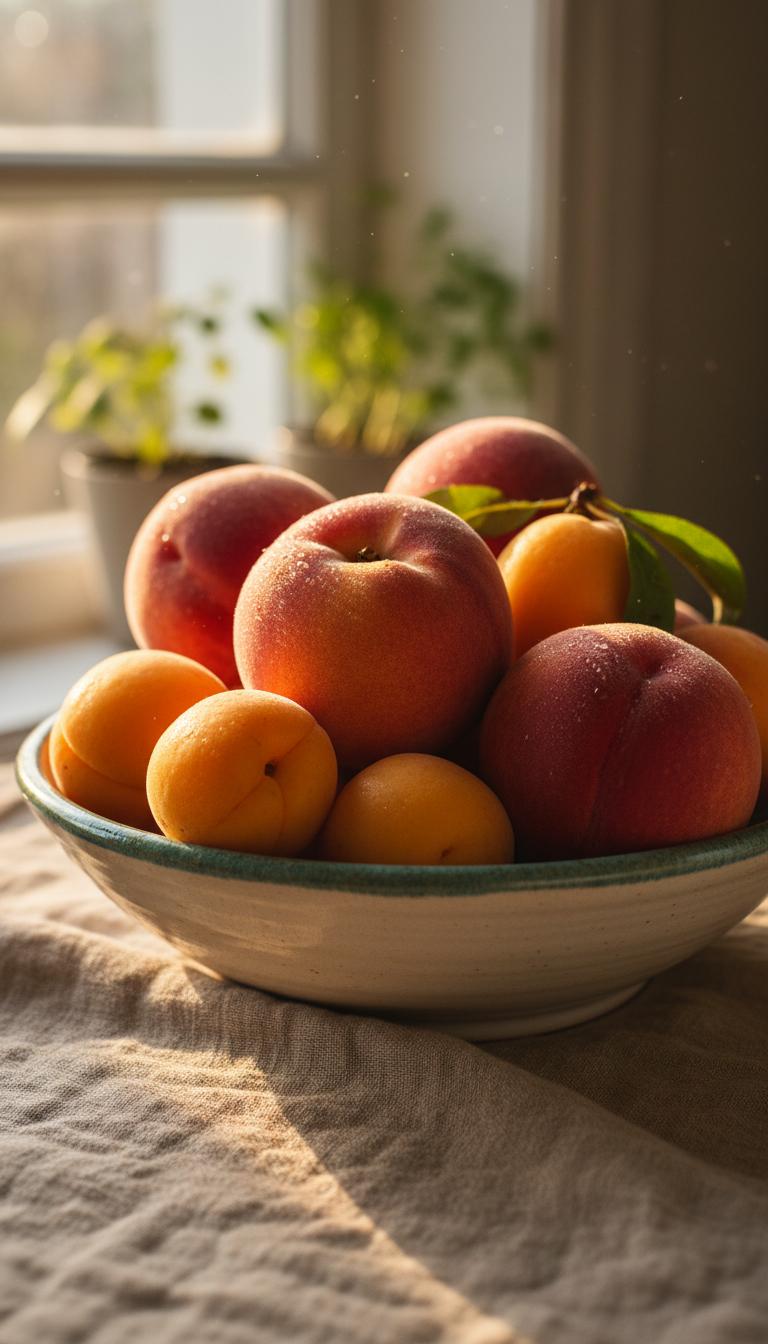
Golden peaches that yield to gentle pressure and release honeyed perfume have signaled summer’s peak for millennia. What to make with peaches extends far beyond cobblers and pies, though those classics endure for good reason. The fruit’s journey from ancient China to global kitchens created a culinary vocabulary that spans continents, courses, and cooking techniques.
Peach history begins in the misty hills of northwest China, where Prunus persica was first domesticated around 6000 BCE. Early varieties were small, tart, and valued more for their blossoms than their fruit. By the time of the Han Dynasty, imperial orchards produced improved cultivars that traveled westward along the Silk Road, reaching Persia — hence the Latin name persica — and eventually Rome by the first century CE. Roman agricultural writers described peaches as exotic imports, suggesting they arrived as luxury goods rather than everyday fare. The fruit reached the Americas with Spanish missionaries in the sixteenth century, spreading so rapidly through indigenous cultivation that some early European explorers mistakenly believed peaches native to the New World.
The general celebration of orchard abundance in biblical poetry aligns with the peach’s status as a symbol of longevity and immortality in Chinese tradition.
Several distinct varieties define the modern culinary landscape. Yellow-fleshed peaches like the classic Elberta and modern O’Henry deliver intense acidity and firm texture that holds up to grilling and baking. White-fleshed varieties such as Saturn and Snow Beauty offer lower acid and floral sweetness, ideal for eating raw or in delicate preparations. Donut or flat peaches, with their distinctive squashed shape, provide higher sugar concentration and easier eating. Nectarines, essentially smooth-skinned peaches, share identical culinary applications and are often treated interchangeably in recipes. Some historical forms have faded. The original Chinese wild peach, with its small size and fibrous texture, survives only in germplasm collections. Medieval European varieties, often called “Persian apples,” have been replaced by modern hybrids bred for shelf life and transport durability. The predecessor to all cultivated peaches was the wild Chinese forest peach, a fruit valued primarily for its ornamental blossoms.
Extremes capture global attention. The largest peach on record weighed over 1.8 pounds, grown in Georgia under ideal conditions. At the opposite end, miniature ornamental varieties produce fruits barely larger than cherries, valued for bonsai displays rather than consumption. The peach industry generates billions annually, with China producing over half of global supply and the United States — particularly Georgia and California — dominating export markets.
What to make with peaches spans every meal and technique. A classic peach cobbler combines sliced fruit with a biscuit topping that absorbs bubbling juices into golden perfection. Grilled peach halves, brushed with honey and charred briefly, develop caramelized edges that pair with burrata, prosciutto, or blue cheese for sophisticated appetizers. Peach salsa, combining diced fruit with jalapeño, red onion, and lime, accompanies grilled fish or pork with unexpected brightness.
Beverages offer refreshing applications. Peach iced tea, made by steeping sliced fruit in hot tea before chilling, delivers subtle sweetness without added sugar. Bellini cocktails, invented at Harry’s Bar in Venice in 1948, puree white peaches with Prosecco for a blush-pink aperitif. Frozen peach smoothies, blended with yogurt and a touch of honey, create instant breakfasts that taste like dessert.
Preserves extend the season. Peach jam, cooked with sugar and lemon, captures summer in jars that brighten winter toast. Pickled peaches, simmered in spiced vinegar, accompany charcuterie boards with tangy-sweet complexity. Peach butter, cooked down until thick and spreadable, offers a lower-sugar alternative to traditional jams.
Savory applications surprise and satisfy. Peach chutney, simmered with ginger, mustard seeds, and brown sugar, accompanies roasted duck or pork. Peach gazpacho blends ripe fruit with tomatoes and cucumbers for a chilled soup that balances sweetness against vegetal depth. Even pizza has embraced peaches, with thin slices paired with prosciutto and arugula after baking.
Global impact continues expanding as consumers seek fresh, seasonal ingredients. What began as a Chinese ornamental has become a universal symbol of summer abundance. From ancient Silk Road caravans to modern farm-to-table restaurants, what to make with peaches remains limited only by imagination and the brief window when the fruit hangs heavy on the branch.
Recipe: Grilled Peach and Burrata Salad
Ingredients:
- 4 ripe peaches, halved and pitted
- 2 tablespoons olive oil
- 1 teaspoon honey
- 8 oz burrata cheese
- Fresh basil leaves
- 2 tablespoons balsamic glaze
- Flaky sea salt
- Black pepper
Method: Brush peach halves with olive oil and honey. Grill cut-side down over medium-high heat for 3-4 minutes until char marks appear and fruit softens slightly. Arrange on a platter, tear burrata over the top, scatter basil leaves, drizzle with balsamic glaze, and finish with sea salt and pepper. Serve immediately while peaches are warm and burrata is cool and creamy.
Recipe: Peach and Ginger Chutney
Ingredients:
- 6 ripe peaches, peeled and diced
- 1 small onion, finely chopped
- 2 tablespoons fresh ginger, minced
- 1 cup brown sugar
- 3/4 cup apple cider vinegar
- 1 teaspoon mustard seeds
- 1/2 teaspoon ground cinnamon
- 1/4 teaspoon red pepper flakes
- Pinch of salt
Method: Combine all ingredients in a heavy saucepan. Bring to a boil over medium-high heat, then reduce to a simmer. Cook uncovered for 45-50 minutes, stirring occasionally, until thick and jammy. Cool completely before transferring to jars. Refrigerate for up to 3 weeks. Serve with roasted pork, grilled chicken, or aged cheddar.
Recipe: Peach Bellini Sorbet
Ingredients:
- 6 ripe white peaches, peeled and pitted
- 1 cup Prosecco or sparkling wine
- 1/2 cup granulated sugar
- 2 tablespoons fresh lemon juice
Method: Blend peaches, sugar, and lemon juice until completely smooth. Stir in Prosecco. Pour into a shallow metal pan and freeze for 1 hour. Remove and scrape with a fork, breaking up ice crystals. Return to freezer and repeat every 30 minutes for 2-3 hours until fluffy and frozen. Serve in chilled glasses with a splash of additional Prosecco if desired.