
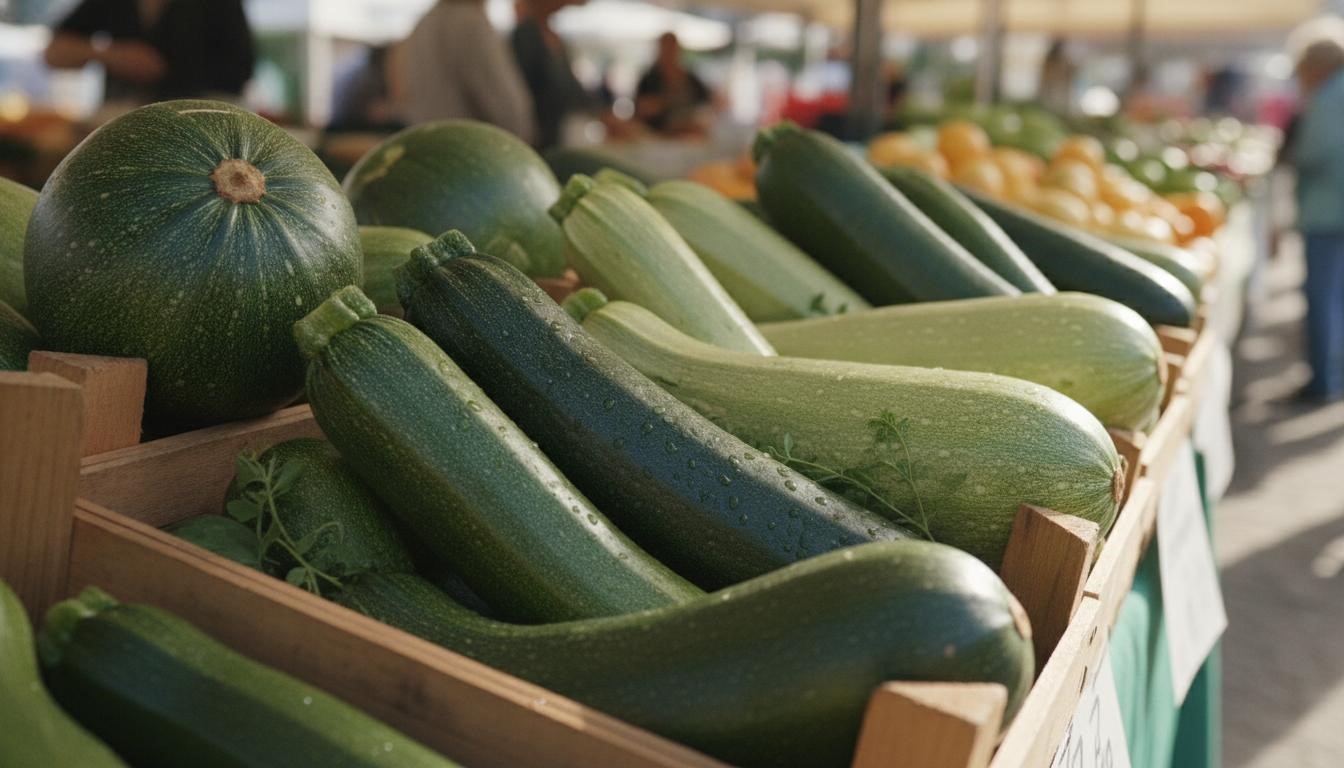
There is a moment in every gardener’s August when they realize they have made a terrible mistake. The zucchini plant, which looked so innocent in May, has turned into a factory. Every morning, three new fruits hide under leaves the size of umbrellas. Neighbors stop answering the door. The zucchini does not ask permission. It simply produces.
This is a modern problem with ancient roots. All squash originated in Mesoamerica, domesticated around ten thousand years ago alongside corn and beans. The Three Sisters — corn, beans, and squash — formed the agricultural foundation of the Maya and Iroquois. But the zucchini itself is a relative newcomer. The thin-skinned variety we recognize was developed in Italy in the late nineteenth century, bred from American squash that had traveled east with Columbus. The Italians called it zucchina, meaning small squash, and by the 1920s it was central to northern Italian cooking.
Symbolically, the zucchini carries abundance and anxiety in equal measure. In Native American tradition, squash was the earth element of the Three Sisters, representing nourishment and protection. In modern culture, it is the punchline of every gardening joke — the vegetable that cannot be stopped, the one that forces creativity because the alternative is waste. Letting a zucchini rot feels like a betrayal of its absurd generosity.
Is it healthy? Almost suspiciously so. A medium zucchini contains roughly thirty calories and two grams of fiber. It is mostly water, which makes it filling without being heavy. It delivers vitamin C, potassium, and antioxidants including lutein and zeaxanthin for eye health. The flesh is alkaline and easy to digest, which is why it appears in gut-healing protocols. For people managing blood sugar, the glycemic load is negligible. For people managing weight, the volume-to-calorie ratio is almost unfair.
What do we make from it? Everything, out of desperation and then out of love. The Italians fry the flowers, stuff them with ricotta, and batter them into golden fiori di zucca. The French build ratatouille. Americans grate it into chocolate cake, exploiting its moisture to create a tender crumb. In the last decade, the zucchini became the star of the low-carb movement, spiralized into “zoodles” with a fraction of pasta’s calories. Some purists scoff. Others admit that zucchini noodles with garlic and olive oil are a different, lighter pleasure.
Storage is where the zucchini reveals its fragility. Unlike winter squash, zucchini bruise at a glance. Moisture is the enemy. A washed zucchini in a plastic bag will turn slimy in three days. Keep it dry and unwashed in the crisper drawer, where it lasts five to seven days. If you have too many, grate and freeze them in measured bags. They will weep water when thawed, but that liquid is perfect for soups.
Here is a fact that surprises even cooks. The zucchini is technically a fruit. It develops from the flower and contains seeds. But culinarily, it behaves like a vegetable, absorbing the flavors around it. This chameleon quality is why it works in chocolate cake and in curry. It has no ego. It only has texture.
What has changed? The zucchini went from a survival crop to a lifestyle ingredient. In the 1990s, it was the vegetable your mother steamed into mush. In the 2010s, it became the vegetable your coworker spiralized into lunch. Gardeners still dread the August avalanche, but now they have recipe apps to help them cope.
In the end, the zucchini is a lesson in humility. It asks for almost nothing — water, sun, a patch of soil — and gives far more than anyone asked for. It does not care if you are ready. It simply grows, and waits for you to catch up. That is the real magic. Not the nutrients, not the recipes. The magic is that something so plain can be so generous, and that generosity becomes a kind of joy.