
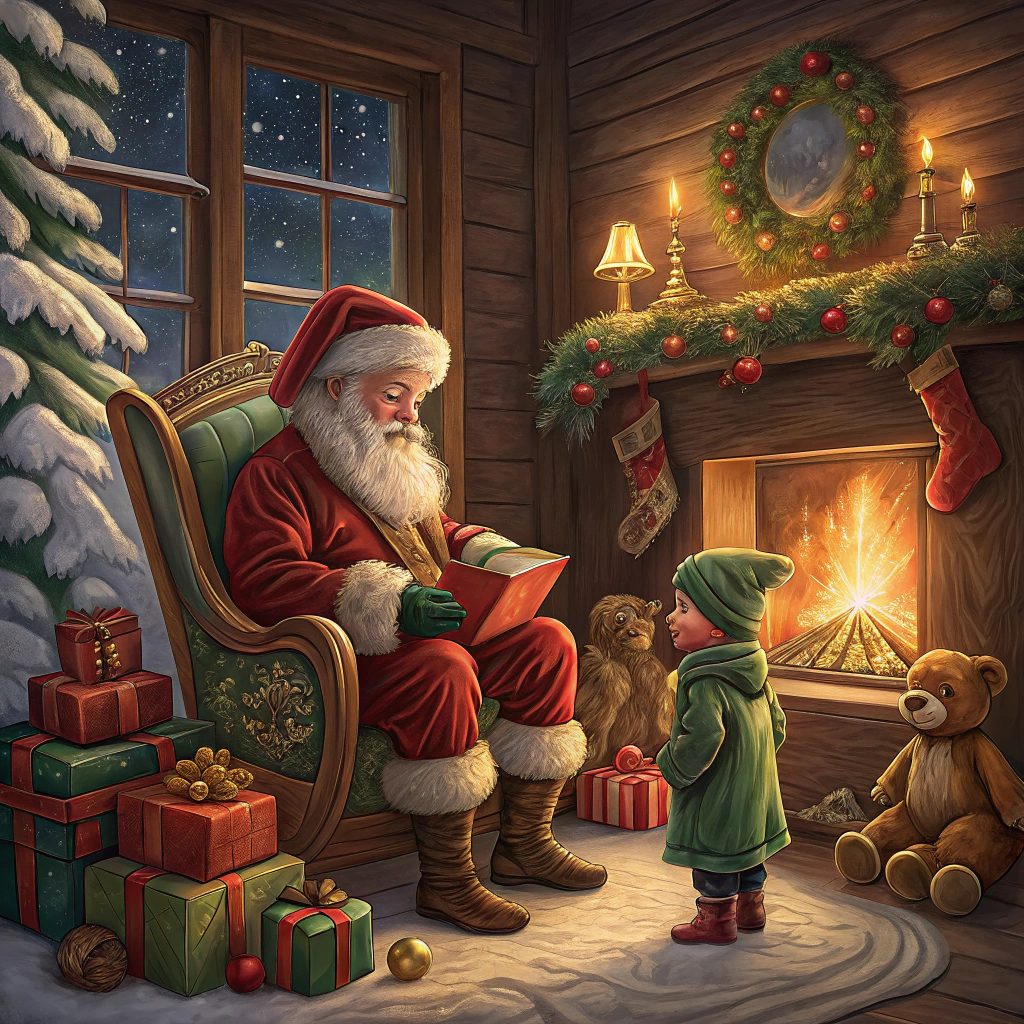
Every December, as snow begins to settle and warm lights glow from homes, one timeless figure returns to our imagination — the cheerful old man in a red suit who brings gifts and laughter. But the story of Santa Claus didn’t begin with chimneys, flying reindeer, or magical sleigh rides. His tale is woven from centuries of myths, winter rituals, ancient customs, and the universal human desire to give and receive kindness. This is the journey of how Santa became the heart of the holiday season.
The Journey From Legend
Far in the snowy North, where winter nights last longest, stories once told of a mysterious traveler. He journeyed across icy skies in a sleigh, carried presents in a giant sack, and slipped quietly into warm homes to leave gifts for children. With a long white beard, laughing eyes, and a red coat edged in white fur, he spread joy wherever he appeared.
This cheerful figure has many names across the world — but his spirit remains the same: generosity, kindness, and the thrill of a magical night.
The Roots of a Popular Tradition
The idea of a winter gift-giver began long before the modern holiday season. One of the strongest inspirations was St. Nicholas, a Christian saint known for his kindness and secret acts of charity. Children adored him, believing he rewarded good behavior and protected the innocent.
The tradition of giving gifts during winter also goes back to ancient Rome, where people exchanged small presents during festivals welcoming the new year. They offered symbolic gifts on evergreen branches, believing this brought luck and happiness.
How Santa Claimed the Chimney
In the far north, homes often had only one opening in winter — the chimney. It was believed to be a magical passage for smoke, spirits, and winter visitors. Over time, storytellers imagined that the friendly gift-giver slipped through this narrow entrance to surprise sleeping families.
A Poem That Shaped a Legend
The modern image of Santa Claus — the one we see today in illustrations, movies, and holiday cards — was shaped by a single poem written in 1823:
“A Visit from St. Nicholas,” better known as “The Night Before Christmas.”
In it, Santa arrives in a sleigh pulled by eight tiny reindeer, lands on the roof, enters through the chimney, and brings joy with a booming laugh:
“Ho, ho, ho!”
This poem transformed the old legends into a warm, joyful character loved around the world.
A Blend of Ancient Wisdom and New Traditions
Long before Santa’s red suit appeared, northern peoples had winter rituals involving evergreen branches, symbolic offerings, and stories about traveling between the world of people and the world of spirits. Many of these traditions later blended with Christmas customs, slowly creating the holiday atmosphere we know today.
Over centuries, all these influences came together — ancient rituals, Christian legends, winter magic, and children’s imagination — until the modern Santa Claus was born.
Why Santa Still Matters
Today, Santa is more than a character.
He represents:
the joy of giving
the excitement of waiting for surprises
the magic every child deserves
the reminder that kindness can change someone’s day
Even adults feel a spark of childhood when they see a stocking hanging by the fireplace or hear the jingle of holiday bells. That is Santa’s true gift — the ability to bring joy that belongs to everyone.