
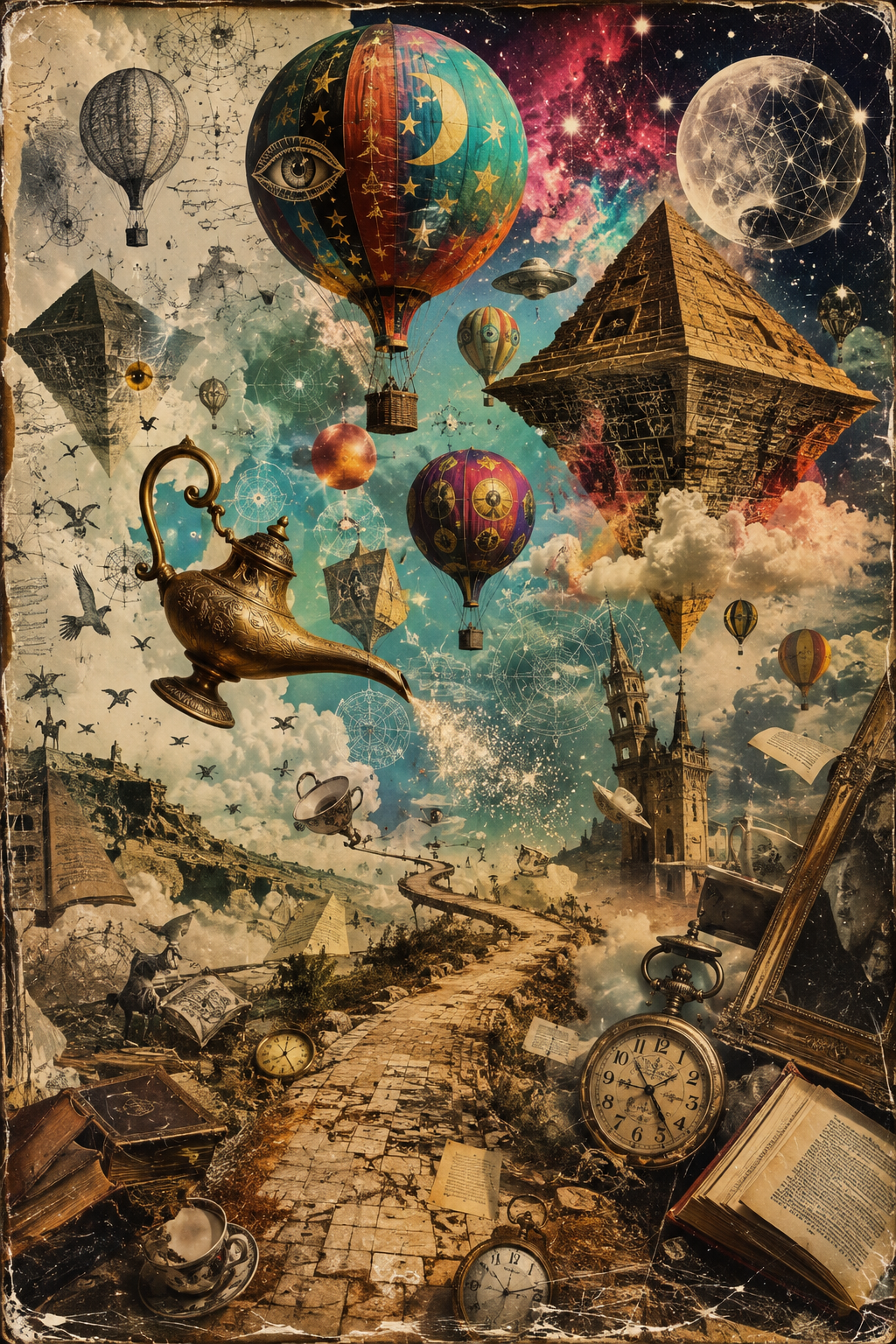
We spend roughly one-third of our lives asleep, and within that shadowy realm, we become storytellers without trying. Every night, the mind weaves tapestries of memory, fear, desire, and symbolism — some vivid enough to haunt us at breakfast, others dissolving the moment we open our eyes. But what are dreams, really? Are they mere neurological static, or messages from somewhere deeper?
Science tells us that dreaming occurs primarily during REM sleep, when the brain is almost as active as it is when we are awake. Neurobiologists suggest dreams are the brain’s way of processing the day’s emotional debris, consolidating memories, and running simulations of possible threats. In this view, the dream is a kind of overnight therapy session — a private cinema where the mind sorts what matters from what does not. We dream, perhaps, because we need to; because a brain that never sleeps in its own way would eventually drown in unprocessed experience.
Yet long before laboratories mapped the sleeping brain, ancient texts treated dreams as something far more sacred. The Bible is rich with dream narratives. Joseph interpreted Pharaoh’s dreams of seven fat and seven lean cows, foretelling years of plenty and famine. Jacob saw a ladder reaching to heaven, with angels ascending and descending. In the Book of Job, God speaks at night “in dreams, in visions of the night.” Biblical dreams are not random; they are divine transmissions, warnings, or prophetic maps. To dream, in this tradition, is to be touched by something larger than oneself — a conversation across the veil between the mortal and the eternal.
Sigmund Freud, the father of psychoanalysis, approached dreams with a scalpel of a different kind. In his seminal work The Interpretation of Dreams, he argued that every dream is a disguised fulfillment of a repressed wish. The dream is the “royal road to the unconscious,” a place where forbidden desires, childhood wounds, and suppressed fears wear costumes and speak in riddles. Freud distinguished between the manifest content — what we remember — and the latent content, the true, often uncomfortable meaning buried beneath symbols. A dream of flying might mask a longing for power; a locked door might hide a forbidden room in the psyche.
Vedic traditions, particularly within Hindu and yogic philosophy, see dreams as journeys of the subtle body. The Mandukya Upanishad describes sleep as one of four states of consciousness, where the self — the Atman — withdraws from the senses and moves through inner realms. Dreams are not illusions to dismiss but experiences of the sukshma sharira, the subtle body, traveling in dimensions inaccessible to waking awareness. Some yogic texts suggest that advanced practitioners can become lucid within dreams, using the dream state — svapna — as a field for spiritual practice and self-realization.
Esoteric disciplines from Hermeticism to Theosophy echo this sentiment. They speak of the astral plane, a realm where the soul wanders while the physical body rests. Dreams, in this view, are not produced by the brain but received by it — impressions from a collective, non-physical reality where symbols carry universal weight, and encounters with the deceased or the unborn are not metaphors but actual events.
So why do we dream? Perhaps the answer is not either/or, but all of the above. Dreams may be the brain’s housekeeping and the soul’s correspondence. They may be chemical storms and whispered prophecies. What remains undeniable is their power: a dream can comfort a grieving heart, warn of danger, or unlock a creative door that waking logic could never open. In the end, dreams remind us that we are larger than our daylight selves — mysterious, unfinished, and forever traveling, even when we lie perfectly still.