
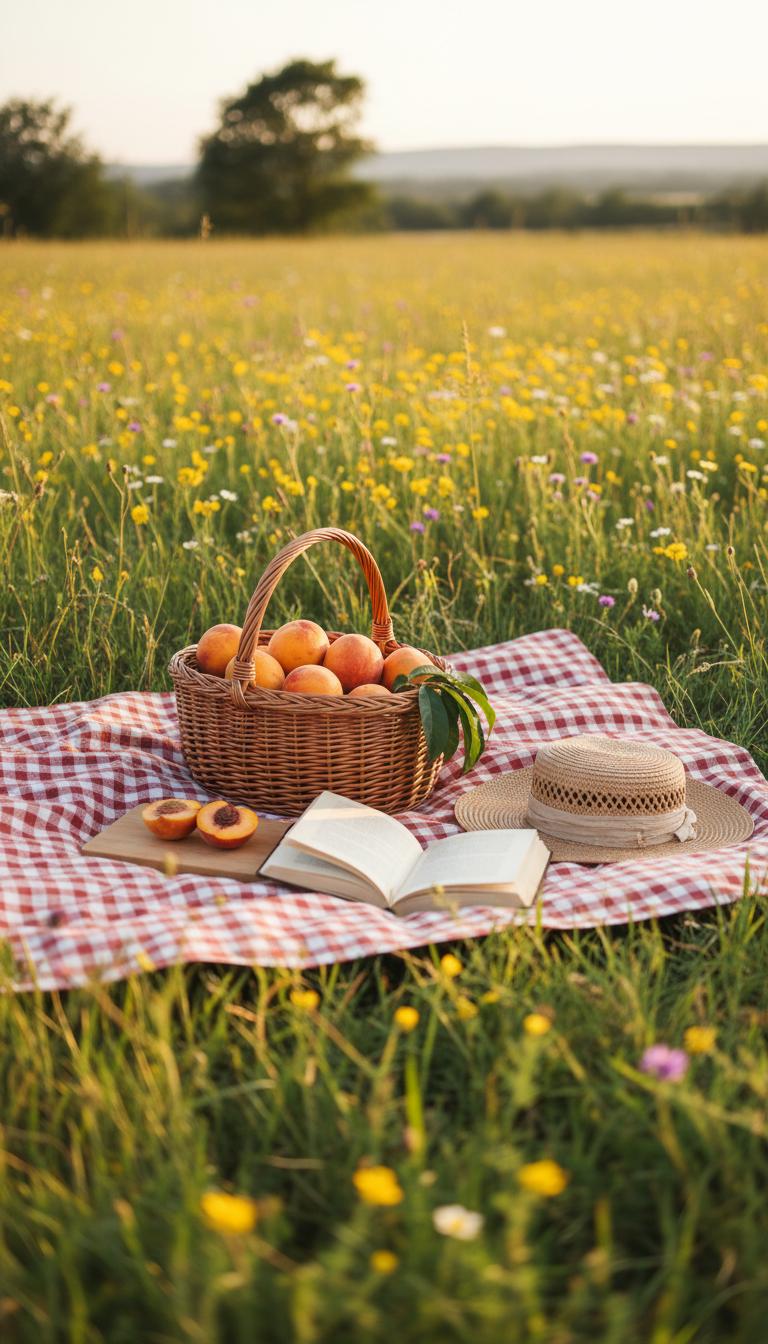
There is a moment in late July when the peach tree gives up its secret. The fruit, hard and green for weeks, suddenly softens. The skin blushes from pale yellow to deep rose. Stand close, and you catch the smell — sweet, floral, unmistakable. That is when you know. Not a day before, and not many days after.
The peach is older than civilization. Native to northwest China, it has been cultivated for at least four thousand years. Ancient texts called it the “fruit of immortality,” and emperors exchanged it as a gift of longevity. When the fruit traveled west along the Silk Road, Persia claimed it, Rome adopted it, and Spanish explorers carried it to the Americas. Today, China produces more than half the world’s supply, though California and Georgia dominate the American market.
Is it healthy? Without question. A single medium peach contains fewer than sixty calories, yet delivers vitamins A and C, potassium, fiber, and antioxidants that support skin and digestion. The deeper the color, the richer the nutrients. The skin, often discarded, actually holds the highest concentration of fiber and antioxidants.
What we make from peaches has evolved dramatically. A century ago, preserving was survival. Canning, jam-making, and brandy-soaking filled August weekends. Today, global shipping gives us peaches in December, but the trade-off is flavor. A peach picked green for transport never ripens into the sun-warmed, juice-down-your-chin experience of an orchard fruit.
Still, the modern kitchen has embraced the peach in new ways. Grilled halves with burrata and balsamic appear on menus worldwide. Peach salsa accompanies grilled fish. Bourbon-soaked peaches top artisan ice cream. The Bellini cocktail, invented in Venice in the 1940s, is now a brunch staple. And farm-to-table dining has brought heirloom varieties back — flat Saturn peaches, blood-fleshed clings, and the delicate White Lady.
Storage is where most people fail. A hard peach belongs on the counter, stem-side down, away from sun. It ripens from the inside out, so pressing the flesh tells you nothing until it is too late. The nose knows first. Once ripe, it survives three to five days in the refrigerator, though cold dulls the flavor. Never store unripe peaches in the fridge; the chill arrests sugar development permanently, leaving a mealy, tasteless ball.
The peach and the almond are botanical cousins. Both belong to the genus Prunus, and their pits share a similar structure. Peach kernels were once used in Europe as a cheap almond substitute for marzipan. The kernel does contain trace cyanogenic compounds, but traditional recipes never posed real danger.
Symbolically, the peach carries weight. In Chinese culture, it represents long life and is a common birthday motif. In Western art, a peach with a bite taken out once symbolized truth — because truth, like the flesh, lies beneath the surface. In modern slang, “peachy” means everything is fine.
So what has changed? We gained access and lost patience. We can eat peaches in December, but they taste like shadows. We forgot the skill of preserving, then rediscovered it as a weekend craft. We traded the orchard for the supermarket, and now some of us are driving back to the orchard on Saturday mornings.
The peach does not ask for much. A few hot weeks, a gentle hand at harvest, and a knife to split the seam. It rewards you with sweetness that feels like a memory even while it is happening. That is the real magic. Every summer bite reminds you that the best things refuse to hurry.



One response to “The Peach: Summer’s Most Perfect Fruit”
The peach: not only healthy and delicious, but also a symbol of youth.