There are over six hundred shapes of pasta in Italy, and every one has a story. Some were invented by grandmothers in mountain villages. Others were engineered in the nineteenth century to survive long sea voyages. Yet the world treats pasta as one thing: a quick, cheap bowl of comfort. The truth is far more interesting.
The origin of pasta is one of the most argued topics in food history. For decades, people believed Marco Polo brought noodles from China to Italy in the thirteenth century. That story is now dismissed by historians. Dried pasta made from durum wheat was already being produced in Sicily long before Polo’s journey. The Arabs introduced hard wheat and drying techniques to the Mediterranean around the eighth century, and Italian artisans perfected the craft. Pasta is not an import. It is a fusion, refined over centuries by people who understood that flour and water could become something immortal if dried correctly.
What makes Italian pasta different is the law. In 1967, Italy passed a decree stating that dry pasta sold as “pasta” must be made exclusively from durum wheat semolina. This is why Italian pasta holds its shape, resists overcooking, and has that rough, porous surface that sauce clings to. Cheap pasta made from soft wheat turns mushy. The Italians knew this, and they protected it.
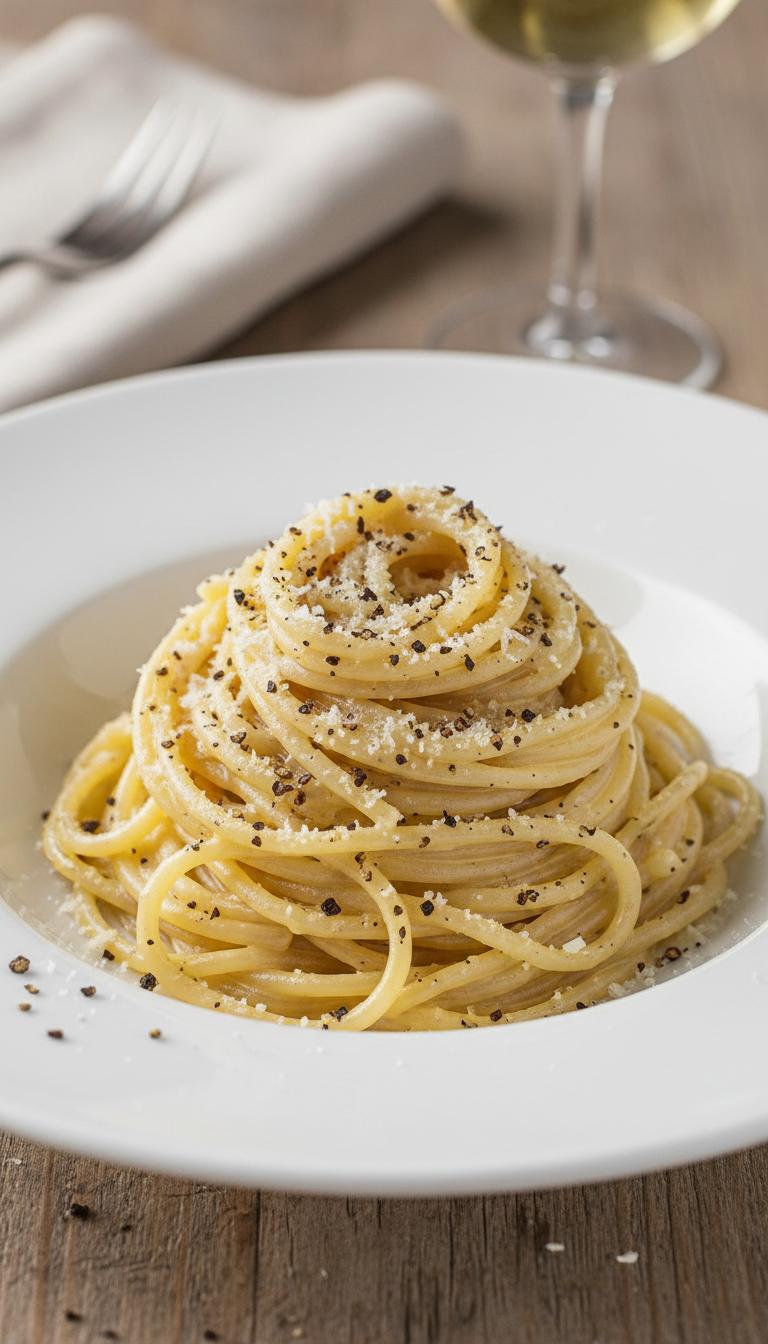
Then there are the rules. In Italy, spaghetti is never paired with meatballs the way Hollywood shows it. Meatballs exist, but they are usually a second course. Chicken on pasta is practically a crime in most Italian households. Carbonara is made with egg, pecorino, guanciale, and black pepper. Cream is not invited. These rules are not snobbery; they are the result of centuries of regional balance. Each shape was designed for a specific sauce. The hollow tubes of penne catch chunky tomato. The ridges of rigatoni hold meaty ragù. The long strands of spaghetti are perfect for light, oily, or seafood sauces that coat evenly.
Here is a fact that surprises most people. The average Italian eats roughly twenty-three kilograms of pasta per year. That is about sixty-three grams per day, often at lunch, and almost always as a primo piatto — the first course, not the main event. Pasta is a warm-up, a ritual, a daily pause. It is rarely eaten for breakfast, and only recently have young Italians started eating it for dinner.
Globally, pasta production has doubled since the year 2000. The United States, Brazil, and Russia are now among the largest consumers outside Italy. During the pandemic, pasta sales spiked by over thirty percent in many countries, making it the ultimate crisis food. It stores for years, cooks in minutes, and costs almost nothing. In a world of uncertainty, pasta is certainty.
Yet the best pasta is still the simplest. A plate of spaghetti aglio e olio — garlic, oil, chili, and parsley — contains five ingredients and takes fifteen minutes. It requires no cream, no blender, no technique beyond timing. That is the real Italian secret. Pasta is not about abundance. It is about restraint, quality, and knowing that a perfect bite does not need a long grocery list.
The next time you boil a pot of water, remember: you are not just making dinner. You are continuing a tradition that survived empires, crossed oceans, and fed generations. Six hundred shapes, one thousand years, and still, nothing beats a bowl of perfectly cooked spaghetti.