For centuries, chocolate remained a liquid luxury in European courts, whisked into hot beverages that fueled philosophical salons and morning rituals. The transformation from cup to cake required two quiet revolutions in the nineteenth century: first, the invention of the cocoa press, which separated cocoa butter from powder and made chocolate behave like flour; second, the development of solid eating chocolate, which could be melted into batter. By the late 1800s, American cookbooks began printing recipes for chocolate cake, and the advent of chemical leavening allowed home bakers to stack layers skyward. The layer cake as we know it was born from this alchemy of industry and domestic ambition.
The chocolate layer cake inherits a sacred role: it marks the thresholds of our lives—birthdays, departures, reunions, ordinary Sundays made memorable by sweetness.
Today the landscape of chocolate cake is vast and varied. German Chocolate, despite its name, is an American creation distinguished by coconut and pecan frosting. Black Forest cake layers in cherries and cream, while flourless versions offer dense, fudgy intensity. The molten center cake, a relatively recent arrival, delivers drama in the form of warm, flowing ganache. Yet not all variations survived the passage of time. Elaborate Victorian constructions, weighted down by architectural ambition, gradually surrendered to more practical home baking. Some regional recipes that relied on specific local chocolates faded as global trade standardized cocoa powder, erasing subtle differences in bitterness and fat content.
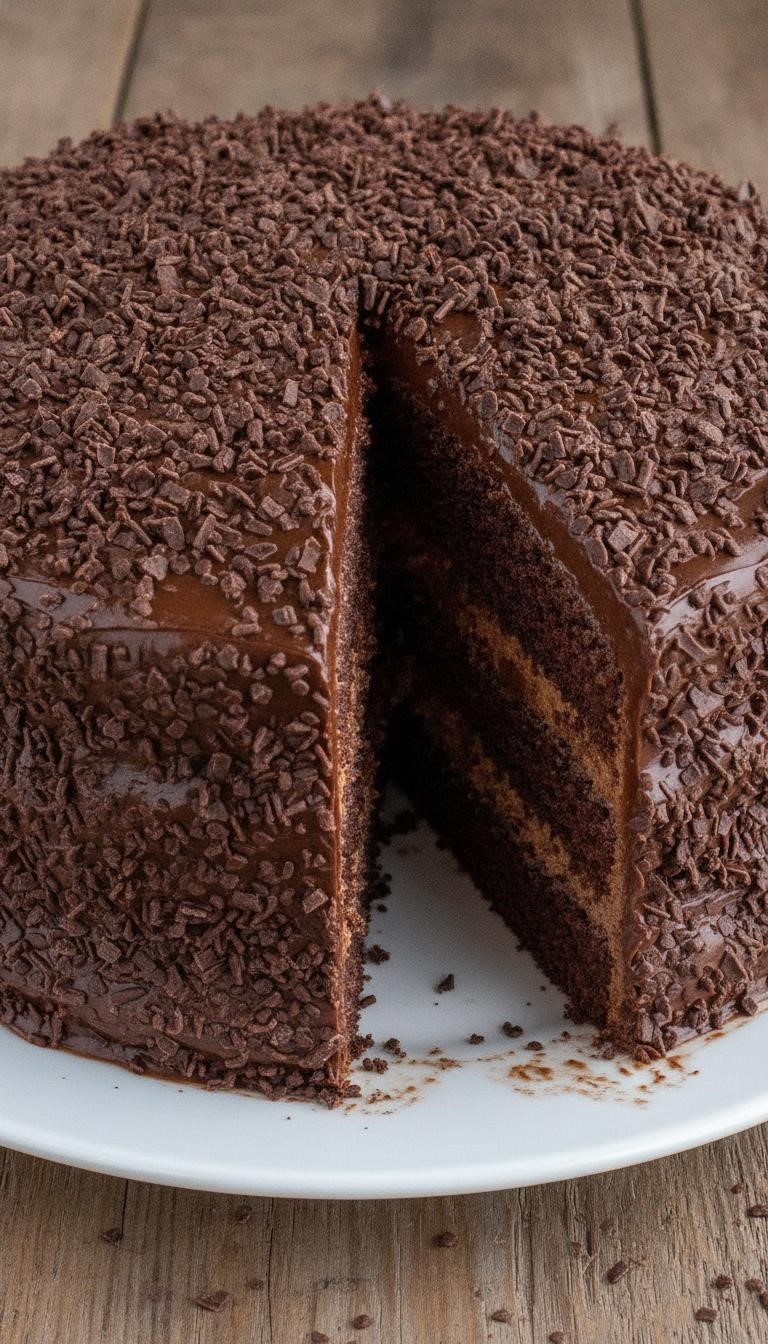
What changed most profoundly is chocolate cake’s social address. Once an aristocratic indulgence, it became the democratic centerpiece of the twentieth-century kitchen, aided by boxed mixes that made layers achievable in minutes. Recently, the pendulum has swung back toward scratch baking and artisanal technique, driven by a hunger for authenticity. At the same time, the visual culture of sharing has elevated the cake’s appearance; the exposed slice, the drip of ganache, the scattering of shavings—these are now part of the language.
Globally, chocolate cake functions as a kind of edible Esperanto. It requires no translation. Its influence extends from neighborhood bakeries to ceremonial tables, offering comfort without pedigree and celebration without formality. In a world that often feels fragmented, the act of sitting down to a shared chocolate layer cake remains a small, sweet agreement that some pleasures are universal.