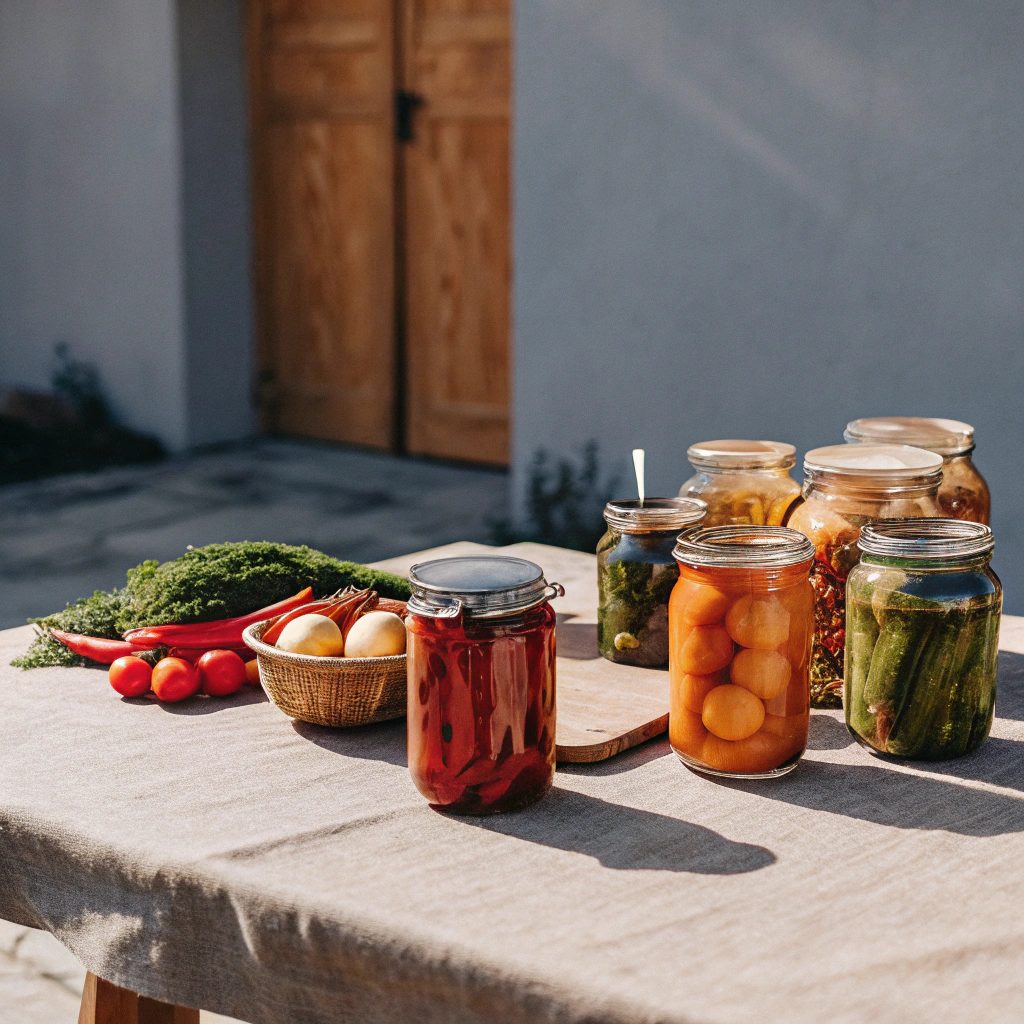
Back when freezers didn’t exist, vegetables were preserved for winter mainly by pickling, drying, or storing in cellars. Here are some recommended traditional methods:
Good Pickling Recipe
- If you’re not using ready-made pickling spice mixes, a simple base includes water, vinegar, and salt. A good mixture is about 3 tablespoons of salt per 1 quart of water and about 2/3 to 1 cup of vinegar. Bring it to a boil, cool slightly, and pour over vegetables that are already placed in jars. Usually, a mix of herbs is added: dill, bay leaf, grape leaves, horseradish, or others depending on taste.
- To know how much liquid you’ll need, first fill a jar with cold water and the raw vegetables, then pour the water into a measuring cup. When filling jars with the hot brine, it should cover the vegetables by about an inch.
- If you want the vegetables to last longer without refrigeration, you’ll need to sterilize the jars after sealing. Place them in the oven at 140°F (60°C) along with the filled jars, and keep them there until the next day to cool slowly.
- When pickling vegetables by salting instead of boiling, everything must be very clean, including your hands. Only use utensils and containers made of stainless steel, glass, or enameled material—never use aluminum.
- The vegetables should be washed, peeled, and cut before salting. Use non-iodized salt, and pour a layer over the vegetables before placing them in a strainer to drain overnight. Stir occasionally. Then transfer to a cloth bag and hang in a well-ventilated area to dry further.
Boiling Method for Preserving Vegetables
- Boiling vegetables is the most common method for preserving them. Boil until all liquid evaporates. This greatly reduces the risk of bacterial growth.
- Before boiling, chop the vegetables finely and cook them without any vinegar or spices at first. During the process, you can add a small amount of preservative powder (like citric acid), which in low quantities is not harmful and helps extend shelf life.
Blanching Before Preserving
- Blanching (briefly boiling or steaming) is important when preserving fruits and vegetables. It involves holding the produce in boiling water or steam for about 2 minutes. This process partially sterilizes the food, softens it for better packing into jars, and can help remove strong odors.
- For steam blanching, the best method is to use a pot with a basket insert so the produce doesn’t sit directly in water. If blanching in water, make sure the vegetables are removed quickly and drained thoroughly.
Preparation of Sugar Syrup:
Sugar syrup is used for pouring over fruit. Preparation depends on what type of fruit is being used. The amount of sugar (depending on the type of fruit) is added to water (to make syrup) and brought to a boil. The foam that forms should be gently removed. Fruit is poured over with hot syrup to make it easier for air to escape.
Pasteurization and Sterilization:
Pasteurization and sterilization of fruit are similar methods as with preparing vegetables. In pasteurization, fruit in jars or bottles is heated in steam or in an oven. The temperature ranges between 165°F and 212°F. If the temperature is above 212°F, then sterilization is being performed. Sterilization is more often used for preparing fruit. Fruit prepared by pasteurization retains its biological value, taste, and color.
Tip for Blanching Fruit:
Fruit is placed on a wire rack or slotted spoon and submerged into boiling water for about 1 minute, then quickly transferred into cold water. This prevents the fruit from browning and helps preserve more nutrients in the sugar syrup.