
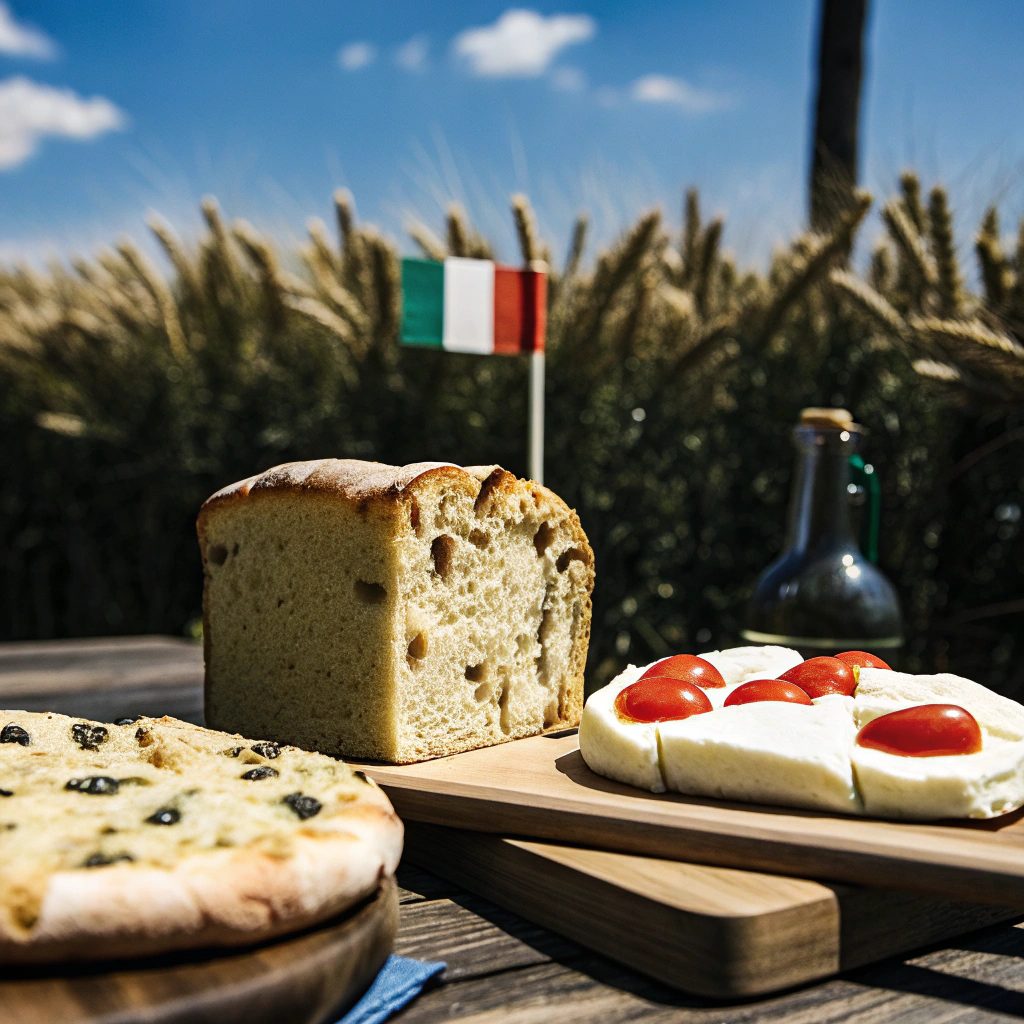
Italy’s baked goods are much more than simple meals—they are a delicious reflection of centuries-old traditions. From soft, airy focaccia to the crusty ciabatta, Italian breads vary widely across regions, each with its own distinctive flavor and history.
Panettone, the iconic holiday bread, comes from Lombardy in Northern Italy. According to legend, a Milanese baker named Toni created a sweet, fluffy dough filled with raisins and candied fruits. The bread quickly gained popularity, and the city embraced it as “Pane di Toni,” which over time became the Panettone we enjoy today.
Pizza also has a fascinating story. Ancient Greeks baked flatbreads made from wheat or chickpea flour on hot stones—a practice that spread to Italy. Early pizza was a humble meal for the southern poor, topped simply with tomatoes and herbs. Neapolitans later added cheese, meats, and other toppings, transforming it into the dish we now know and love. By the 16th century, pizza had reached the tables of Naples’ elite, eventually spreading across the world.
A key milestone in pizza history came in 1889, when Queen Margherita of Naples was served a pizza representing the Italian flag: red tomato, white mozzarella, and green basil. Pizzaiolo Raffaele Esposito named it Margherita in her honor. Today, pizza is a global favorite, celebrated in countless variations while remaining a symbol of Italy’s rich culinary heritage.