
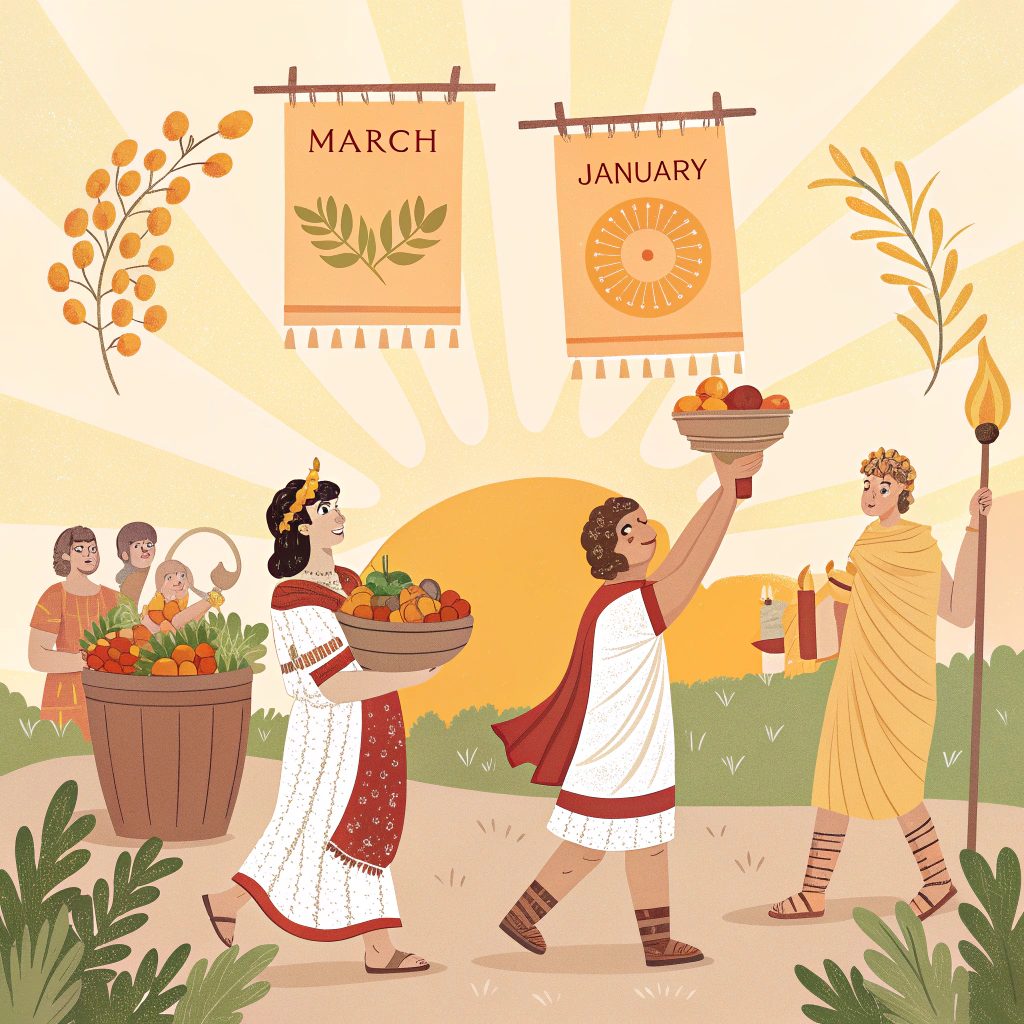
Celebrating the New Year is one of the oldest traditions in human history, stretching back over 4,000 years. The earliest records come from ancient Babylon, where people welcomed the new year in late March, coinciding with the start of spring and the planting of crops. At that time, January 1 held no particular significance.
Babylonian New Year festivities lasted more than a week, featuring elaborate ceremonies, feasts, and symbolic rituals to honor their gods. When the Romans took inspiration from these celebrations, they also marked the new year in March. However, inconsistencies in their calendar made it unreliable, and dates often shifted depending on the ruler.
In 153 BC, the Roman Senate officially set January 1 as the beginning of the year to stabilize civic and political records. Later, Julius Caesar introduced the Julian Calendar in 46 BC, adjusting the length of the year to match the solar cycle. This reform ensured the calendar stayed in sync with the seasons.
As Christianity spread, the Church initially discouraged traditional New Year festivities, considering them pagan. Over time, Christian observances were added to the calendar, and some communities celebrated January 1 as a religious holiday. For many centuries, New Year celebrations were modest, and only in the last 400 years did January 1 become widely recognized as the official start of the year in Europe and North America.